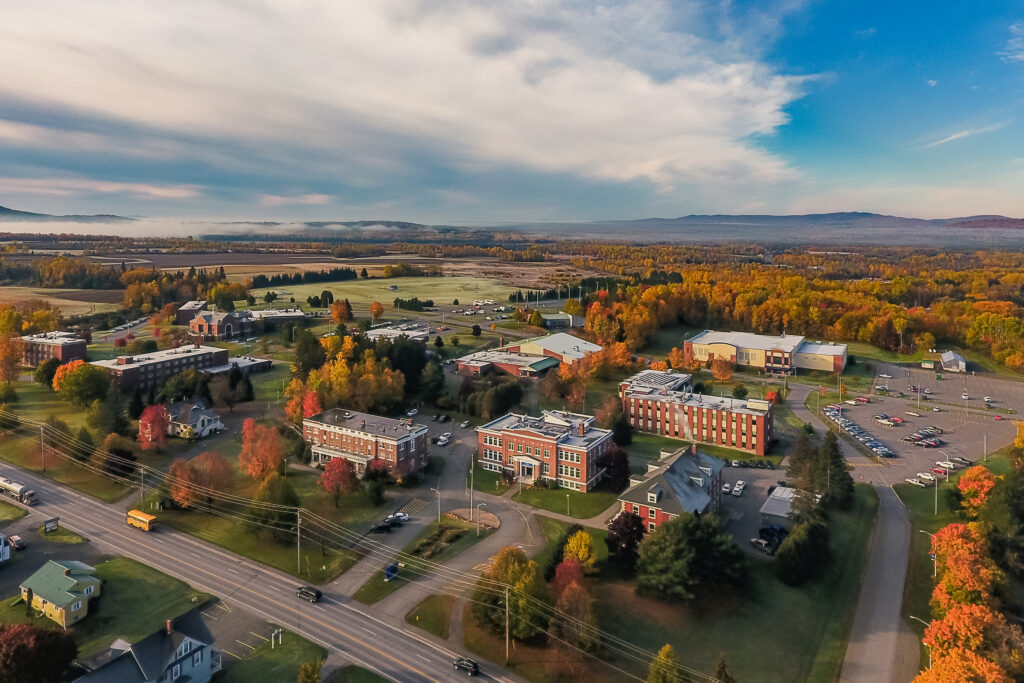
A public college known for letting students earn a bachelor’s degree in less than a year is drawing scrutiny from its accreditor about the quality of its online program.
Enrollment has skyrocketed at the University of Maine at Presque Isle, a small state school near the Canadian border, as word has spread that it offers fast, affordable degrees.
The school’s online YourPace program enrolled nearly 4,100 students during last academic year, a 30-fold increase since 2018. Administrators say most students can complete their degrees in under a year for less than $10,000 in tuition.
But that growth and reputation for speed have also led to an examination by the New England Commission of Higher Education.
The accreditor said it plans to review concerns about the YourPace program at its meeting next week after a Washington Post article reported that some students completed bachelor’s degrees there in as little as a few months. The Post found that Presque Isle is one of a number of universities across the country known for allowing many students to graduate quickly online, using an approach touted on social media as “college hacking,” “degree hacking” or “speed running” degrees.
How much does college really cost?
Sign up for our six-part Paying for College newsletter
In April, the commission sent the University of Maine System a letter saying the Post article “raised questions about the quality” of YourPace and requested information about the program, including its enrollment growth and the time it takes students to complete their degrees. The Post obtained both the letter and the system’s reply through a public records request.
In a 20-page response in August, the university system said nearly half of students who finished in spring 2026 started and ended the YourPace program the same semester. And 79 percent completed the program within two semesters. Most YourPace students are undergrads, but the figures include completion times for both grads and undergrads.
One of the reasons YourPace students finish so fast is they typically start with large amounts of transfer credit, including from previous colleges, the report noted. The university allows students to use transfer credits for as much as 90 of the 120 credits they need for a bachelor’s degree.
“A student who finishes within one academic semester is finishing the final requirements of an academic record built over years,” the University of Maine System report said.
However, the report shows that close to half the transfer credits over the past two years have come from sources that are not accredited colleges, including from places from which other University of Maine schools do not routinely accept credits.
The biggest source of noncollege credits is online learning platforms — like Sophia Learning and Study.com — that allow students to move through online tutorials faster than a traditional college class. The Post found that some courses can be completed the same day by taking open-book, unsupervised tests.
University of Maine System spokeswoman Samantha Warren acknowledged that most other institutions in the system don’t routinely accept those credits but pointed out that some other large online programs catering to adults do. Warren specifically named the University of Maryland Global Campus, Southern New Hampshire University, Western Governors University and Purdue Global.
Still, the report said Presque Isle has begun reviewing its transfer policy, including the number of transfer credits that may be accepted from institutions that are not accredited colleges.
In addition, some students find they can move quickly through courses at Presque Isle’s YourPace program.
The program relies on competency-based education — where students complete papers and other assignments at their own pace to prove they have learned the material, instead of attending weekly classes over the course of a semester.
The report said 21 percent of undergrads completed 10 or more online courses in a semester in spring 2026, roughly double the typical full-time load at a traditional college.
One YourPace graduate from North Carolina told The Post she completed a bachelor’s degree at Presque Isle in a total of three months, including two months taking classes through online learning platforms like Sophia and four weeks at the university’s YourPace online program, while working full-time. She later earned a master’s in five more weeks.
The university system report said the high course load and fast completion time do not mean the school has lowered its academic standards.
“Different adults will complete at different rates, but the mastery threshold is the same for all,” Warren, the spokeswoman for the university system, wrote in an emailed statement.
University administrators have said the YourPace program is aimed at adults who find they need a degree to advance in their careers, rather than teenagers who just graduated from high school. The school also has a physical campus with semester-long classes for traditional students.
Increasingly, YourPace has also drawn students from out of state.
Last year, just 10 percent of students in the Presque Isle YourPace program came from Maine, compared with 85 percent in 2018. The growth also helped inspire two other schools in the university system (Farmington and Fort Kent) to start offering degrees through the same online platform.
“YourPace is doing exactly what it was designed to do: enabling working adults to complete accredited door-opening degrees and improve their earning and employment opportunities in a timely and affordable manner that works in their busy lives,” said Warren, the university system spokeswoman.
The program has divided faculty in the system.
Brian McGill, faculty senate president at the University of Maine’s flagship campus in Orono, said he and some of his colleagues are concerned the controversy around the YourPace degrees could hurt the reputation of the entire university system, which has seven universities and a law school.
“Do people now assume that the degree we’re offering is the same thing?” said McGill, a professor of ecology. “Ultimately, it’s a pretty practical question, because it affects what people are willing to pay.”
But Lisa Leduc, a criminal justice professor at Presque Isle who has taught in the YourPace program for seven years, said she holds students to the same standards as those who attend traditional classes on campus.
“I feel very strongly they are getting the same educational content and they have the same learning outcomes,” Leduc said.
She said the program isn’t for every student but can help adults who need a degree to land a raise, promotion or new job.
“I feel this is a really good pathway,” she said.
Larry Schall, the commission’s president, said the accreditor plans to notify the system by late next month whether it will take any action regarding the YourPace review.
The accreditor also plans to consider possible changes to its broader policies around transfer credits and competency-based education for all the schools it regulates at its November meeting, he said.
The post College allowing students to earn a bachelor’s in under a year draws scrutiny appeared first on Washington Post.