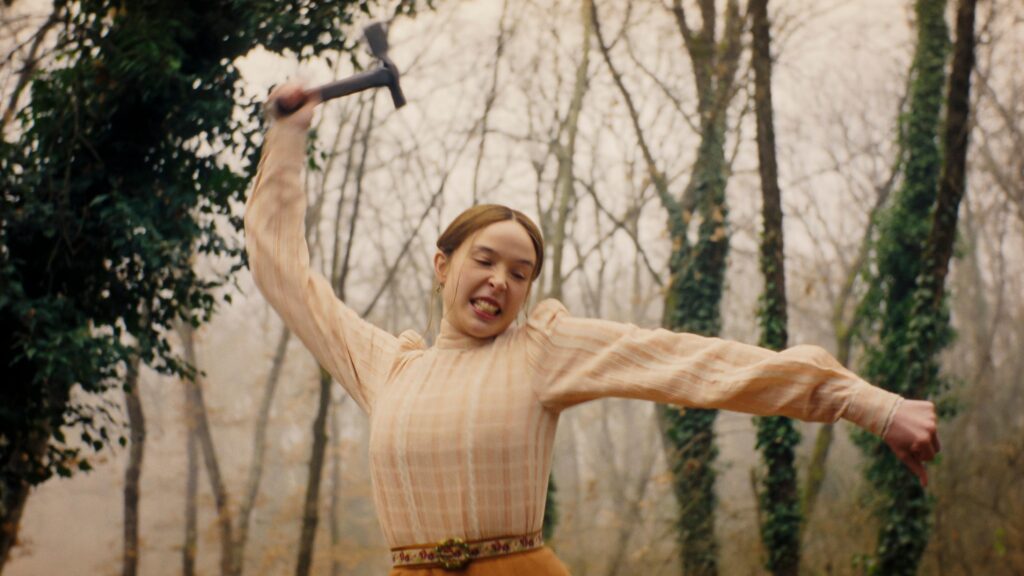
This article discusses the full season of Netflix’s Monster: The Lizzie Borden Story
Monster: The Lizzie Borden Story is about female rage and repression. That isn’t my personal interpretation of the latest installment of Ian Brennan and Ryan Murphy’s Netflix true-crime anthology. It’s the talking point that the show’s makers have been leading with, in publicity materials and in multiple interviews. These are fine themes for the first season of Monster with a female subject, even if they’re not exactly unique within a post-Big-Little-Lies, #MeToo-informed TV landscape where so many dramas aimed at women double as amplifiers for gendered frustrations. The well of misogyny isn’t in danger of running dry anytime soon. But if we must keep diving into it, each descent should at least leave us with some new insight or nuance.
Lizzie Borden, now streaming, fails to clear even that bar. Perhaps the least historically accurate Monster yet—and that’s saying something—the season uses the infamous tale of a Fall River, Mass. woman who probably hacked her wealthy father and stepmother to death with an axe in 1892 as a conduit to just about every plague on womankind you can imagine, past, present, and perennial. Rape. Domestic violence. Pregnancy and childbirth. Housework. Menstrual maladies. Pressure to marry. The premium put on physical beauty. The perils of sex work. Confinement in the home and subjugation to male relatives. By tying together Lizzie’s story with the legends of supposed forerunner Elizabeth Báthory and descendent Aileen Wuornos, Brennan, who wrote every episode, suggests a simplistic kinship between all female killers.
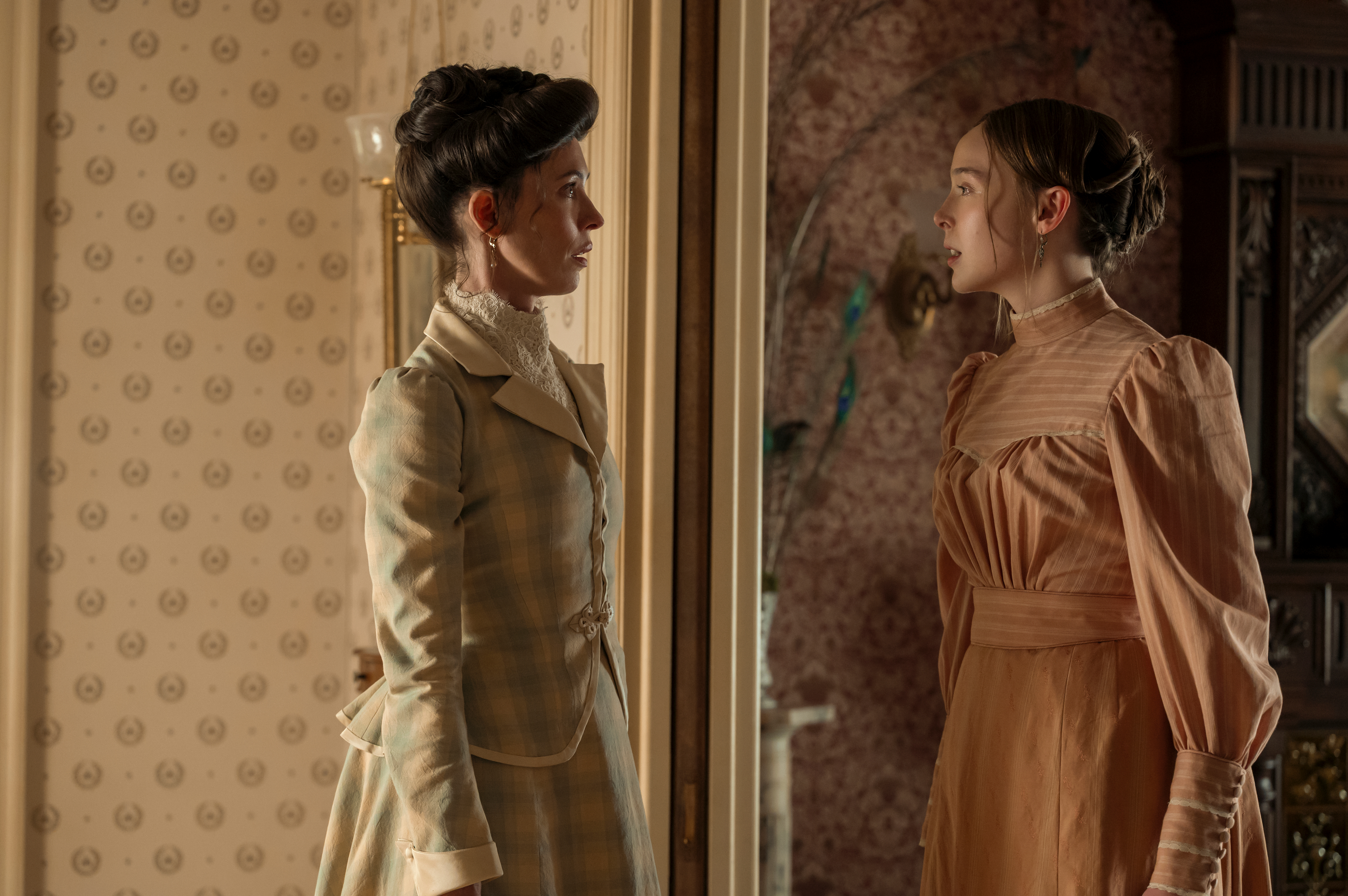
There’s no use fretting over the extremely purposeful anachronisms and inaccuracies in this retelling, which plays as fast and loose with the Borden family as that classic nursery rhyme. With 26-year-old Ella Beatty starring as a dreamy, blank-screen Lizzie, who ages from 32 to her 60s by the end of the season, and Charlie Hunnam and Rebecca Hall cast as parents who were really a couple of decades the actors’ seniors, everyone is much younger and prettier than their real-life counterparts. And more shocking, in some ways, than the hyperspeed double murder reenactment that opens the premiere, is what immediately follows it: a flashback to four months earlier, when Lizzie scares off a suitor by passing a bucket of menstrual blood on the white sofa where they’re sitting. As it turns out, what the fictionalized Bordens refer to as her “lady time” had some relevance to the actual case. But Lizzie Borden is such a massive remix, mingling facts with half-truths and rumors and fabrications, it barely matters which detail is which.
Because its source material is not especially extensive—one double homicide, as opposed to the lengthy and lurid sagas of most past Monster subjects—the show is forced to stretch. The series is padded with Fall River horror scenes that either never happened (the oyster poisoning that leads to so much operatic barfing) or didn’t transpire remotely the way they’re shown (the murder of Bertha Manchester, played by Linda Reiter). Brennan also adds queer love to Lizzie’s life, in the form of the family’s maid, Bridget Sullivan, who they really did call Maggie, after a former servant. He is far from the first to investigate this angle; the 2018 film Lizzie, to take just one example, is also built around a romance, between Chloë Sevigny’s Lizzie and Kristen Stewart’s Bridget.
Monster is, however, the first dramatization to make such imaginative use of the character. Phantom Thread breakout Vicky Krieps, who played ‘Bitch of Buchenwald’ Ilse Koch in Monster’s Ed Gein season, is a conspicuously Germanic Irish maid, with an ahistorical shag haircut dyed a series of shades reminiscent of, by turns, Wuornos and Ziggy Stardust. She has picked up skills in everything from cooking and cleaning to pharmacology in the course of her global travels. It’s no mystery why the awkward, sheltered Lizzie, who craves a bigger life, is enchanted by this glamorous, androgynous outsider. Maggie is easily the best part of the season, thanks in no small part to Krieps’ at once humane and otherworldly performance.
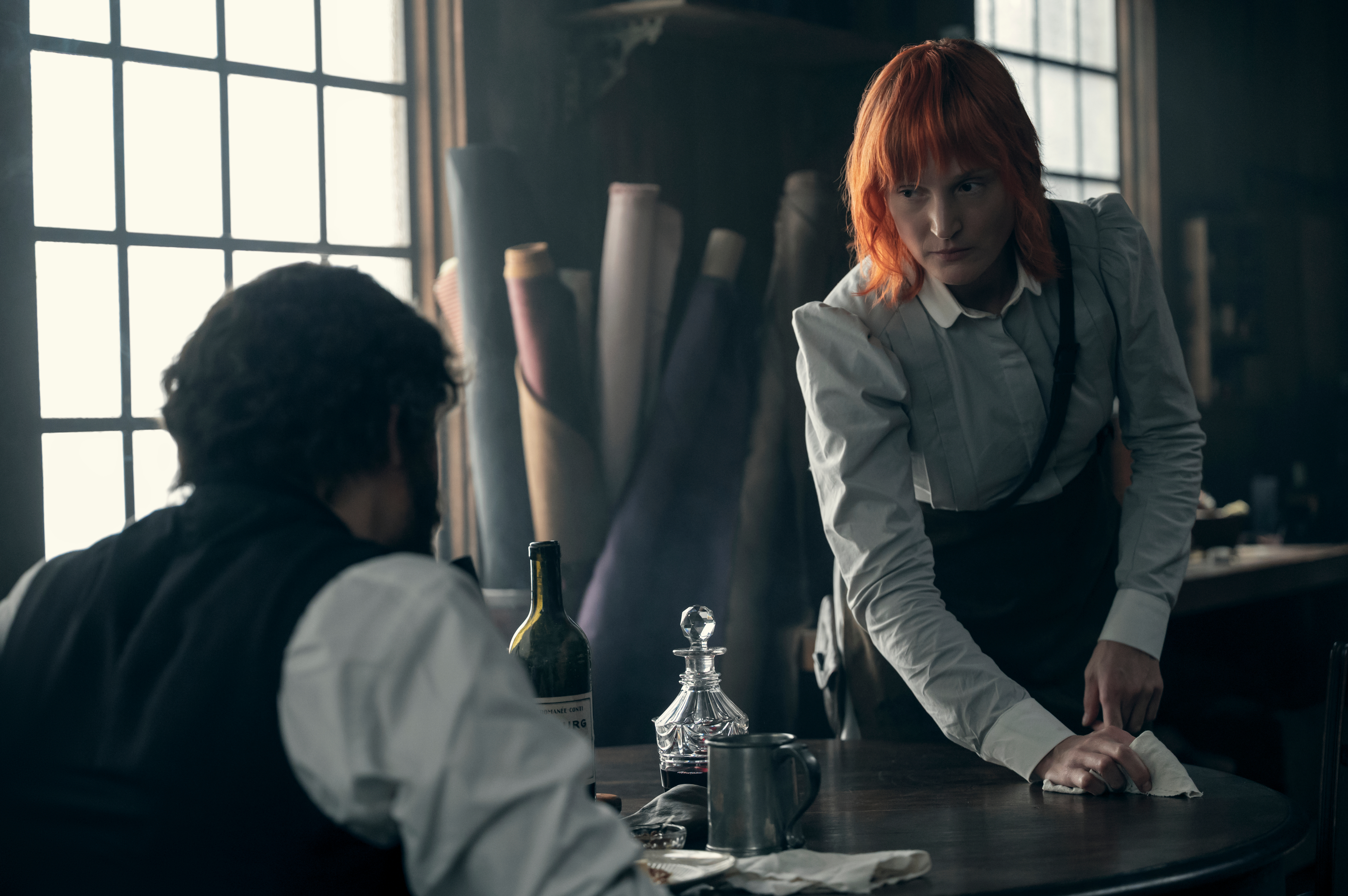
She’s also the unstuck-in-time character who first connects Lizzie to murderesses from other eras. As Maggie reads from a French book about Báthory, a 16th century Hungarian noblewoman said to have killed hundreds of young women and bathed in their blood in pursuit of eternal youth, we see Krieps—with hair and makeup straight out of the goth club—as the so-called Blood Countess. The Runaways’ anthem of teen-girl rebellion “Cherry Bomb” blares. And Lizzie is electrified by the story. She feels a kinship with Báthory. Never mind that killing your cruel parents to free yourself and massacring a village’s worth of peasant girls because La Mer has yet to be invented are about as different as murder motives get. The fact that each woman is acting in response to some form of sexism is, I guess, supposed to bridge that gulf.
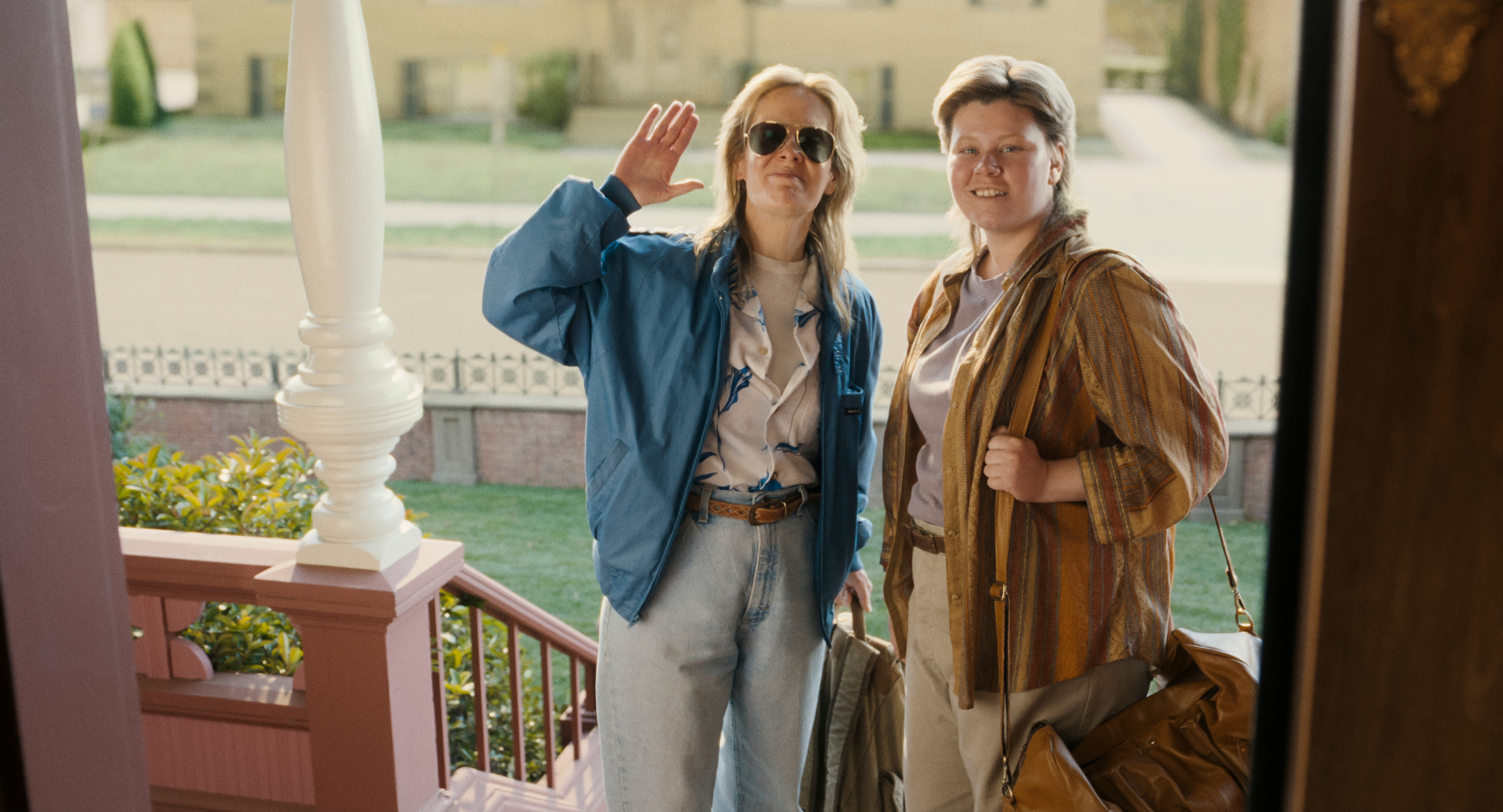
It takes almost half the season for the third member of the deadly trio, played by Murphyverse MVP Sarah Paulson, to show up. Often framed as America’s first female serial killer, Wuornos, a Florida sex worker who killed seven johns between 1989 and 1990, is, in this telling, as inspired by Lizzie as Lizzie is by Báthory. Her presence, and her unsuccessful attempt to claim in court that she acted in self-defense against rape, allows the show to take on—and force us to watch—sexual violence. I’m not sure it needed to be shoehorned into the rare true-crime drama where it doesn’t have an obvious place. Brennan also connects Aileen’s well-documented queerness with the speculative relationship between Lizzie and Maggie. On a pilgrimage to the Borden home, now a bed and breakfast, Aileen and her girlfriend (Jessie Lee) have public sex. A fantasy sequence has the two couples dancing side-by-side in Lizzie’s sacred garden shed. But it’s never clear what Monster is trying to say about lesbians and murder, and this is a case where ambiguity leaves space to insert some pretty dark assumptions.
The outcomes for each of the three female killers are as different as their motivations. Lizzie is acquitted and buys a mansion with her inheritance, presumably because sexist men can’t conceive of a woman committing such physical murders—and because she learns to correctly perform femininity, crying and fainting at appropriate moments, during the trial. Despite wrenching testimony, coarse, unfeminine Aileen is convicted and executed. This might lead you to conclude that privilege and falling in line with patriarchal expectations are what it takes for a woman to get away with murder. But then there’s the rich, powerful, and apparently quite appearance-obsessed Báthory. Our last glimpse of the countess is as a rotting corpse, bricked up in her castle for her sins. So what is really being said here?
Not much, as far as I can tell. Lizzie Borden certainly makes a strong case that women have always been repressed, that rage is the obvious product of that repression, and that liberation is the only antidote. (Of course we get a scene in the finale where Lizzie celebrates suffrage.) But if you didn’t know that, it’s probably also news to you that water is wet and the pope is Catholic. The show’s obsession with women’s bodies as the sites of unending horrors reminds me of House of the Dragon’s repeated depictions of traumatic childbirth. It’s as though viewers are expected to go in completely ignorant of basic hardships afflicting half the human population and must see them reproduced over and over again in gory detail to be enlightened, much less empathetic. And in that case, I suppose it’s also necessary to render interchangeable three notorious women defined by actions rooted in a near-universal form of rage.
But theirs are old stories, already told and retold in every conceivable media, and often, effectively, by women. Wuornos was, of course, most famously portrayed by Charlize Theron, in writer-director Patty Jenkins’ career-making, Oscar-winning 2003 film also titled Monster. Isabelle Huppert stars as Báthory in The Blood Countess, a new feature by German experimental cinema legend Ulrike Ottinger, which is earning praise on the festival circuit for its strangeness and sense of humor. Meanwhile, on TV, creator Liz Meriwether just gave us Furious—another story of female rage, female repression, and yes, even a (fictional) female serial killer. While Krieps is mesmerizing in Monster and frequent Murphy production designer Matthew Flood Ferguson has outdone himself with lavishly suffocating Gilded Age interiors, Furious is the superior show because it takes “being a woman is hard” as the given it is rather than as the endpoint of many repetitive episodes. It has dark, lived-in comedy and real stakes, posing the question of what can realistically be done about systemic misogyny and the anger over it that stains women’s lives.
“All your books are written by men,” Maggie scolds Lizzie in Monster’s season premiere. When you consider how heavily male the creative team behind Lizzie Borden is (executive producer Max Winkler directed six episodes and Sarah Adina Smith, two), this kind of has to be a self-aware line. But whether it’s intended as a wry apology or a small joke, I couldn’t tell you.
The post Monster: The Lizzie Borden Story Has Nothing New to Say About Female Rage appeared first on TIME.