The funny thing about American capitalism is that it requires abundance to truly thrive, and yet capitalists prefer the illusion of exclusivity and scarcity to control the market.
It wasn’t too long ago when the Great Recession exposed the phrase “free market” as a synonym for “less accountability.” We also learned then that “job creators” just means “rich people,” and there was some truth to that back when labor was a necessary ingredient to building wealth. One way that the rich became richer was indeed by employing people to do things. In the age of AI, the richest among us are rapidly building wealth without labor, sometimes displacing it altogether.
What is slowly unfolding may feel like science fiction because many Americans alive today grew up when talk of extinction-level technology was entertainment — think “Terminator” of the 1980s, “Matrix” of the 1990s, “I, Robot” of the early 2000s. But now that we’re experiencing that point in the classic movie arc when the science community comes together to warn humanity of the dangers, we can easily see who failed to learn from fiction about the consequences of poorly regulated industries. History and Hollywood both teach us that when you allow capitalists to dictate the terms, the people will always be secondary to profits. The labor will always be second to the bottom line.
Even though there is usually plenty of wealth to go around, plenty to enrich the masses along with the investors. What has long kept the power out of the hands of the people has not been a lack of resources so much as a lack of compassion, particularly among the poor themselves.
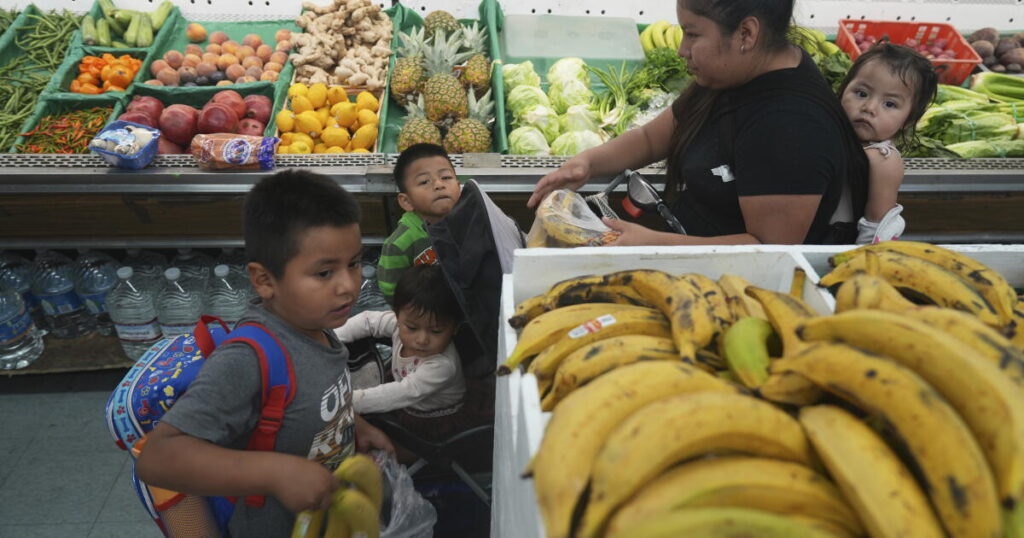
Whether it’s race, geography, neighborhood … it doesn’t really matter what divides, so long as the poor lack compassion for one another. The Supplemental Nutrition Assistance Program, known as SNAP or food stamps, is a favorite target for politicians because they know “poor” can be used to motivate voters. Take Rep. Brandon Gill (R-Texas). This month he introduced a bill that would eliminate the option to use EBT cards in restaurants. SNAP helps about 37 million Americans buy food, mostly groceries — but for people who can’t easily cook, such as those without permanent housing or access to a kitchen, restaurants are the main way to get a hot meal.
This measure is not fiscal policy but political theater, and it may well be effective because many Americans who are struggling to get by will hate the thought of other struggling Americans getting a restaurant meal on taxpayers’ dime. The calculus is cruelly effective: Instead of uniting people to lift everyone up, turn one group of poor people against another so that politicians don’t have to help either group — no relief for the struggling Americans who get by without SNAP, and hurting the people who are even worse off by limiting their food aid. All a politician has to do is get one group worked up about the possibility that members of the other group are freeloading or “cheating the system.”
Are there instances of fraud in the country’s entitlement programs? Absolutely. Regardless, it is cruel to introduce a bill that would take hot food away from homeless people in states like Rhode Island and Illinois as we head toward winter.
Perhaps if the reality of poverty in 2026 greeted him in the mirror each morning or in the school dropoff line or at church every Sunday, Gill would see the inhumanity in what he’s proposing. But this era of Trump Republican politics, built on a false narrative of belt tightening, has found a way to balloon the debt and yet squeeze out more poor people. It is made possible by the vast distance between the increasingly wealthy denizens of Congress and the average American, for whom President Trump’s inflation and tax increases create daily pain.
Before Gill’s legislation, SNAP was already set to kick millions off this month, even as wages fail to keep up with inflation. It cannot be stressed enough that all of this turmoil was initiated by the short-lived Department of Government Efficiency, led by the richest man on Earth.
It is not my point to rant about the ultra-rich or the failing of the current president. This is a question of labor. The wealthy have always tried to get wealthier. What ebbs and flows is workers’ willingness to unite. The common thread among the eras of the Gilded Age, the start of the Great Depression and Reaganomics was labor’s unwillingness to see past differences and come together.
That ultimately is what the midterm elections are going to answer for us. Not whether Trump’s politics will hurt Republicans but whether workers will begin to see one another’s pain as their own.
Sven Beckert, the Harvard historian whose 1,000-page tome “Capitalism: A Global History” came out last year, told me the reason things feel impoverished now is because labor keeps forgetting the abundance around us. “Very few societies in world history have been as rich as the United States,” he said. “That is an enormous opportunity.
“I don’t have the solution, … but we should think about these opportunities that we have. We should also face that it is a very immoral and unethical choice to live in one of the richest countries ever in world history and have people not have enough food, have people not be able to access healthcare, to have people live in terrible housing conditions. This is not necessary. We can address these issues based on the enormous wealth this is at our disposal.”
Like Beckert, I don’t have the solution. But I know finding one begins with finding our shared humanity.
YouTube: @LZGrandersonShow
The post The cruel politics that pit struggling Americans against each other appeared first on Los Angeles Times.