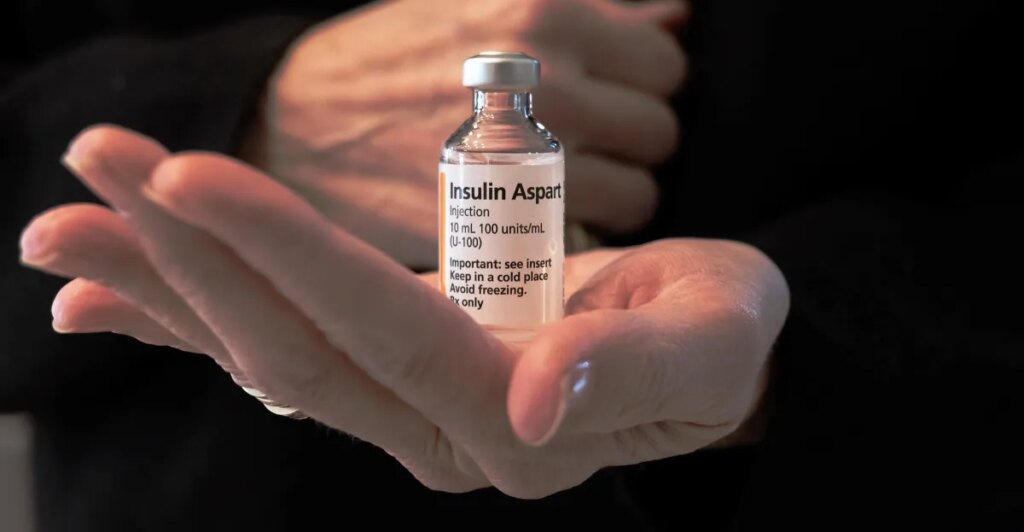
A decade ago, insulin became the poster child for America’s out-of-control drug prices. The 2017 death of Alec Smith, who was rationing his insulin before he died, and repeated price hikes for a 100-year-old medication (the patent for which was originally sold for $1 to a university to prevent it from being exploited commercially) sparked widespread outrage that a lifesaving medication could be unaffordable to the people who depend on it to survive.
And then politicians actually acted. Starting with a Colorado law passed in 2019, states began passing laws capping the out-of-pocket costs for many people who take insulin; 27 states (plus Washington, DC) now have such a policy. Then in 2022, Congress included a provision in the Inflation Reduction Act that established a $35 per month cap on insulin prescriptions for people on Medicare. Given the national response — drugmakers also made splashy public announcements about reducing the cash price that uninsured people pay — you would be forgiven if you thought this was the one health care cost crisis that the US had genuinely managed to solve.
But the diabetes community has a dire warning: It’s not over. Millions of people continue to struggle to pay for their insulin and having their long-term health put at risk because of, in the words of one advocate who put it bluntly, pharmaceutical greed.
“There has been so much attention and promise to action around the insulin price crisis. … There has been so much action,” said Shaina Kasper, executive director of T1 International, a global nonprofit that advocates for people with diabetes. “And shockingly, frustratingly, critically, the data from our 2024 survey showed that the rationing rates were worse than ever. Ultimately we’re facing such immense and monstrous corporate greed. … When we put a Band-Aid on one hole, another one’s going to find a way to pop out and keep profits high.”
Fixing the insulin crisis will require a multifaceted approach: drug pricing reform, insurance mandates, and possibly even public manufacturing. Out-of-pocket caps, Kasper said, were always a temporary fix for a very broken system. There is still a lot more work to do.
Why so many Americans still struggle to afford insulin
Both national and local surveys indicate that the policy changes of the past decade have not had the desired effect.
A study published last year from researchers at the Yale Diabetes Center found that people treated there were rationing insulin at the same rate in 2024 as they were in 2017; about one in four people reported some rationing due to the cost of the drug in both years. When you added in the people who rationed because of insurance delays or supply limits, more than one in three people — 38 percent — were still having trouble keeping this lifesaving medication on hand in 2024. A 2024 T1 International survey likewise found that nationwide, 34 percent of the Americans who use insulin reported rationing the medicine. (About 8.4 million people in the US rely on insulin to survive.)
Dr. Kasia Lipska, an endocrinologist and researcher who treats patients at the Yale Diabetes Center and who co-authored that study, was surprised by their findings.
“I was surprised because I’ve been looking at the policy and advocating for policy change; you think things are moving, they should be really improving,” Lipska said. “But if I talked to the nurses and our staff at the Yale Diabetes Center, they told me, ‘Of course they haven’t changed. We’re still hearing these stories.’”
How could this be? The explanation is multifaceted, according to Lipska and Kasper.
“There’s just still a lot of holes in one who is covered by various protections and then how they’re covered and how they access this,” Lipska said. “It’s not as simple as just showing up at the pharmacy and asking for your insulin, and the sticker price is there, and that’s what you pay. It’s extremely complicated.”
For starters, millions of Americans remain uninsured and have to pay the cash price for drugs. While drugmakers make flashy announcements about helping those people, the process of enrolling for savings cards to get those lower prices can be a nightmare; one congressional investigation found in 2023 that uninsured patients were still paying an average of nearly $100 for insulin despite Eli Lilly’s pledge that its generic product would be available for $25 per vial. Even if you manage to get your discount card, the same investigation found that Lilly introduced several restrictions based on geography and needs, and that the specific insulins that are subject to these voluntary price caps are often out of stock at the pharmacy when people go to fill a prescription (while the more expensive brand name version is consistently available).
And then there are the loopholes in those existing federal and state laws. The federal $35 cap applies only to Medicare; the private insurance that covers half the country is excluded. (There have been bills proposed to extend the cap to private coverage, but they have not gone very far in Congress.) The state laws that do exist typically apply only to small-group and individual plans that are subject to state regulations; larger self-funded plans are exempt from state mandates and currently have no enforced limit on out-of-pocket insulin costs. One national estimate found that around 775,000 people who use insulin and had private insurance were protected in 2025 by the caps in states where they’d become law. But more than 1 million people in those states were not, nor were the 2.1 million commercially insured insulin users in states without a cap.
Sign up for the Good Medicine newsletter
Our political wellness landscape has shifted: new leaders, shady science, contradictory advice, broken trust, and overwhelming systems. How is anyone supposed to make sense of it all? Vox’s senior correspondent Dylan Scott has been on the health beat for a long time, and every week, he’ll wade into sticky debates, answer fair questions, and contextualize what’s happening in American healthcare policy. Sign up here.
Even for people who benefit from the mandatory out-of-pocket caps instituted by Medicare and state laws, some of them still struggle to come up with $35 a month, given all of the other price hikes Americans have faced since the pandemic. They may have to navigate a complex process in order to actually receive the promised discount. And while a $35-per-month cap sounds straightforward, in practice, people can still face higher costs. Each individual person requires a unique amount of insulin and, for some of them, they might need two different kinds; the pharmacy may not have the right version and will make substitutions that lead to higher costs. That’s how one of Lipska’s patients ended up paying $140 per month for his insulin — despite being on Medicare.
“These things really add up…and frustrate people,” she said, “because what seems like a great idea is not actually how things work on the ground.”
The consequence is that, despite all the legislative activity and self-congratulations, millions of Americans are still at risk of serious health problems because they can’t get insulin.
The worst-case scenario is what happened to Alec Smith: Somebody is forced to spread their insulin so thin that they put their life is in danger. When diabetics have their blood sugar spike without insulin on hand, they can go into diabetic ketoacidosis, “which literally means your blood is turning into acid,” Kasper said. “I can speak from experience: it feels like you’re dying.”
To recover from an episode, they may have to go to the emergency room and end up taking even more insulin while eating in order to get their body back to equilibrium. But even short of an emergency, Kasper said, people who resort to rationing insulin can experience significant side effects. Prolonged high blood sugar due to rationing could lead to serious vision and nerve problems that were supposed to be a thing of the past once insulin became available.
Those were the scenarios that lawmakers wanted to prevent as they tried to make insulin more affordable. But they remain a very real threat for too many people.
The big idea that could make insulin truly affordable
If there’s good news to be found, it’s that the advocacy community is not giving up. They are sounding the alarm about the ongoing affordability crisis and urging Congress to act. But they do worry that the issue has become less urgent: The truly comprehensive mandate for insulin out-of-pocket caps, which is typically introduced every Congress, was delayed this time. “This year, neither bill was introduced for over a year, and it was very concerning,” Kasper said.
But they are also placing bets on something much more profound than a price cap: the government itself procuring or even producing insulin and making it available to people at the lowest possible cost.
“This idea that medicines should be for people and not for profit I feel like is really catching,” Kasper said.
Some states are taking baby steps in that direction: Oklahoma passed a bill this year that would offer government funding for private companies that pledge to produce insulin and sell it at a low price.
Others are going bigger. As I reported in 2023, California has launched a program that is eventually intended to lead to government-owned facilities producing insulin to be sold on the cheap, though it will take years until publicly owned production begins. The New York state Senate approved a similar plan this year, although funding for it didn’t make it into the state’s budget. Kasper said that she is optimistic the project will make it into next year’s spending plan, and says a lot of work is currently being done to ensure it happens.
In the future, public manufacturing could also help to address the supply problems that continue to pop up. There are only three insulin manufacturers in the US right now. As those for-profit pharmaceutical companies place more emphasis on GLP-1 production — which often takes place in the same facilities as insulin production — nonprofit initiatives could fill in the gaps.
“In this time of tariffs even, with these concerns around shortages and rising prices and the corporations having this monopoly and price gouging ordinary Americans for decades now, as we’ve seen on insulin, let’s just make it ourselves,” Kasper said.
This is a long-term vision; if you need help right now, T1 International has resources to help people get health insurance, access discount programs, and even find emergency insulin. But a more affordable future for insulin will only be possible if lawmakers feel compelled to act. Public outrage created one round of reform, but the risk of political complacency is real. So if you care about this issue and want to get involved, T1 International also has a tool kit for people who want to advocate for policy changes, including around public pharma.
“The general communication that we’ve been hearing is that the insulin price crisis is over,” Kasper said. “Everyone should have access to a $35 copay for insurance. As the data shows, as we’ve been talking about, that is just not true.”
The post No, insulin still doesn’t cost $35 appeared first on Vox.