This story appeared in Today, Explained, a daily newsletter that helps you understand the most compelling news and stories of the day. Subscribe here.
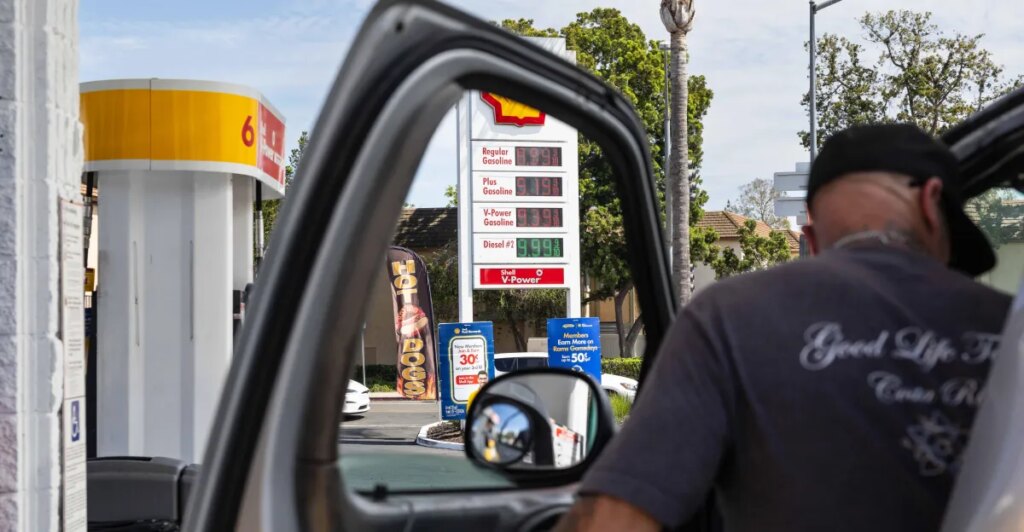
Diesel hit a record $6.40 per gallon this morning, up 73 percent from a year ago. “Not really my problem,” you might be thinking. “I don’t drive a semi or excavator.”
But you know who does drive semis and excavators and all the other machines that rely on diesel fuel? The people who farm your food, ferry your online orders, and repave the streets in your neighborhood. All that means the price of diesel trickles down into virtually every segment of the economy. (We’ll get into that a bit more shortly.)
Like gas prices, diesel has been rising since the US war with Iran began more than six months ago. But this particular surge was also driven by two incidents in particular: an attack on Saudi Arabia’s East-West pipeline, which has made it costlier and more time-consuming to get oil out, and a Ukrainian drone campaign against Russian oil infrastructure, which has forced major refineries to scale back production.
In the aftermath of those attacks, President Donald Trump implored Ukraine to stop targeting refineries. His administration has also relaxed some labor rules for fuel-truck drivers in the hopes of getting more gas and diesel moving.
There’s reportedly also talk of invoking the Defense Production Act to scale up America’s refining capacity, or even restricting diesel exports to help drop domestic prices. Not on the solution list, notably: winding down the war in Iran, which kickstarted this whole thing.
Go a little deeper
The cost of diesel quietly raises the price of many other goods and services. This is difficult to quantify, but researchers at Brown University estimate that the extra cost paid for diesel between the start of the Iran War and the time I’m drafting this newsletter works out to roughly $374 per US household.
Part of that cost springs from the fact that so many commercial, agricultural, and industrial machines run on diesel fuel. At the risk of sounding like one of my toddler’s “things that go” books, the list includes semis, tractors, excavators, freight trains, buses, cargo ships, and garbage trucks — to say nothing of other machines, like heavy industrial equipment and backup generators.
But part of the cost also springs from the fact that demand for diesel fuel is, compared to other goods, pretty inelastic. When the price of regular gas goes up, consumers can cut back on road trips, opt for public transit, or even contemplate an EV purchase.
Diesel-dependent industries frequently lack those options, however. As one fuel industry analyst put it in a recent column for the trade publication Oil & Gas 360, a farmer halfway through the harvest — as many are right now — can’t just stop running a combine or tractor because diesel gets pricey.
In other words, it’s difficult for businesses to avoid or offset the higher cost of fuel. And that makes it more likely that they’ll pass on the cost to consumers, even if they’re able to absorb it for a little while.
Where will you likely see those added costs first? Your grocery bill, for one. Look for price increases on highly perishable products that travel long distances, like milk, meat, fruits, and vegetables.
One link for later
➨ Gossip more ethically. Talking about other people is interesting, common, and — often! — quite fun. But it’s neither very kind, nor particularly moral, to reduce your acquaintances to conversational trading cards. So when you gossip, consider whether your story affords its subject “the concern and respect” you’d expect yourself. If not, try a safer conversational topic: stories about your own experiences.
Before you go…
- Did you know…that “money dysmorphia” is a real (and common!) cognitive bias? It describes the irrational feeling that money is tight, when you’re actually — on paper — doing just fine.
- Today’s trivia: What is the name of the nursery rhyme character referenced in the movie Shrek’s interrogation scene? (You can find this and other brain puzzles in Vox’s daily crossword. Look for the answer in tomorrow’s edition.)
- Yesterday’s trivia: Yesterday we asked you for a large marine mammal that recently died at a US aquarium. That would be the whale — specifically, the beluga. Three beluga whales died in an eight-day span at Chicago’s Shedd Aquarium in August.
The post The overlooked factor making everything more expensive appeared first on Vox.