Starting Friday, immigrants trying to become lawful permanent residents could be rejected if they or certain relatives use public benefits such as Medicaid, food stamps or even student financial aid.
Green card holders are allowed to live and work in the United States permanently, and obtaining the status is the final step toward citizenship. The policy is the Trump administration’s latest effort to restrict legal immigration and deter people from signing up for welfare programs.
The administration installed a similar policy during the president’s first term but was later blocked by the courts. This week, a coalition of more than 20 states and several local governments sued the administration over the new version, calling it a “catastrophic” move that would force families to make the difficult choice between accepting public assistance to meet their basic needs or risk deportation in the future.
The Department of Homeland Security’s own estimate found that the policy could result in about 950,000 people choosing to unenroll from, or forgo enrollment in, public assistance programs.
Here’s what to know about the policy, called the “public charge” rule.
What is the public charge rule?
Since 1882, the federal government has barred immigrants from obtaining green cards if they are deemed likely to become a “public charge,” or dependent on the government for subsistence. Immigration officers are allowed to consider factors like a person’s age, health and financial status.
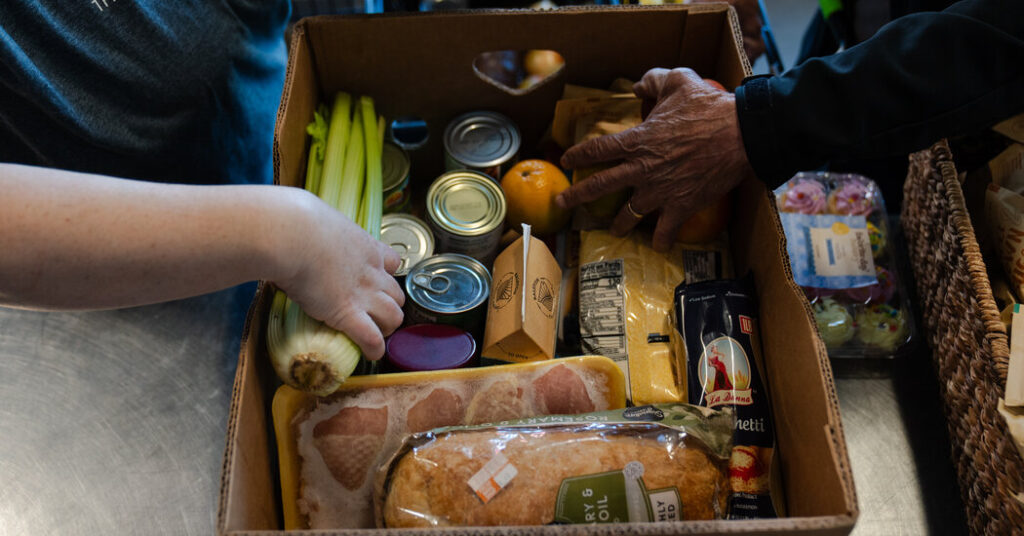
Immigration officers have long only considered the use of institutionalized long-term care and cash assistance programs, such as Temporary Assistance for Needy Families, which provides direct payments to low-income families with children. But they have not typically considered the use of programs like food stamps or Medicaid, which provide benefits but not direct cash to families.
How is the Trump administration changing the rules?
The new policy expands the types of public benefits that immigration officers can take into account before deeming people likely to become dependent on the federal government. Still, it is vague about which public benefits could lead immigration officers to reject green card applicants.
Guidance issued last month said that officers could consider the use of “means-tested public benefits,” including housing assistance, food stamps, financial aid for college and other similar benefits. Immigration policy experts said the lack of specificity means officers could be empowered to consider a wider range of public assistance, including Medicaid and certain free school lunch programs.
“This is a really significant change,” said Julia Gelatt, associate director of the U.S. immigration policy program at Migration Policy Institute, a nonpartisan think tank. “Now there’s so much room for interpretation. It’s bound to create more misunderstandings and more fear in immigrant communities.”
Immigrants without green cards already cannot access most public benefits programs. But the new policy has spurred concerns that parents with U.S. citizen children, for instance, could turn away from public benefits programs for which their children are legally eligible, out of fear they could be denied green cards in the future.
Trump administration officials have said the change is necessary to protect public resources and to restore “the basic principle that immigrants must be able to support themselves.”
Why is this happening now?
The administration imposed a similar policy during President Trump’s first term that was met with a raft of legal challenges. A federal judge ordered the administration to vacate the policy in late 2020, saying it exceeded the authority of the executive branch and citing “numerous unexplained flaws” that made the rule “arbitrary and capricious.” The policy was eventually reversed by the Biden administration.
It remains to be seen whether the new rule will survive. The states and cities seeking to block the policy argue that it would harm immigrant families. They also argued that the change would cost state and local governments billions in federal funding as more people turn away from public benefits programs.
Who does the rule apply to?
The new policy would apply to immigrants already inside the United States who are applying for green cards, including skilled workers and spouses and children of U.S. citizens. The administration carved out many exceptions for certain immigrants who will not be subject to the new policy, including refugees, people granted asylum and Afghan nationals employed on behalf of the U.S. government.
How will the change affect immigrant families?
Advocacy groups and Democrats say the new policy will create hardships for immigrant families, causing them to withdraw from public benefits they rely on.
After the first Trump administration tried to impose a similar policy, nonprofits reported a steep drop in food stamp enrollment among immigrant families. Researchers also estimated that thousands of children were removed by their parents from nutrition and health care programs after the announcement of the rule.
“President Trump is giving individual immigration officers sweeping discretion to deny green cards based on nearly any use of public benefits,” said Maddie Geschu, the director of policy and advocacy at the Protecting Immigrant Families Coalition. “We’ll see families across the country fearing that seeking help today could jeopardize their or their family members’ immigration status in the future.”
The post How Trump’s New Green Card Policy Could Affect Immigrant Families appeared first on New York Times.