This year, the Television Academy moved a handful of awards out of the main ceremony to make room for more skits, musical performances and other bits of ostensible entertainment in the telecast.
It might be rethinking that strategy on Tuesday after seeing what the producers did with that extra time. The “S.V.U.” star Mariska Hargitay, a surprise pick for host, was game and enthusiastic, but the material the writers saddled her with was flat when it wasn’t terminally cringey.
The awards themselves were more enjoyable, with likable performers like Jean Smart, Allison Janney and Matthew Rhys making Emmy history and Stephen Colbert giving a graceful goodbye. A fun freshman show, the Apple TV horror-comedy “Widow’s Bay,” nearly ran the table on the comedy side.
Maybe next year the Emmys will give us more, uh, Emmys? Here are some of the best and worst moments of the night. — JEREMY EGNER
Best demographic trend: Thriving veteran actresses
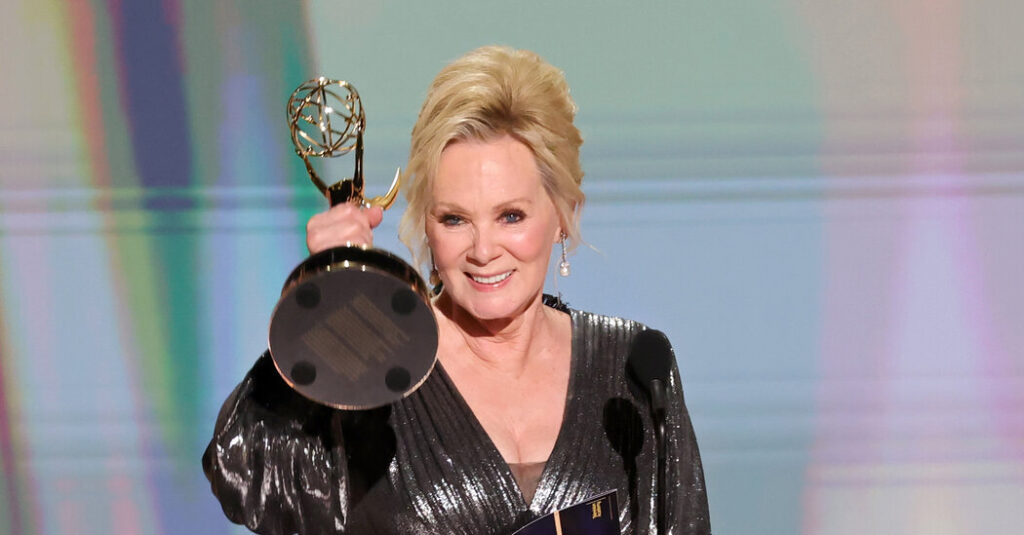
Jean Smart was expected to make history at the Emmys. She did. Her win, for the fifth and final season of “Hacks,” tied her with Julia-Louis Dreyfus and Cloris Leachman for the most prime-time acting Emmys for any performer, with eight. And her streak, an award for every year of “Hacks,” set another record.
But perhaps the evening’s biggest surprise was a supporting acting win for Allison Janney for “The Diplomat.” That trophy took Janney’s acting total to eight, tying the others. Even Janney seemed shocked.
“I have to tell you this was not what I planned for this category at all, and I’m very surprised and very, very grateful to be here,” she said.
Smart is 75. Janney is 66. They led the way in a banner year for women 40 and over, including acting wins for Linda Cardellini (for “DTF St. Louis”), Sally Field (“Remarkably Bright Creatures”), Rhea Seehorn (“Pluribus”) and Betty Gilpin and Kate O’Flynn (both for “Widow’s Bay”). Shailene Woodley, who won a guest acting award for “Paradise,” was at 34 the youngest woman to win an acting Emmy this year.
“What a ride this has been,” Smart said as she held her trophy. How sweet to know that the ride can last so long. — ALEXIS SOLOSKI
Best delayed reward: Justice for Rhea Seehorn
What did Rhea Seehorn have to do to win a flippin’ drama actress Emmy? It turns out just about everything.
That’s what Seehorn, criminally spurned for “Better Call Saul,” did in “Pluribus.” Her starring role, as the unhappiest woman on Earth and one of the few unscathed by an alien invasion that joined humanity into a creepy hive-mind, required her to carry the bulk of the series. It was often a solo performance, sometimes a silent-movie-like role and often one of the most delicious comic performances of the season.
She practically had to become the last woman on Earth to win, but fortunately she only played that role on TV. — JAMES PONIEWOZIK
Best surprising Emmy trend: Originality
As a critic, I spend a lot of my professional life describing new series to people. But sometimes the highest praise I can give is to say, “I can’t entirely explain what this show is, but you need to watch it.” It’s a good season if you get one of these, and this season three of them got Emmy recognition.
“Widow’s Bay” blended horror and comedy, a combination that TV has sometimes attempted but not while executing the scares and the laughs equally effectively. “Pluribus” was eerie and comic in an entirely different way, turning an alien invasion-of-the-mind-snatchers premise into a philosophical investigation of the necessity of unhappiness to the human condition. (As well as, maybe, an unintentional but apt parable for A.I.) And “DTF St. Louis” was a stealth operation, arriving as what seemed like a sex-driven suburban murder mystery and unfolding into a sweet study of platonic love, marital melancholy and male loneliness.
Each of these shows began as a flash of light in a writer’s mind, so it was gratifying that each won an Emmy for writing. — JAMES PONIEWOZIK
Best double play: Matthew Rhys
Matthew Rhys is a beast after all.
Rhys made history on Monday by becoming the first person to win two lead acting Emmys in one night. He took home prizes for the Netflix crime thriller mini-series “The Beast in Me” and the Apple TV horror-comedy hit “Widow’s Bay.”
The wins gave him a historic trifecta: He is the only person to have won lead acting Emmys in the drama, comedy and limited series categories. He laid the foundation for his feat in 2018, when he won the drama statuette for playing a deep-cover K.G.B. agent in “The Americans.”
“This is a real shock, not least because of the caliber and company of the actors in this category,” Rhys said as he accepted his award for “The Beast in Me,” which earned nine nominations and co-starred Claire Danes.
Rhys played the mayor of a haunted island community in “Widow’s Bay,” which won 14 Emmys, including best comedy. In his speech, Rhys thanked the show’s creator, Katie Dippold, and extended gratitude to his family.
“My parents, they just kicked me onto a stage from a very early age,” he said. “My sister, who’s here tonight — turns out she was the brains of the outfit all along. Thank you for all the sage words and patient, patient listening.” — MALIA MENDEZ
Worst outside-the-box hire: Mariska Hargitay
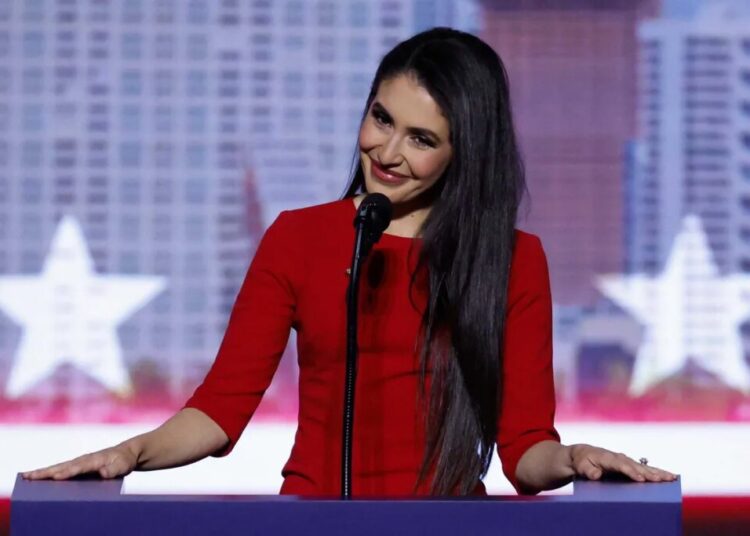
Typically, the Emmys bring on a comedian or late-night host as M.C. This year, the ceremony recruited Mariska Hargitay, a celebrated dramatic actress and the star of the NBC stalwart “Law & Order: Special Victims Unit.” Maybe someone should have a conversation with H.R.
Last year, Nate Bargatze and his charity jar tanked. Somehow this year’s approach was even more criminal. The victims? Everyone watching at home. Special? In all the wrong ways.
Hargitay, abetted by some very sweaty joke writing (Dick Wolf’s real name: Richard Penis), floundered. An opening sequence, with a cameo from a steamer-clutching Jalen Brunson, turned into a musical parody set to the tune of “I Love Rock ‘n’ Roll.” That was followed later by a strained sketch about first jobs, then by an endless “S.V.U.” riff with a mystifying appearance by Taylor Swift and her cat. A second song parody, set to “Goodbye Stranger,” ensued. The Emmys relegated guest actor awards to an earlier evening for her “Game of Thrones” bit?
Hargitay is a television darling, but her character, Olivia Benson, would have cuffed her for this. — ALEXIS SOLOSKI
Best tease: John Mulaney’s award intro
The comedian John Mulaney brought a jolt of life to the broadcast when he used his intro for the best actor in a drama award to crack sharp jokes about Hollywood’s history of gender discrimination.
“This is the best part of the night,” Mulaney said. “Lead actor in a drama — this award is for the guys. Finally, something for the fellas.”
He even came armed with a prop, whipping out a copy of the 2006 book by the “Sopranos” actor Frank Vincent, “A Guy’s Guide to Being a Man’s Man.” (Excerpt: “If he doesn’t treat everyone around him with respect and class, he’s not a real man’s man. He’s just a jabroni in a good suit.”)
His bit drew hearty laughs from the crowd — although the joke that drew perhaps the most laughter was censored. Viewers could be forgiven for wondering: Can he host the ceremony next year? — SARAH BAHR
Best tribute: Reba McEntire honoring Dolly Parton
As expected, Dolly Parton, who died in August, was part of an emotional In Memoriam segment that included extended homages to Rob Reiner and Catherine O’Hara and tributes to Tim Curry, Hayden Panettiere, Bob Mackie and other Hollywood luminaries. (But not Robert Redford, Diane Keaton or Chuck Norris.)
But Parton also received her own dedicated tribute from Reba McEntire, another beloved country music superstar, who shared a decades-long friendship with Parton in which they sometimes sang and acted together. McEntire performed one of Parton’s songs, “Appalachian Memories,” a ballad about the region’s cultural heritage.
Sally Field, one of Parton’s co-stars in “Steel Magnolias,” opened the segment by sharing how much she adored the country icon, who Field said was not only genuine and supportive, but also “blisteringly funny.” Then McEntire took the stage with a full band and sang as images of the Appalachian Mountains and Parton rolled behind her.
She ended the song by saying, “I love you, Dolly.” — DERRICK BRYSON TAYLOR
Worst clock management: The pacing
The producers of this year’s Emmys were determined to bring the show in on time — so much so that they shunted off several awards to secondary ceremonies held earlier.
What did that leave room for? A bunch of clunky sketches and regrettable song parodies, and it all led to a closing that … dragged … out … interminably as the program seemed to run out of awards well before it ran out of time.
The climax came with the final presenters, Woody Harrelson and Matthew McConaughey, offering a rambling explanation of the premise of their new Apple comedy, “Brothers.” At one point, McConaughey said they had been told to stretch out the gab because the show was running short.
I would — almost — like to apologize to every awards show I’ve ever complained about for running long. — JAMES PONIEWOZIK
Best goodbye: ‘The Late Show With Stephen Colbert’
In a celebratory capstone, “The Late Show With Stephen Colbert” captured the Emmy for outstanding variety series after ending its run in May.
“Thank you so much on behalf of the over 200 people who threw themselves at this show for 11 years to try to do the best show they possibly could for you,” Colbert said in accepting the award.
“The Late Show,” which also won last year, topped a crowded field that included “The Daily Show,” “Jimmy Kimmel Live!,” “Last Week Tonight With John Oliver” and “Saturday Night Live.”
CBS said that it had canceled “The Late Show” for financial reasons and that the show was losing tens of millions of dollars a year as advertising for late-night television dried up. Many suspected that political calculations were also involved. Paramount, CBS’s parent company, was closing a multibillion-dollar merger with the movie studio Skydance at the time. President Trump was often criticized on the show, and the deal required the Trump administration’s approval to proceed.
Colbert has generally declined to bemoan his fate or openly criticize Paramount. He struck a similar note of grace and modesty on the Emmy stage.
“We hope you enjoyed the show,” he said. “We had a great time doing it for you. That’s it. Thank you.” — JONATHAN ABRAMS
The post Best and Worst Moments From the 2026 Emmy Awards appeared first on New York Times.