Elaine McCusker, former acting undersecretary of defense, is a senior fellow at the American Enterprise Institute, where Brady Africk is a research analyst.
The proliferation of satellite imagery is changing the way militaries fight. Once sparsely populated, low Earth orbit is now crammed with satellites owned, operated and accessed by many countries — including America’s adversaries.
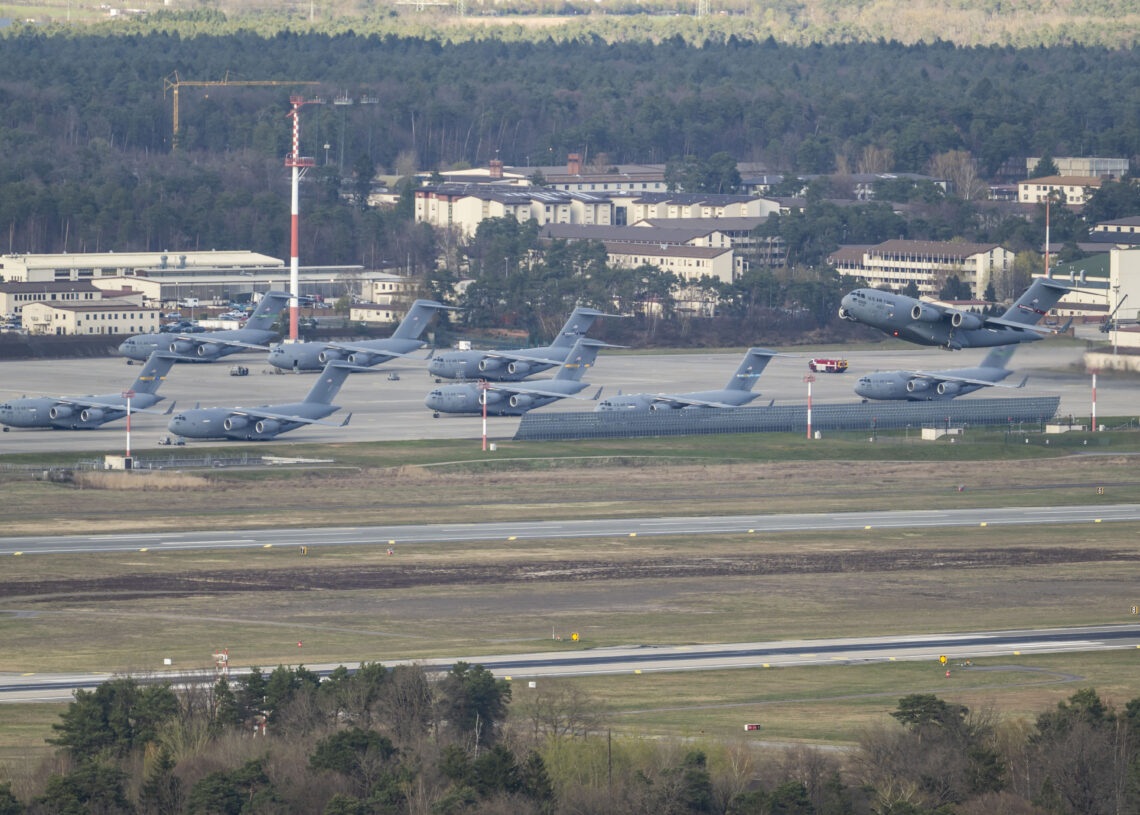
The images captured by these satellites are exposing more of the battlefield than ever before, turning unprepared bases into vulnerabilities. Even clouds no longer offer protection, as radar-based imagery allows satellites to pierce an overcast sky. In March, Iran successfully targeted American bases and embassies in the Middle East with the help of a satellite reportedly bought in secret from China in 2024. The strikes killed and injured U.S. service members at multiple bases and destroyed troop housing, hangars, radars, aircraft and other equipment. When deciding how and where to build bases and facilities, U.S. defense planners must design them for a reality where adversaries can observe and target military assets from space.
According to the Space Data Navigator at the American Enterprise Institute, where we work, there are about 16,800 satellites in orbit today, more than 10 times the number from a decade ago. Most of them don’t take pictures of Earth, instead serving communications functions or other purposes. Many that take photos capture blurry, low-resolution images used for tracking weather or agriculture. On a clear day, these images can easily reveal the locations of aircraft and other military equipment on the ground.
At Prince Sultan Air Base in Saudi Arabia, a major hub for the U.S. Air Force, Iran’s March strikes damaged five American refueling aircraft and destroyed a command-and-control plane on the ground. These planes will cost hundreds of millions to repair or replace. Iran also targeted expensive radar systems in Jordan, the United Arab Emirates and Kuwait, prompting the United States to rush replacements to its bases and partners in the region. In Bahrain, the damage to American naval facilities was so severe that it may impact strategic, operational and tactical decisions in the region for years.
It’s a pattern that has played out across the Middle East. Losing equipment in war is inevitable, but defense planners can do more to protect it from advanced technology. The U.S. should learn the lessons demonstrated by Iran’s recent strikes before more devastating consequences come from a future conflict.
The U.S. military recognizes the power and risks posed by the proliferation of commercial satellite imagery. As far back as 2001, the U.S. was purchasing exclusive rights to commercial satellite images to keep them from adversaries. The range of providers today makes that solution infeasible, and the U.S. also benefits from it. That same breadth of industry allows the U.S. to better track everything from China’s naval fleet to airstrips used by drug traffickers.
This new reality should permeate every layer of American defense planning, including how the U.S. builds bases, repairs facilities and positions equipment and personnel. Russia and China are building hardened aircraft shelters en masse, recognizing the danger satellites pose when combined with missiles or drones.
The U.S., meanwhile, routinely leaves its expensive high-end aircraft parked out in the open. While American bases have complex air defenses and early-warning systems, waning munitions stockpiles make total reliance on those defenses a bad bet. Combined with necessary advances in affordable counter-drone interceptors, hardened structures can mitigate damage and provide a barrier between an aircraft and an enemy satellite’s eyes in the sky. Advanced defenses can create a shell game, turning a confident strike plan into an expensive guess.
When it comes to the rest of a base, stationary facilities, like command-and-control centers, can be placed underground, while concrete barriers and hardened buildings can better protect others that need to be on the surface. These practices will not replace air defenses, but as new drones and missiles make the sky more contested, modernizing protection and deception on the ground is a responsible choice. The proliferation of satellite imagery has forced militaries to hide what they can, and protect what they cannot, in places farther from front lines than ever before.
On today’s battlefield, the United States has to fight like everyone’s watching.
The post There’s nowhere to hide on the battlefield anymore appeared first on Washington Post.