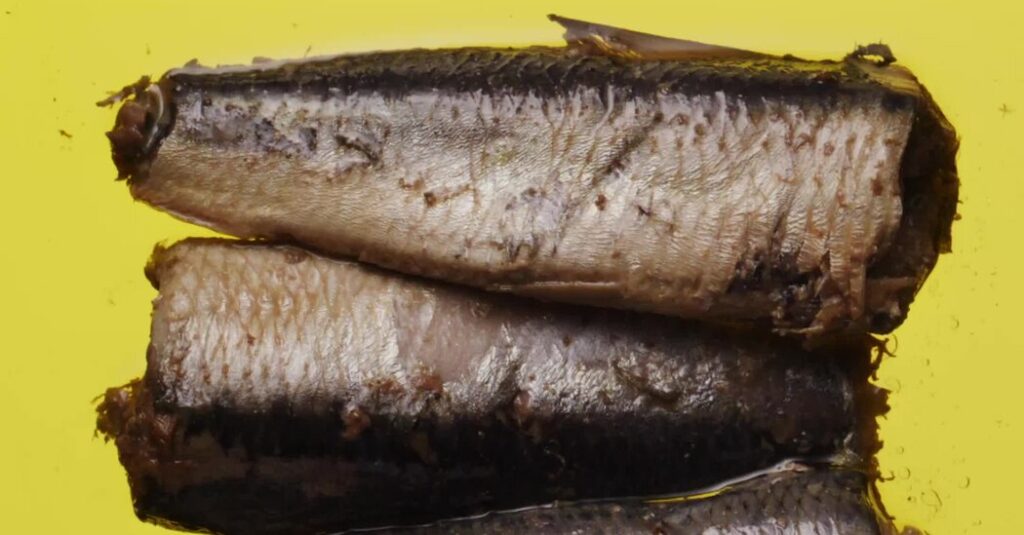
Sardines don’t often get the love they deserve.
They have a perceived “ick factor,” said Celine Beitchman, the director of nutrition education and a chef instructor at the Institute of Culinary Education in New York City, but in reality they are “convenient, super nutrient-dense, budget friendly and neutral tasting.”
You can buy fresh sardines and eat them filleted, but they’re more commonly consumed from a tin. Here’s what sardines have to offer, along with recipes from New York Times Cooking.
They help build and maintain healthy bones.
Tinned sardines are eaten whole, including the bones, which are partially dissolved and softened by the canning process.
“Before you let that image ruin sardines forever,” that’s what makes them rich in calcium, which is essential for maintaining bone health, said Abby Chan, a dietitian in Flagstaff, Ariz. Sardines also contain vitamin D, which helps the body absorb calcium.
One can of sardines (the standard serving) has about 350 milligrams of calcium and 4 micrograms of vitamin D — about a third the amount of each nutrient that most adults need daily.
It is possible to cook fresh sardines until the bones melt, “but that requires a lot of patience,” said Heitor O. Santos, a dietitian and visiting professor of nutritional sciences at the Federal University of Paraíba in Brazil who has studied sardines’ health benefits. Typically, people remove the bones in fresh sardines, so they get the vitamin D, but not the calcium.
They’re heart healthy.
Sardines are an essential part of the Mediterranean diet and richer in omega-3 fatty acids than many other fish. Omega-3s can lower blood pressure, improve cholesterol, fight inflammation and reduce the risk of heart disease, said Jacqueline Vernarelli, an associate professor of public health at Sacred Heart University in Fairfield, Conn.
In one small Spanish study of older patients with prediabetes, eating 200 grams (about two cans) of sardines a week for a year was linked to reduced blood pressure and increased HDL, or “good,” cholesterol.
The American Heart Association recommends eating fatty fish — such as sardines, mackerel, tuna or salmon — at least twice a week for cardiovascular health. Since they are small, sardines don’t accumulate concerning levels of mercury, making them a safe choice.
They have good amounts of iron and protein.
Many Americans don’t get enough iron, especially women of reproductive age and people who don’t eat meat. The body uses iron to make hemoglobin, a protein in red blood cells that carries oxygen to your organs. A can of sardines contains almost 3 milligrams of iron — more than a third of what most adult men need in a day, and a sixth of what most adult women require (pregnant women need even more).
With around 20 grams of protein per can, a serving of sardines gets most people to about a third of their daily protein needs, “as long as you’re not a bodybuilder,” said Ms. Beitchman, since heavy lifting can require a higher protein intake.
Sardines are also rich in vitamin B12, which is important for making red blood cells and for nerve and muscle function. The 8 micrograms per serving can easily satisfy most adults’ daily requirement.
What’s the best way to eat them?
Fresh sardines take some work, said Dr. Santos, who admitted he hasn’t mastered deboning them. But including tinned sardines in your diet requires “exactly zero culinary skill beyond opening a can,” Ms. Chan said.
People who are concerned about their salt intake should check the labels on canned sardines because some can have up to 500 milligrams of sodium per tin. The American Heart Association recommends eating no more than 2,300 milligrams a day.
Ms. Beitchman said she keeps tins of sardines in her office for busy days when she isn’t able to break for lunch. “I’ll eat it right out of the can with a little bit of cracked pepper and salt,” she said.
Want to eat more sardines? Here are some recipes from New York Times Cooking.
Greek Salad With Sardines and Beans
Sardines and white beans transform this refreshing salad into a protein-packed main dish, without turning on the stove.
Recipe: Greek Salad With Sardines and Beans
Broiled Sardines With Lemon and Thyme
Milder in taste than canned ones, fresh sardines need only a quick run under the broiler to cook through and brown the skin to a delicate crisp.
Recipe: Broiled Sardines With Lemon and Thyme
Grain Bowl With Sardines and Sauce Moyo
The tangy blend of tomatoes and peppers in this no-cook sauce from West Africa balances the savory richness of tinned sardines.
Recipe: Grain Bowl With Sardines and Sauce Moyo
Sardine Toasts With Tomato and Sweet Onion
All you need to enjoy the sea-saltiness of tinned sardines is buttered toast. Add garlic, tomatoes, onion and basil and you have dinner.
Recipe: Sardine Toasts With Tomato and Sweet Onion
Sizzled Scallion Rice With Sardines
With the Caribbean seasonings of chile, thyme and vinegar, this is an utterly delicious one-pan meal.
Recipe: Sizzled Scallion Rice With Sardines
The post How Healthy Are Sardines? appeared first on New York Times.