Until recently, Star Sabga spent her days making artisanal cheese and ranting about politics over the phone with her niece.
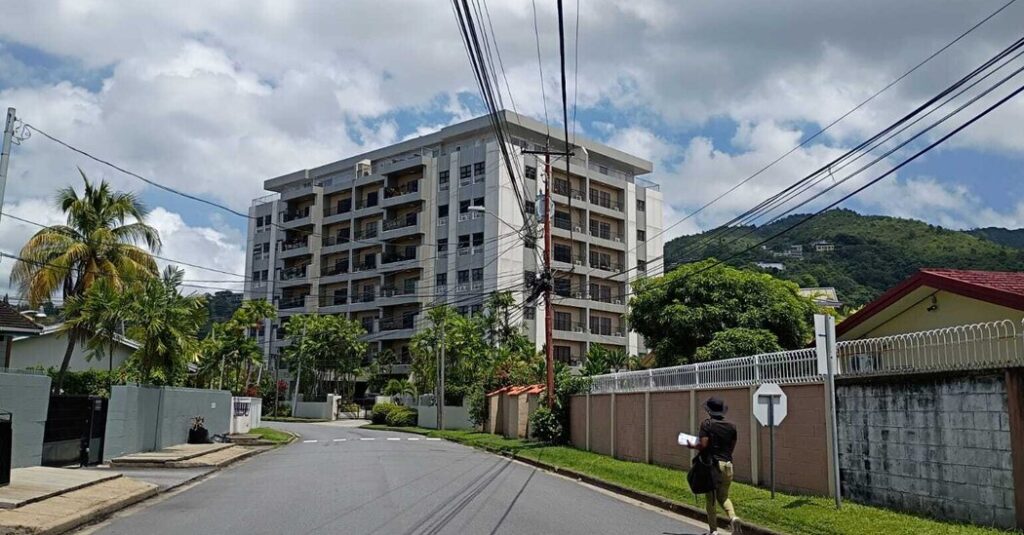
Ms. Sabga, 69, lived in a luxury seaside apartment in a suburb of Port of Spain, the capital of Trinidad and Tobago. Her niece, Genevievre Hadeed, and her niece’s husband, a bottled-water magnate named Dominic Hadeed, helped cover her costs.
But in June, that peaceful lifestyle was upended when police officers detained the Hadeeds and Ms. Sabga, accusing them of plotting to assassinate the prime minister.
The Hadeeds were held without charges for nearly a month, and Ms. Sabga for more than two months, under Trinidad’s state of emergency, a measure in place almost continuously since 2025 in response to rising violent crime, according to officials. The state of emergency allows authorities to carry out warrantless searches and detain people indefinitely without charges.
The detentions gripped the Caribbean nation, setting off a national debate about the government’s use of surveillance and preventive detention. The saga also exposed racial and political friction surrounding Trinidad’s Middle Eastern-descended minority, to which Ms. Sabga and the Hadeeds belong.
Kamla Persad-Bissessar, the prime minister, did not respond to questions about the cases of Ms. Sabga and the Hadeeds. But she defended the state of emergency, saying to reporters on Thursday, “It is very clear that the crime stats are down.” She added, “Maybe it’s not the best thing to do, but it was very successful.”
Governments around the region have increasingly turned to severe tactics in response to surging rates of violence. In El Salvador, more than 90,000 people have been detained, and nearly 500 have died in state custody, amid a four-year state of emergency, according to Amnesty International. Honduras and Jamaica have also used states of exception, during which certain rights are suspended amid an emergency, to the alarm of human rights groups.
Sandra Pellegrini, the Latin America regional team lead at Armed Conflict Location & Event Data, or A.C.L.E.D., a U.S.-based nonprofit organization that monitors conflict and protest data, has studied the use of emergency powers in the region. She said any reductions in crime have often been short-lived and come at the cost of civil liberties.
“Whether you’re a criminal or not, you’re still supposed to be able to access a fair trial,” she said, noting that protesters and government critics have at times become targets under law enforcement agencies with weakened restrictions.
Before his legal saga made headlines, Mr. Hadeed had been known as a critic of the administration. He criticized its tax policies in a public forum in March and objected to the government’s decision to cancel a lease for land his businesses had operated on since 2007. The Hadeeds were also known as prominent members of Trinidad’s Syrian-Lebanese minority group.
The nation is split almost evenly between Afro-Trinidadians, many of whom are descended from enslaved Africans, and Indo-Trinidadians, who trace their roots to indentured workers from India. Many people also have mixed heritage, and several prominent minority groups exist, including the Syrian-Lebanese.
Middle Eastern-descended Trinidadians have historically been associated with the People’s National Movement, currently the country’s main opposition party, and a notable number of successful businesspeople in the country are of Syrian-Lebanese descent, according to Sam Salloum, a Trinidadian businessman who is part of the community.
Politicians in the United National Congress, the governing party, frequently criticize the economic dominance of the Syrian-Lebanese community — often referred to as “the 1 percent” — and accuse them of political corruption and organized crime.
In June, the attorney general, John Jeremie, issued warnings to the ethnic minority during a motion to extend the nation’s state of emergency. He called them a “gang” that had “taken over” the opposition party.
Members of Parliament enthusiastically thumped their desks, punctuating Mr. Jeremie’s remarks.
Mr. Jeremie also confirmed that some Syrian-Lebanese people have had their U.S. visas revoked. He denied his government’s involvement in those decisions, but implied that U.S. intelligence agencies had flagged them for criminal ties. (The Hadeeds’ lawyer confirmed that their visas were among those that were revoked.)
Ms. Sabga read about Mr. Jeremie’s comments in the next day’s newspaper, according to court documents. Angry, she called her niece, Ms. Hadeed, to vent her frustration with how her community was being treated.
Less than two weeks later, just after dawn on June 24, the Hadeeds were startled awake when police officers, some with machine guns, swept into their home, according to affidavits by the Hadeeds. Officers declared they had a search warrant and seized electronic devices, including those of the Hadeeds’ three children.
It was not until Mr. Hadeed was separated from his wife and detained for multiple days that he was given a reason for the arrests: The Hadeeds were accused of plotting to assassinate the prime minister and other government leaders and of fostering ties to transnational crime.
Mr. Hadeed was “numb with shock, disbelief and horror,” he wrote in an affidavit denying the allegations. He later learned that Ms. Sabga, his wife’s aunt, had also been detained.
“The entire community was in shock,” said Mr. Salloum, who knew Ms. Sabga and the Hadeeds. He said the community knew Ms. Sabga primarily for selling shanklish cheese, balls of fermented and strained yogurt covered in seeds and spices.
Mr. Salloum dismissed the idea that Ms. Sabga could be at the center of an assassination plot, saying she wouldn’t even spray a bug. “She gonna cry for the cockroach,” he said.
The Hadeeds and Ms. Sabga denied the accusations. Through their lawyer, they declined interviews.
In an affidavit, Mr. Hadeed said he suffered from medical conditions that were exacerbated in prison. Ms. Sabga and Ms. Hadeed were held in a women’s prison, where they said in affidavits that they were subjected to strip searches and filthy lodgings with no privacy, even to relieve themselves.
In the following weeks, court records revealed that a central piece of evidence in the case was a recording of the June 11 phone call between Ms. Sabga and Ms. Hadeed, which authorities had intercepted. To date, authorities have not explained why they had tapped the call in the first place, saying only in court documents that security agencies were specially trained to monitor “persons of interest.”
Roger Alexander, the homeland security minister, cited 13 written excerpts from Ms. Sabga’s impassioned conversation with her niece. Ms. Sabga used a slur against the prime minister, an Indo-Trinidadian woman, and called her “a target.”
“Somebody’s getting a bullet in their head,” Ms. Sabga had said. “What has to happen for this to cool down is the death of one of her members of Parliament.”
Mr. Alexander, who did not respond to requests for comment, wrote in a court document that those statements were part of “a developing plot or chatter pointing to threats to the life of persons in public life.” He said the authorities had worked with U.S. “partner agencies” and found that the Hadeeds and Ms. Sabga had connections to criminals, to whom they could “communicate deadly intent.”
The U.S. authorities, including the F.B.I., the Drug Enforcement Administration and the International Law Enforcement division of the Department of Justice, did not confirm or deny any criminal investigations involving the Hadeeds or Ms. Sabga.
The intelligence that authorities relied upon to detain the Hadeeds and Ms. Sabga was called into question when a local news outlet posted a leaked recording of the full 15-minute call in July. The recording showed Ms. Sabga had been privately venting her frustrations about what she saw as a political attack on her community, which she insisted was not involved in criminal activity.
The leak sparked intense and wide-ranging reactions.
Many condemned Ms. Sabga’s use of slurs against the prime minister, for which Ms. Sabga expressed regret in an affidavit — though she said her comments had been “wickedly twisted out of context.” Others saw the recording as discrediting the government’s claims of an assassination plot. The call did not involve Mr. Hadeed, raising questions about why the authorities detained him.
After a month in detention, the authorities released the Hadeeds and revoked their detention orders. A video on social media showed Mr. Hadeed returning to his office, hugging and kissing his employees and saying, “I missed you all.”
In July, Ms. Sabga was released from prison but was ordered to remain confined to her home. According to court documents, she was barred from leaving her apartment and her contact with family was severely restricted. In an affidavit, she described armed, camouflaged officers guarding her building.
On Thursday, more than two months after Ms. Sabga was detained, authorities released her from house arrest and revoked her detention order. On Friday, when local reporters asked Mr. Alexander about Ms. Sabga’s release, he compared her case to the search for the killer of Tupac Shakur, the American rapper.
“Tupac Shakur was shot in 1996, and the person was only charged this year,” he said, implying that the state’s investigation into Ms. Sabga would continue after her release. “It’s not over till it’s over,” he added.
The state of emergency is scheduled to expire this week, and hundreds of detainees are set to be released. Many, like Ms. Sabga and the Hadeeds, have not been charged with any crime.
The post She Bashed the Government on a Private Call. Then She Was Detained for Months appeared first on New York Times.