The Serious Newsperson cast of correspondents was different — goodbye, Scott Pelley; hello, Ross Douthat — and the production values seemed glossier, a little more Vice News than Huntley-Brinkley Report.
But for all the Sturm und Drang that has surrounded “60 Minutes” since the arrival of CBS News’s high-profile editor in chief, Bari Weiss, the version of America’s most watched news program that returned to CBS on Sunday looked a lot like the show viewers have come to expect.
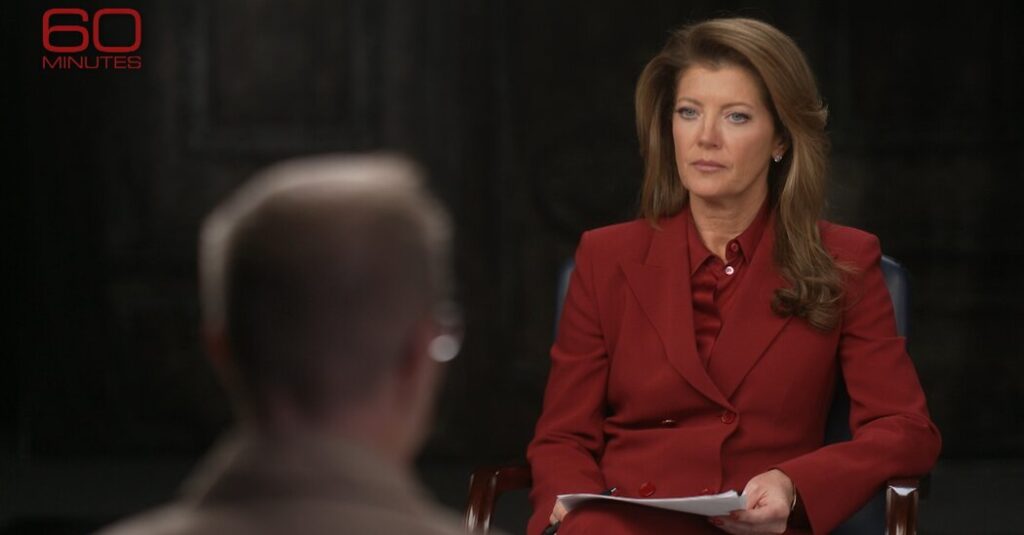
Norah O’Donnell landed a gripping interview with an Air Force colonel who recounted his harrowing rescue from behind enemy lines after being shot down over Iran. Lesley Stahl presented an investigation into middlemen who charge large sums to lobby for presidential pardons. A lighter segment profiled Sean McVay, the coach of the Los Angeles Rams.
There were some changes. The pardon segment revived the use of a hidden camera, a once-common technique at “60 Minutes” that had dwindled in recent years. The show’s signature ticking stopwatch received a makeover, and the “book” graphics that used to appear behind correspondents were replaced with sleek screens.
And for those wondering how the new season would treat President Trump, the program referred to the war in Iran as “costly and unpopular,” and said he had pardoned “a string of unrepentant financial con men,” as well as “rioters” at the United States Capitol on Jan. 6, 2021.
The formula of politics, sports and accountability journalism was the same mix that has frequently kept “60 Minutes,” 59 seasons in, among the 10 most watched network shows of the week.
Off-camera, however, the season premiere came after a period of wrenching change at the program that threatened its reputation.
Ms. Weiss purged the program’s senior leadership this year, and many star correspondents, including Mr. Pelley and Anderson Cooper, either quit or were forced out; Mr. Pelley accused her of “murdering” the program, an incident that led to his dismissal. Some of those who exited said Ms. Weiss tried to inject political bias, a claim that CBS News has denied.
As a result, Ms. Weiss and her pick to oversee “60 Minutes,” the technology journalist and filmmaker Nick Bilton, zeroed in on the season premiere as a critical test to placate skeptical viewers — and media executives who wondered why Ms. Weiss had insisted on overhauling CBS News’s most successful franchise.
Besides securing the interviews necessary for a newsy episode, CBS also created a slick ad campaign with a new slogan — “It’s Time” — and hired a celebrity photographer, Mark Seliger, to shoot a glossy photograph of the cast in Grand Central Terminal. (One version of the photo includes Mr. Bilton in a slick suit; in another version, he is not there.)
The premiere seemed calibrated to anticipate criticism that the revamped “60 Minutes” would go too hard, or too soft, on Mr. Trump.
CBS’s parent company, Paramount, paid $16 million to settle a lawsuit that Mr. Trump filed in 2024 over “60 Minutes”; soon after, the Trump administration approved Paramount’s sale to the tech scion David Ellison. Mr. Ellison, who appointed Ms. Weiss, has maintained ties with Mr. Trump, hosting him and his senior aides for a dinner in Washington in April. The result has been intense scrutiny on CBS News’s political coverage.
On Sunday, the airman segment featured an interview with Defense Secretary Pete Hegseth, who rarely speaks one on one with major news outlets outside his former employer, Fox News; Mr. Hegseth used an expletive in his interview that CBS bleeped out.
The program’s quest to land an interview with the downed colonel, known as Dude 44 Bravo, involved executives from the new and old editions of “60 Minutes.”
Keith Sharman, the segment’s producer, began reaching out to sources to secure the interview on April 6, within hours of the rescue, according to a person connected to the show. He and Tanya Simon, the “60 Minutes” executive producer who was fired in May, attended a meeting arranged by Ms. Weiss with Tami Radabaugh, an adviser to Mr. Hegseth, to make their case, two people connected to the show said. The interview was ultimately booked this summer.
Ms. Stahl’s segment on pardons was the result of a monthslong effort by “60 Minutes” and the investigative team at CBS News — a collaboration within the news division that has been comparatively rare in the past but is now actively encouraged by Mr. Bilton and Ms. Weiss.
Ms. Stahl concluded with a statement from the Trump administration, which said any suggestion the president had behaved unethically “is either ill-informed or malicious.”
Sunday’s episode made no mention of the behind-the-scenes drama at the program. Instead, Mr. Douthat, a former columnist at The New York Times, offered a closing message about artificial intelligence fears. He said that for six decades “60 Minutes” had “meant the same thing: journalism you can trust. Where we’re headed, we’re going to need it.”
One important verdict on the season premiere will have to wait. Last season, “60 Minutes” averaged 9.1 million Americans an episode, up 9 percent from the year before. Nielsen is expected to report Sunday’s ratings on Tuesday.
The post The Bari Weiss Era of ‘60 Minutes’ Begins appeared first on New York Times.