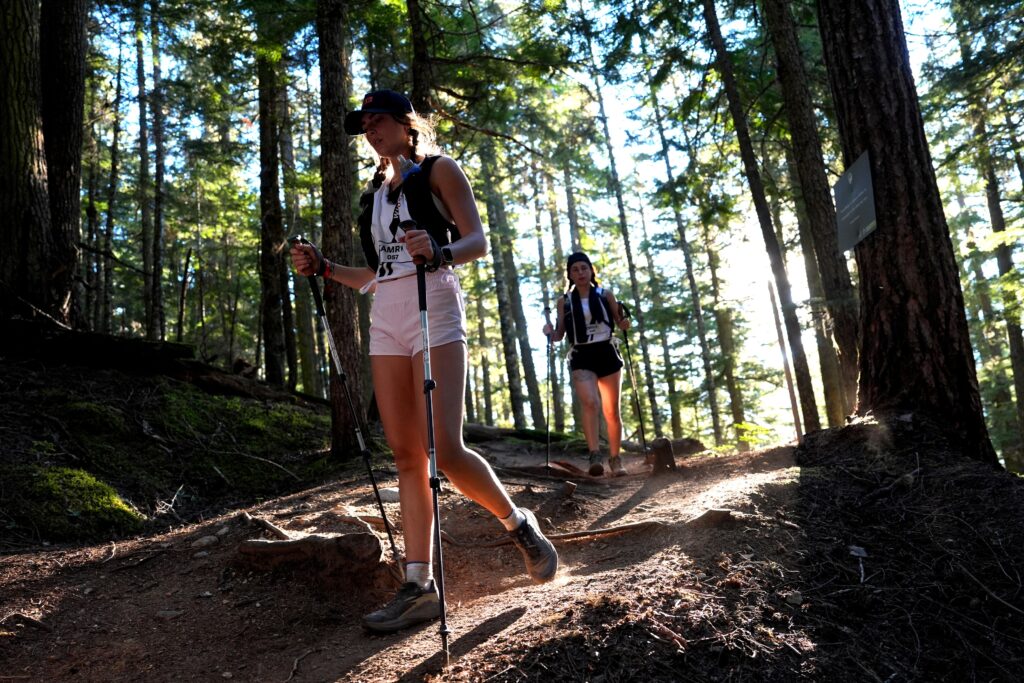
A few weeks ago, I went on a hike with some friends in the mountains in Colorado. The weather was perfect, the lakes and trees were gorgeous and we even saw a moose.
As I took in the views and breathed the fresh air, I also appreciated what has made hiking possible: industrialization. Hiking is often seen as a natural activity, but there’s nothing natural about it, and almost nobody did it before the industrial revolution.
There weren’t even words for it in English. According to Merriam-Webster, the word “hike” was first used as a noun meaning “a long walk especially for pleasure or exercise” in 1865. Google Books Ngram Viewer, which tracks word usage in English-language books beginning in 1800, shows that the words “hike” and “hiking” did not appear in writing with any kind of frequency until around 1900.
Before the industrial revolution, the great outdoors was most people’s workplace. They were out there from dawn to dusk in all kinds of weather, doing grueling manual labor, or else they starved. It was only the richest of the rich who could stay inside and partake in such hedonistic extravagances as eating a varied diet or learning how to read. Today we can enjoy the great outdoors because we do it on our own terms.
But back then, wandering around outside could be dangerous. The medieval Norse word skóggangr, a formal punishment for very serious crimes, translates to “going to the woods.” People who received that sentence were cut off from Norse society, leaving them with nowhere to go but the forest, where they eventually died.
Fear of the woods is also evident in old fairy tales, where the forest was commonly portrayed as a scary place because the rules of society didn’t apply there. Now, with the professional management of park services and the aid of mass-produced gear, people can enjoy a break from society even with small children in tow.
As for walking, for most of human history, it wasn’t recreation. It was the primary mode of transportation. The idea of walking purely for pleasure began as a Romantic-era reaction to the beginning of industrialization, with its sooty smokestacks and unventilated indoor workplaces.
But that still wasn’t anything like hiking as we know it today. Walking in the woods didn’t really take off until it could be done with pre-marked paths, backpacks full of snacks and comfortable clothes and hiking boots made from synthetic materials in factories in Asia.
Nowadays, countless Americans get in their personal cars to drive to the airport to fly across the country to rent another car to drive partway up a mountain to go for a walk. Only in a rich, industrialized society can people afford to do that.
Even when hiking close to home, people are taking advantage of one of the best inventions of the industrial revolution: free time. It’s not that nobody ever rested before the 1800s, but it was only after industrialization that leisure became an industry of its own.
Your favorite trail that takes you to that perfect view? It was sliced through nature by humans, almost certainly within the past 100 years. “Leave no trace” is not ancient wisdom. It came out of educational programs that began in the 1970s to deal with the new environmental problems caused by millions of people hiking.
The advent of modern economic growth began to allow ordinary people to acquire significant disposable income. They could spend at stores such as REI, whose history also helps illustrate how recent a development hiking as a hobby is. It was founded in 1938 as a co-op to serve a small clientele of serious mountaineers and became the retail giant it is today only within the past few decades.
As the weather cools and the leaves change color, take in the beauty of Earth while getting some exercise if you’re able. Just don’t be under the illusion that you’re rebelling against modernity. Hiking is fun only because of the industrial revolution.
The post A hike through the woods feels natural. It’s anything but. appeared first on Washington Post.