Before a deadly flash flood tore through the Grand Canyon at the end of August, several National Park Service officials repeatedly pressed for parts of the fire-damaged trail to be closed, according to four current and former agency officials, calling out the heightened risk of runoff and rock slides that could endanger people.
But leaders above them ultimately decided to reopen the North Kaibab Trail in time for peak tourist season, said two former National Park Service officials with knowledge of the situation, and one former and one current official briefed on the matter. Those decisions were made, they said, amid ongoing pressure from lawmakers to keep the park fully operational.
“There were a lot of us at the boots-on-the-ground level, the people who were really kind of looking at it, really having some concerns,” said Robert Parrish, who served as chief of planning, environment and projects at the Grand Canyon from December 2020 through early October 2025. “But then once those got filtered up, and we were getting what the political pressure was filtered down, it was quite evident that the political pressure was going to win.”
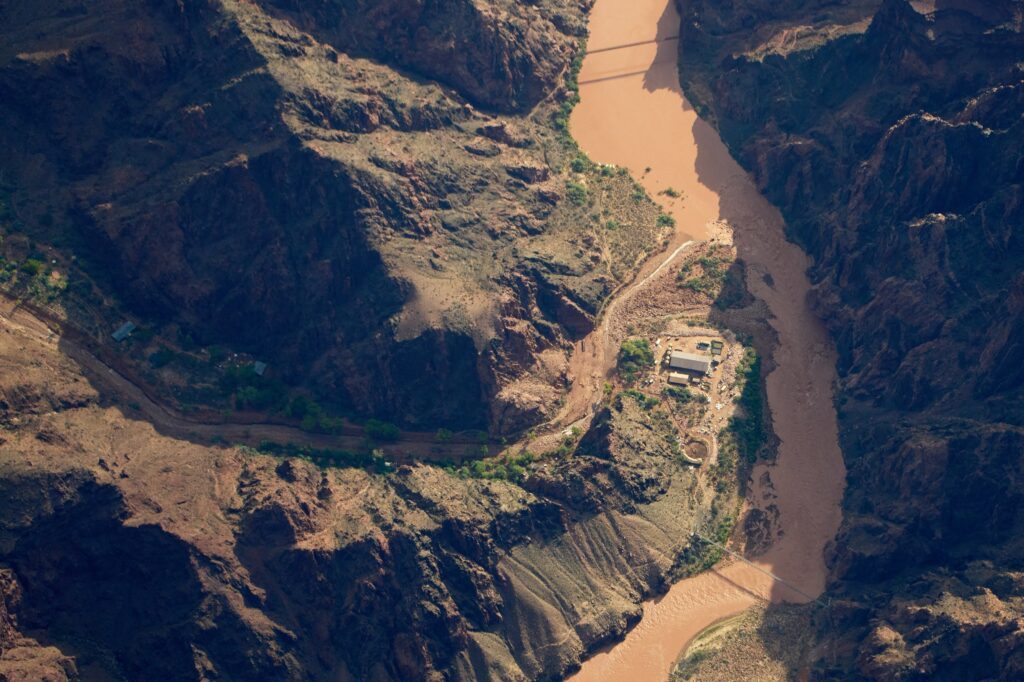
On July 4, 2025, the Dragon Bravo Fire ignited within Grand Canyon National Park and burned nearly 150,000 acres, including 106 structures and portions of the North Kaibab Trail, which the Park Service built in the 1920s to attract more tourists. The trail is a key part of the increasingly popular rim-to-rim hike.
Parrish, who was part of the Grand Canyon leadership team when some of these discussions took place in August and September last year, said he and others advocated for the North Kaibab Trail to remain closed through this season. Other current and former officials spoke on the condition of anonymity for fear of retribution or because they were not authorized to speak with the media.
In a statement, Interior Department spokeswoman Elizabeth Peace said the decision to reopen the trail was “not simply whether to ‘keep the trail open.’ The trail had been closed following the Dragon Bravo Fire.”
“The trail was reopened only after crews completed assessments and the work identified as necessary to make the trail as safe as reasonably possible for public use in a wilderness environment,” Peace said.
The damage from the fire brought down trees and led to rock slides, prompting land management teams across multiple agencies to produce a Burned Area Emergency Response (BAER) Plan, according to a copy reviewed by The Post.
The team completed that detailed analysis on Sept. 2, 2025, nearly a year before August’s late-summer monsoon drove the deadly flash flood that hit parts of the fire-scarred canyon. The report recommended extensive repairs, stabilization work and the removal of slide debris, as well as installing an early-warning system and hazard signs.
While it is unclear whether the Park Service completed all the work, the agency installed a flash flood warning network, according to an internal presentation from this past spring reviewed by The Post, which also predicted the possibility of up to a threefold increase in runoff potential in the North Kaibab parts of the burn area.
The park also added some signage. A photo from a hiker obtained by The Post showed bright yellow hazard warnings: “Burned area. Flash floods; fallen trees; rock and debris,” the sign reads, with the image of a person running from falling boulders.
It’s not yet clear exactly how the fire’s aftermath exacerbated the speed and power of last month’s flooding, which killed at least two hikers and forced the rescues of about 80 others. Response crews are still searching for one missing person. Experts have said that when torrential rain falls quickly on fire-scarred land, it increases erosion and intensifies debris and water flows.
While flash flooding has always been a part of the Grand Canyon — rock and debris have shaped and reshaped the massive expanse — a sweeping wildfire such as Dragon Bravo intensifies this process, said Daniel Swain, a climate scientist with the University of California Agriculture and Natural Resources.
Such a blaze makes “it so that the landscape is less able to absorb rapid accumulation of rainfall,” he said, adding that it might be the same amount of water, “but more of it runs off more quickly.”
In an interview with radio station KTAR News shortly after the flood, Interior Secretary Doug Burgum described the risks to the landscape when a flood follows a fire.
“A forest that is alive holds water; when you have a forest that is burned through, you get a lot of runoff, a lot of mud that occurs,” Burgum said, adding that even a year or two after a major fire, “flash flooding is a concern that those professional foresters and we have had going into this.”
In the Interior Department’s statement, Peace acknowledged that the “Grand Canyon is a dynamic environment where conditions can change rapidly because of weather, flooding, rockfall and other natural processes.”
Mounting pressure
In multiple meetings, including some specifically about the BAER report, Park Service officials with land and safety expertise raised concerns about reopening the North Kaibab Trail, the four current and former National Park Service officials said. Some recommended that it be closed for about a year to allow the grounds to recover.
“I was hearing from the safety officer, people in search and rescue, people in law enforcement, the trails manager, that they were seeing risks that really should be seriously considered,” said one former member of the Grand Canyon’s leadership team. “And they were not.”
Based on meetings and conversations with safety and resource experts, this former official said there were “a number of things” that they could have done to reduce the danger, including closing the trail and better educating visitors about the risk.
Parrish and another former senior official said that Grand Canyon Superintendent Ed Keable, who was a key decision-maker in whether to reopen the trail, attended some of these meetings and heard those concerns.
The official said the risks “were certainly calculable, and were known by leadership,” and recalled that Keable, appointed by President Donald Trump in 2020, initially discussed keeping the North Kaibab Trail closed, before “his tone changed significantly.”
Keable referred questions to the Interior Department.
“Park staff recommended continuing that closure through the winter while necessary work was completed, and the superintendent agreed,” Peace, the Interior Department spokeswoman, said in her statement.
Representatives from Grand Canyon National Park did not respond to a request for comment by the time of publication.
Several politicians, including some Democrats, lobbied to reopen the trail last year as a way to retain tourism revenue. Last September, Sen. Mark Kelly (D-Arizona) wrote a letter to Burgum.
“I urge the National Park Service to reopen key viewpoints and trails wherever it is safe to do so,” he said, citing that the park generates “roughly $1 billion in economic activity” every year. He specifically cited the North Kaibab Trail, calling it one of the “cornerstones of the Grand Canyon experience.”
In April 2025, Burgum directed that any national park closures or reductions, including individual trails and campgrounds, would need review by the National Park Service director and the assistant secretary of the Interior for fish and wildlife and parks to ensure all national parks remain open and accessible to visitors.
The order put final closure decisions, previously made locally by park superintendents, in the hands of officials based in Washington.
Peace said the order “should not be characterized as requiring parks to keep an area open when conditions are unsafe.”
A month after Kelly sent a letter to the Interior Department, Rep. Elijah Crane (R-Arizona) introduced a bipartisan bill “to fast track” the rebuild of the Grand Canyon’s North Rim after the fire.
Crane joined NPR station KANU in January for an interview about the North Rim Restoration Act. Based on conversations with local businesses, Crane told the station “there’s just a sense of urgency” to get the area back into shape. He said once the fire was out, conversations “quickly transitioned to … what can we do about it as the North Rim is so vital to Arizona’s small businesses, local economies and communities.”
In a statement, a spokesperson for Kelly said that “he remains focused on ensuring safe access to public lands.” And that “the priority now must be on quickly remediating damage from the Dragon Bravo and White Sage Fires.”
Crane did not respond to requests for comment by the time of publication.
The desire to get the iconic Grand Canyon back up and running after a major wildfire underlines a push-and-pull that follows when extreme weather causes devastation in national parks, particularly in regions where the local economy depends on them.
Nearly 5 million people visit the canyon every year. However, only about 1 percent make it down to the banks of the Colorado River, according to the National Park Service. It notes that the “North Kaibab Trail is challenging for day hikers as well as rim-to-rim hikers.”
Parrish noted that given the relatively low North Rim visitation compared with other areas in the canyon, the economic losses to the park would have been temporary.
Still, it’s a tough balance to strike, said Dave Worthington, a veteran federal land management official who retired at the end of May 2025 from his role as the Grand Canyon’s chief of science and resource management. Allowing enough time for recovery after a disaster can hamper businesses that employ hundreds of workers and mom-and-pop shops that need tourism to survive, he said.
“It’s a huge impact on the park and community when the park is shut down,” said Worthington, who lived in the park during the Dragon Bravo Fire.
At the same time, he said, “you don’t want to put resources and people in danger.”
A series of warnings
Last September, the Grand Canyon National Park leadership team of about 10 members gathered at the South Rim headquarters for a discussion about trail conditions. Deputy Superintendent Brian Drapeaux was running the meeting in Keable’s absence, said Parrish and the former official, who were in attendance.
Adam Gibson, the Grand Canyon trails program manager, gave a presentation there on the status of the North Kaibab Trail, sharing his firsthand observations, as well as photographs he took. He proposed not reopening the trail for the 2026 season, the former official said.
12 News in Arizona first reported the meeting, which was one of several where Park Service experts raised concerns about the integrity of the land, Parrish and the former official said.
Gibson and other park leaders also worried that putting staff out in that environment could be risky. There were still toxic remnants from the fire — many dead, hazardous trees.
“From his point of view, there was rock fall, tree fall, a lot of damage. There was a concern about mudslides,” Parrish said about Gibson’s presentation.
Gibson did not respond to requests for comment.
On March 3, Gibson appeared on a popular podcast, “The Grand Canyon Hiker Dude Show.”
In the episode, Gibson said he was alarmed after hiking the area the month before to assess the conditions. Debris flowed with such momentum, and in atypical areas, that it took out whatever was in its path.
“That was a bit of an eye-opener,” he said on the podcast. “It’s not going to be a good place to be if you find yourself in the upper North Kaibab and you get an inch of rain in an hour.”
He said he was working with leadership on his recommendations for reopening the trail, but the “decision to close or reopen a trail is ultimately at the responsibility of the superintendent.”
“That is really going to be a decision for senior management, and I will respect their decision,” he said. On March 4, a portion of the North Kaibab trail was back in use. In mid-March, Crane’s bill passed unanimously.
The park reopened the full North Rim to the public shortly afterward, on May 15, just in time for peak season.
“Hikers should anticipate temporary trail closures or delays while crews continue to repair the trail. Postfire hazards and weather events may also result in additional closures,” the Park Service cautioned in its announcement, as it celebrated the iconic landscape.
The problem, Parrish said, is that “a lot of people go into our national parks thinking they are like Disneyland.”
They often forget the Grand Canyon is the wild, he said — with its heat, sudden storms, exposed and narrow depths, and punishing ascents.
“The canyon has many conditions and situations that will kill you,” Parrish said. “The canyon and nature is going to do what it’s going to do, and no matter how much money or whatever Congress or the politicians want to do, the environment is still going to do what it is going to do.”
The post Park officials pushed for a Grand Canyon trail to remain closed. Then the floods came. appeared first on Washington Post.