In watchmaking circles, James Dowling is known as “Mr. Rolex.”
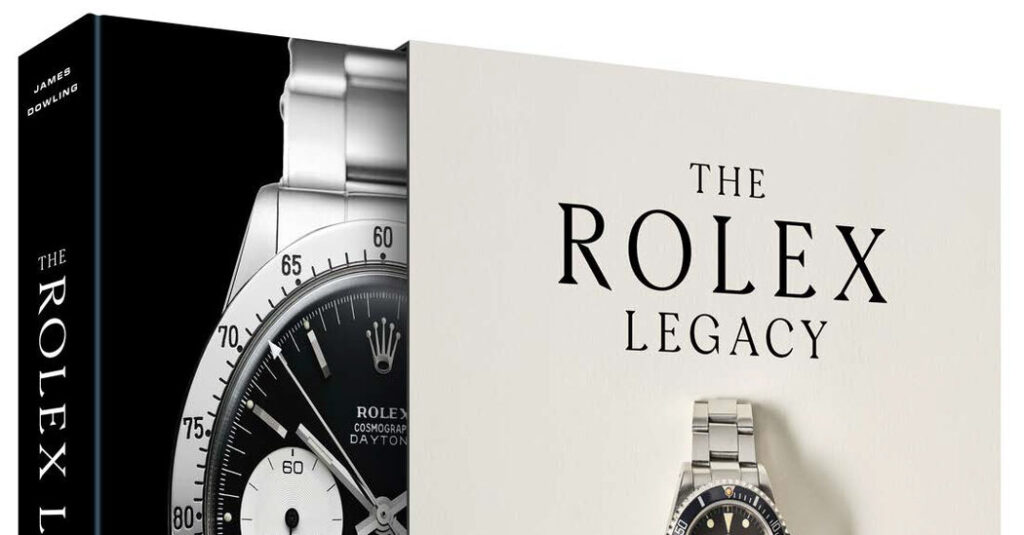
He recently turned that reputation into “The Rolex Legacy,” a 336-page book published in October that tells the prominent Swiss watchmaker’s story through 120 watches (ACC Art Books, $75).
Mr. Dowling, a founder and the former editor in chief of the watch forum Timezone, talked about the book’s distinctive content, his watch selection process and the Rolex brand name. The conversation has been edited and condensed.
There are a lot of books out there about Rolex, some of them yours. What is different about this one?
Every Rolex book tells the historical story of the company. What I wanted to do was look at the company and its product alongside what was happening in the world at the same time, and to assess how those two things affected one another. This is also a much more personal book about my experience of collecting watches over a 40-year period.
How did you choose which watches to feature?
I wanted to show that the story of the wristwatch is the story of the 20th century and the story of the wristwatch is the story of Rolex.
Hans Wilsdorf, who founded the company in London in 1905, was the Steve Jobs of the 20th century. He always gave his profession as “merchant.” He wasn’t a watchmaker and didn’t invent anything, but he could see gaps in the market and knew how to fill them. He was brilliant at taking something that already existed and making it better, and a brilliant marketeer.
Not all the watches in the book were commercially successful. Why did you include those?
It doesn’t happen often, but every now and again, even Rolex has to fail. That’s interesting in itself, but what’s also interesting is that some of those failures, like the 1950s Milgauss or the 1960s Daytona known as the Paul Newman, become a collector success half a century later. Some failed so badly that Rolex barely made any, like the Zerograph of 1941. There are only 12 known examples and they don’t sell for big money because there aren’t enough of them to create a market.
Do you need to be a Rolex expert to enjoy the book?
Not at all. Of course, I hope the book will satisfy Rolex completists who want to know everything about the brand, but I also want this book to be a wonderful gift for anyone with even a vague interest in watches.
I wanted it to be accessible, so it’s structured in short essays about each of the 120 watches so people can either read it from beginning to end or dip into it.
Does the book explain how Rolex got its name?
It’s simply a memorable brand name. Think of brands born around the same time: Oxo, Bovril, Hovis, Kodak. The words mean nothing but they’re all short and easily memorable. Rolex, in my opinion, is no different.
The post Rolex’s Story Told in 120 Watches appeared first on New York Times.