Early one morning last month, cellphones across Rio de Janeiro buzzed with a severe weather alert: Conditions, civil defense authorities warned, suggested the possibility a bomb cyclone could form over southern Brazil.
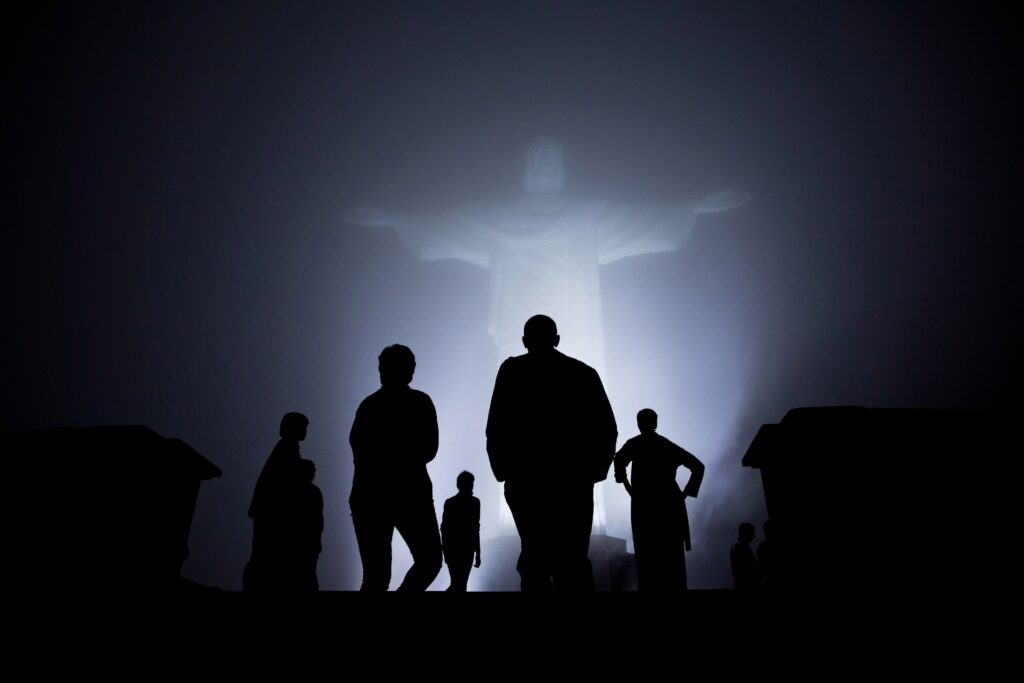
Winds could reach 55 mph. Authorities recommended closing Rio’s iconic Christ the Redeemer monument and the city’s much-touristed Botanical Garden. People were urged to stop what they were doing and head home.
Cacique Cobra Coral, meanwhile, went to work.
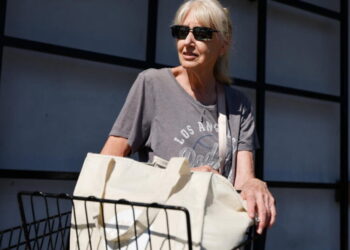
Officials in Rio have been calling on the centuries-old spirit, channeled by a 71-year-old woman in Guarulhos, to protect it from weather-related calamity for decades. With the emerging El Niño climate pattern on track to become the strongest on record, Rio has now extended the relationship with a 25-year agreement with the cacique’s foundation.
The aim, according to a notice published last month in a government gazette, is to “promote the dissemination and exchange of information between the parties, with a view to enabling the provision of technical meteorological assistance.” No payment is involved. The city government, asked to comment, referred to the notice.
The appeal to the esoteric to address natural phenomena is difficult to understand through a Western lens, anthropologist Renzo Taddei acknowledges. But in Brazil, shaped by Indigenous, Afro-Brazilian and spiritist traditions, the boundary between the spiritual and material worlds is more porous.
“Brazil is spiritually anarchic,” said Taddei, a professor of science and technology studies at the Federal University of São Paulo who has interviewed meteorologists who have worked with the foundation. The cacique, he said, exists “at the boundary where science and spirituality can coexist.”
That fluidity extends to how many Brazilians understand knowledge itself, anthropologist Ana Lídia do Nascimento said.
“There is no separation between traditional science and the science of the sacred,” said Nascimento, a professor at the Federal Rural University of the Amazon. “If there is knowledge, strategy and results, then it is science.”
Brazil’s religious culture doesn’t confine belief to a single tradition. In a country with the world’s largest Catholic population, a believer might see a doctor when sick, visit an Umbanda practitioner to be blessed and, after a family member dies, go to a spiritist center for a medium to reestablish communication.
Sixty-nine percent of Brazilian adults agree that there’s “something spiritual beyond the natural world, even if we cannot see it,” the Pew Research Center reported in January, the greatest percentage among Latin American countries surveyed.
Cacique Cobra Coral — literally, Chief Coral Cobra — doesn’t give interviews. That’s according to Osmar Santos, the director of his foundation and husband of Adelaide Scritori, the medium who channels his spirit.
But from what Santos and Scritori have managed to glean over the years, the cacique is the spirit of an Indigenous chief who lived long ago somewhere in what’s now the United States. He has returned to Earth as Galileo and Abraham Lincoln. And given meteorological data, he has some ability to affect the weather, though they’re are unsure how.
“Cobra Coral does not act until science gives him the parameters,” Santos says. “He believes in science. He makes the changes that man and science cannot.”
That was enough for César Maia, who as mayor of Rio in 1993 reached out to the foundation for help.
“In the early 1990s, Rio was already grappling with recurring bouts of heavy rain and their impacts on a city highly vulnerable to flooding and other weather-related disasters,” Maia told The Washington Post. “With no cost involved, there was no reason not to pursue this important collaboration.”
He described it as a “complementary initiative.” He emphasized that the city continued to rely on science, engineering and official agencies in its decision-making.
Maia signed a formal agreement with the foundation in 2001. “Regardless of political or ideological differences, successive mayors saw no reason to end the cooperation,” he said.
The cacique has been providing technical meteorological assistance to city and state governments in Brazil and private businesses for decades, the foundation says. It doesn’t charge governments, Santos says. He declined to identify any businesses, citing confidentiality.
Assignments for the Rio city government, he says, have included New Year’s Eve celebrations at Copacabana Beach and, in 2011, a visit by then-President Barack Obama and his family.
“Through a good experience,” Santos said, “we could improve relations between Brazil and the U.S.”
The foundation first approached the U.S. government in 1986, Santos says. He saw then-first lady Nancy Reagan, whom he described as “very esoteric,” as a potential point of contact. At Cobra Coral’s request, he says, he asked that she talk to her husband, then-president Ronald Reagan, about suspending underground nuclear tests.
He got a thank-you note from the U.S. consulate, but tests continued until 1992, when then-president George H.W. Bush declared a moratorium.
The cacique did voluntary spiritual work for the United States, Santos said, but the relationship has soured. The foundation cut that work by half last year after President Donald Trump declared a 50 percent tariff on Brazilian imports. It stopped working on behalf of Argentina over President Javier Milei’s repeated criticisms of Brazilian President Luiz Inácio Lula da Silva and support for Flávio Bolsonaro, his challenger in this year’s presidential election.
“They’re on their own now,” Santos said.
Rio has one of Brazil’s most robust weather-monitoring systems. Meteorologists with its Alerta Rio network use data from thousands of cameras, dozens of rain gauges and 12 weather stations to feed forecasts into its operations center, where Civil Defense and other agencies coordinate emergency measures and warnings.
And someone, Santos says, calls the cacique. Why?
“Because it must work,” Scritori said.
Scritori first encountered the cacique at her father’s spiritist center in rural Paraná in 1962. She was 7.
Ângelo Scritori, who also worked as a medium, established the foundation in 1931. Three decades later, little Adelaide Scritori woke one day to find several people staring at her. She felt exhausted but didn’t know why.
Her father said she had been unconscious for several minutes, during which her body had been taken over by a spirit. The spirit announced himself as Cacique Cobra Coral, an Indigenous chief with a thin nose, arched eyebrows and long hair. He would use Scritori, he said, to control the forces of nature — forces, he said, that in time would grow more extreme.
He hasn’t shared much else about himself, Scritori says, but over the years, she has learned how to contact him.
“I have to concentrate in a very quiet place, without interruptions,” she told The Post. “After that, I don’t hear or see anything anymore. I go completely into a trance.”
On Aug. 6, as the possible bomb cyclone threatened, a meteorologist who works with the foundation sent over data on the falling atmospheric pressure and shifting winds.
The meteorologist, a retired professor at Brazil’s National Institute for Space Research, did not respond to requests for comment. but his report, Santos says, told the spirit where to intervene.
Scritori sat in a quiet room. According to Santos, her eyes narrowed. Her eyebrows rose. The muscles in her face tightened. Her voice dropped to a deep, masculine register.
Cobra Coral had arrived, Santos said.
The winds over the next 24 hours fell short of the most extreme scenario forecast. A change in atmospheric conditions helped reduce their intensity, meteorologists said. There was no bomb cyclone.
The post The ancient spirit who’s helping protect Rio from the effects of El Niño appeared first on Washington Post.