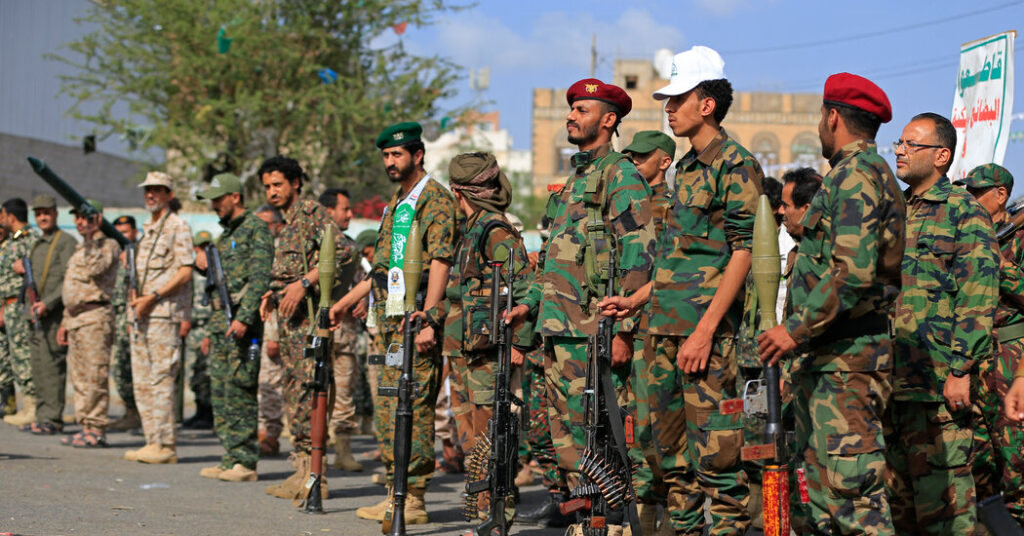
The Iran-backed Houthi militia captured a strategic Red Sea port city on Thursday, according to two Yemeni officials, a move that could allow the group to exert greater control over an important international shipping route.
In a swift ground offensive, the Houthis pushed out forces allied with the Yemeni government that is backed by Saudi Arabia and seized the city of Mokha as well as its port, according to a local official in the city and a senior provincial official. Both spoke on the condition of anonymity because they were not authorized to speak to the media.
Mokha has been the focus of several days of fierce ground battles between the Houthis and the internationally recognized government of Yemen.
The two sides have been at war since 2014, when the Houthis seized Yemen’s capital, Sanaa. Soon after, a Saudi-led military coalition began a bombing campaign to try to restore the government, plunging the impoverished nation into a civil war that has lasted for more than a decade.
Mokha is less than 50 miles from the narrow Bab al-Mandab Strait at the southern end of the Red Sea.
The Houthis have previously attacked ships in the Red Sea from Yemeni territory further north but control of Mokha gives the militia a foothold closer to the strait — a major win for the group, with implications for global trade and oil markets, analysts say.
“This is potentially one of the more significant turning points, particularly in recent years, of the Yemen conflict,” said Adam Baron, a Yemen-focused fellow at New America, a research organization in Washington.
The Houthis are expected to try to push further south to try and take territory next to the strait, an area that is “arguably Yemen’s most strategically valuable real estate,” Mr. Baron said. If they are able to do so, it could leave both of the Arabian Peninsula’s major maritime choke points — Bab al-Mandab and the Strait of Hormuz — under the control of Iran and its allies, he added.
Mokha was under the control of Lt. Gen. Tareq Saleh, a commander allied with the Yemeni government. His spokesman did not respond to a request for comment on Thursday. Houthi officials also did not respond to a request for comment.
On Thursday, General Saleh said on social media that he had ordered his troops to “reorganize their ranks and establish an alternative command center in a secure location,” in consultation with the Saudi-led military coalition.
Bab al-Mandab has become increasingly important to energy markets since the United States and Israel attacked Iran in February. Saudi Arabia, the world’s biggest oil exporter, typically ships its oil through the Strait of Hormuz, the waterway connecting the Persian Gulf to the world’s oceans that Iran has effectively closed since the early days of the war with the United States.
Saudi Arabia pivoted to the Red Sea to export most of its oil, but over the past two months, escalating tensions with the Houthis have disrupted that route.
In July, the militia declared a blockade on Saudi oil tankers passing through the Red Sea, and launched missile and drone attacks at ships and Saudi facilities from their territory in northern Yemen.
The Houthi-affiliated foreign ministry said in a statement on Thursday that the group “will not pose a threat” and that they are “prepared to be part of the regional security framework, particularly with regard to protecting maritime navigation.” The statement did not refer to fighting in Mokha.
The ministry called on the international community “to compel the Saudi regime to stop targeting Yemen.”
In recent days, Houthi officials have accused Saudi Arabia of launching more than 100 airstrikes in Yemen to support its allies in the country. The Saudi government has not commented on those claims.
The post Yemen’s Houthis Seize Strategic Red Sea Port, Officials Say appeared first on New York Times.