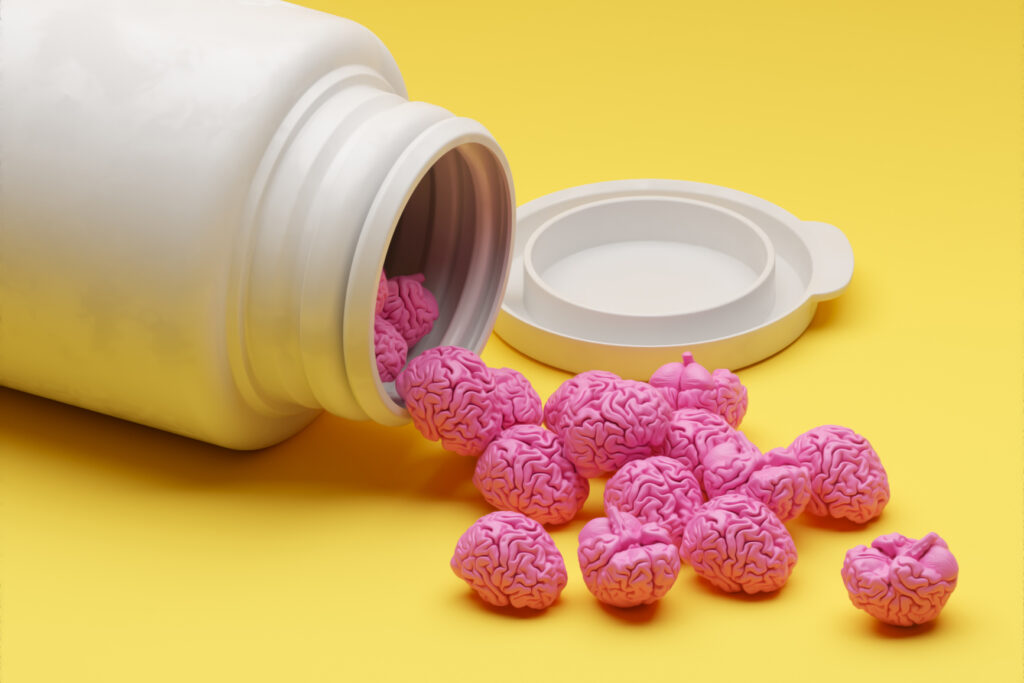
People tend to think about supplements the way they think about food: Things that are inherently good or bad for you. Green beans are good. Potato chips are bad. Vitamin D and fish oil belong, presumably, on the green-bean side of the ledger.
But the aging brain may change the calculation, putting some of America’s most popular supplements under new scrutiny.
Recent research is raising a largely overlooked question: Can something that benefits (or is at least neutral to) a young, healthy brain become less helpful — or even harmful — as the brain ages?
In January, researchers reported an association between vitamin D supplement use and faster cognitive decline among older adults who already had normal vitamin D blood levels. In April, another study found that adults 55 and older taking omega-3 supplements showed greater cognitive deterioration over time than nonusers. Then, in June, researchers reported that people taking glucosamine, used for joint pain, appeared to have a much higher likelihood of progressing from mild cognitive impairment to dementia over five years than their peers who were not taking it.
“I was stunned,” said Ramon Sun, a professor of biochemistry and molecular biology at the University of Florida and the lead author of the glucosamine paper.
The findings are preliminary, contradict other research in places and far from proof that the supplements lead to cognitive decline.
The studies are mostly observational, meaning they don’t prove causation, and those links with mental deterioration may be because of the supplements or something else entirely.
But together they point toward a possibility that researchers are beginning to take seriously: Aging changes how the brain handles fats, calcium and glucose, and how it responds to inflammation, which could alter how nutrients and drugs reach brain tissue in the first place.
Sun’s larger point is not that people should empty their medicine cabinets. It’s that doctors already account for aging elsewhere in the body.
They often adjust drugs such as blood thinners and opioids, as kidney function, metabolism and sensitivity change over time. But supplements typically don’t come with comparable age-specific dosing guidance.
We have spent decades asking whether vitamin D, omega-3s or glucosamine are good for us. The emerging science suggests that may be the wrong question. The more useful one may be: Good for whom — and at what age?
A moving target
The aging brain differs from a younger one in countless ways.
A younger brain is generally more plastic, clears waste more efficiently, regulates inflammation better and has greater capacity to recover from cellular stress. An older brain can still function remarkably well, but it has less biological reserve, meaning it cannot compensate as well when something interferes with normal function.
Aging also changes the environment in which nutrients are processed.
One of the most consequential ways involves the blood-brain barrier, the elaborate security system surrounding the brain’s blood vessels.
It lets in necessities such as oxygen and glucose while tightly regulating the passage of proteins, inflammatory molecules, toxins, drugs — and nutrients. And the barrier ages, with the cells maintaining it and the connections between them deteriorating. The transport systems that shuttle substances into and out of the brain can change as well. The result isn’t simply a “leakier” barrier. It is a different gateway into the brain.
Scientists are investigating whether deterioration of the blood-brain barrier itself contributes to cognitive decline — and whether restoring it could someday help preserve memory.
Vitamin D
Those involved in cognition research have long been intrigued by Vitamin D. Several studies have suggested that low circulating vitamin D concentration and low dietary vitamin D intake are linked with accelerated cognitive decline.
There was hope that it could be used as a supplement to help slow down or even stop decline, but studies have been mixed. Many conclude it does not do anything.
In the January paper, one of the larger real-world studies to examine vitamin D supplement use and cognition, researchers followed 5,065 Americans with a mean age of 67.5 from the Health and Retirement Study, an ongoing, nationally representative longitudinal survey of adults in the United States over 50 years of age. About 40 percent of the participants were vitamin D supplement users.
Published in BMJ Open, the study found vitamin D supplement users had slightly faster declines in overall cognition and executive function over six years. This link applied only to people who already had normal vitamin D levels, but not those who had deficient or insufficient levels.
The researchers’ hypothesis: Extra vitamin D could impact molecular signaling in the brain that increases the production or buildup of amyloid beta plaques, which are linked to Alzheimer’s.
Marion Nestle, an emerita professor at New York University who co-founded the university’s food and nutrition program, said supplements may improve certain biochemical markers in the blood. But their effects on actual hormone levels — and what those changes mean physiologically — are more complicated.
And supplements aren’t the only option. People can also absorb vitamin D through food and sunlight. Nestle, for her part, favors the latter. “I vote for short exposures of skin to sunlight, especially during the summer,” she said.
Fish oil and omega-3s
Scientists have long had reason to believe that omega-3 fats consumed as part of a diet rich in fish are good for the brain. Omega-3 supplements, however, have proved far less effective. Study after study has failed to find the cognitive benefits that many people hoped a daily fish-oil capsule might provide.
Even so, these supplements were generally assumed to be harmless. A new analysis published in the Journal of Prevention of Alzheimer’s Disease complicates that picture.
The analysis involved using longitudinal data from the Alzheimer’s Disease Neuroimaging Initiative, which is a National Institutes of Health-funded repository that includes information on a group of adults ages 55 to 90 ranging from cognitively healthy to having significant disease.
They compared 273 omega-3 users with 546 nonusers, with a median follow-up of five years and found that those who used omega-3 supplements experienced faster cognitive decline on three standardized clinical scales. The scales measured things like orientation, attention, memory and language, and the ability to process visual and spatial information.
As with the vitamin D findings, the study shows an association, not cause and effect.
One possible explanation, the researchers said, involves how the brain uses energy. Omega-3 supplement users showed lower glucose metabolism in brain regions vulnerable to Alzheimer’s, which partly accounted for the association with faster cognitive decline. The researchers said this could reflect problems with how brain cells communicate and function.
“These findings challenge the prevailing view of omega-3 as uniformly beneficial and highlight the need for a cautious reassessment of its widespread use for cognitive protection,” the authors wrote.
Onder Albayram, an associate professor of neuropathology and neuroscience at the Medical University of South Carolina, was not involved in the JPAD study. But he has observed a similarly troubling association between fish-oil supplements and slower recovery after brain injury in his own research. In a study published earlier this year in Cell Reports, Albayram and his colleagues looked at mice, human cells and human medical records, and found that all three pointed to a component of fish oil as potentially impairing healing.
One possible explanation, he said, lies in the brain’s changing metabolism. When the brain is injured or diseased, its energy demands shift, potentially altering the way it responds to fats and other nutrients. A supplement that seems benign — or beneficial — under ordinary circumstances may not behave the same way in a brain under stress.
To Albayram, it makes sense that age might play a big role in how people respond to certain supplements.
“If you look at psychiatric or neurological disorders, many are dependent on age,” he said. Autism, for example, typically becomes apparent in early childhood; bipolar disorder often emerges in late adolescence or early adulthood; and Alzheimer’s disease overwhelmingly appears later in life, particularly after age 65. The brain, in other words, is not metabolically static across a lifetime — and the effects of a supplement may not be either. In other words, he said, the biological environment in which a supplement acts is not the same throughout life.
Glucosamine
Long ranked as one of the U.S.’s most popular supplements, glucosamine is mostly used by middle-aged and older adults. It’s usually made from shellfish shells or produced synthetically.
Glucosamine, a building block for molecules found in cartilage and joint tissue, is mainly taken by those with osteoarthritis to reduce joint pain or slow cartilage deterioration. The evidence for its benefit has been mixed, with some studies showing a modest improvement in pain but others not finding any benefit.
Sun, a brain researcher, became interested in the supplement while searching for Alzheimer’s treatments focused on how the brain handles sugar.
The study approached the question from three different directions.
First, the researchers studied mouse models of Alzheimer’s disease. They found that the animals’ brains produced unusually high levels of glycans — complex sugar structures attached to proteins and other molecules. When the researchers genetically slowed down this process, the mice performed better on cognitive tests. When they pushed it in the opposite direction by giving the mice oral glucosamine, their cognitive problems worsened.
The researchers then examined postmortem human brains. They found the same broad phenomenon: Alzheimer’s brains contained substantially more glycans than healthy brains. In gray matter, these sugars also tended to become more abundant as the disease advanced. That suggested the phenomenon they had observed in mice was also present in people with Alzheimer’s.
Finally, they turned to electronic health records, asking whether people who took glucosamine supplements showed a similar pattern in the real world. Glucosamine use was associated with a roughly 25 percent greater likelihood of progressing from mild cognitive impairment to Alzheimer’s disease or a related dementia. Separately, among patients who already had Alzheimer’s or dementia, glucosamine use was associated with about a 25 percent higher rate of death.
The researchers identified supplement use from physician notes and prescription records in electronic health records. As a result, unrecorded use could have been missed and other differences between users and nonusers could help explain the association.
Researchers think glucosamine may worsen an abnormal buildup of sugars on proteins in the Alzheimer’s brain, disrupting how brain cells function, and that some of that effect may be related to the weakening of the blood-brain barrier.
Sun and his co-authors argued that the findings do “make a compelling case for glucosamine as a potentially negative driver of neurodegeneration.”
Should people stop taking these supplements?
None of these findings are conclusive on their own. Three signals involving completely different compounds don’t constitute evidence of a common aging mechanism. Supplement users differ from nonusers in income, education and health behaviors. People may start taking supplements because they’re already experiencing symptoms. Dosages and formulations vary. Self-reported supplement use can be messy. Mouse Alzheimer’s models aren’t people.
For these reasons, Sun and the other researchers do not suggest that older adults stop taking any of these supplements. But they say the findings expose a blind spot in the way supplements are often studied and marketed that goes beyond vitamin D, fish oil and glucosamine.
Supplements are biologically active substances, Sun said, not necessarily harmless additions to the diet — and older adults should approach them accordingly.
The post Scientists are investigating whether popular supplements could harm the aging brain appeared first on Washington Post.