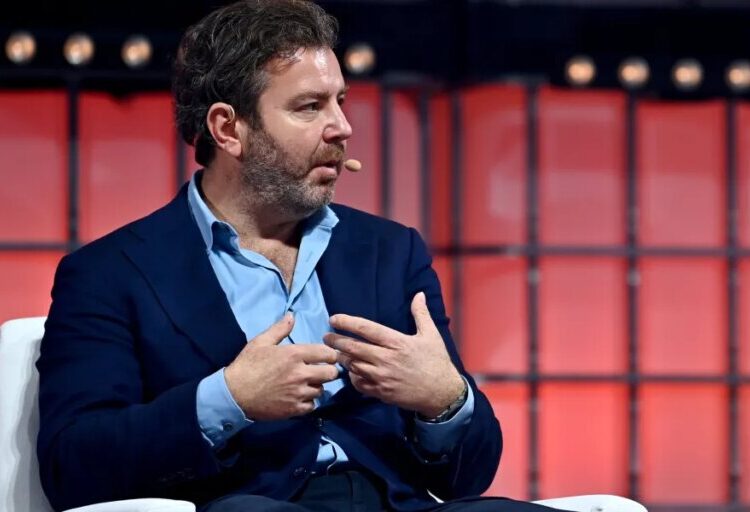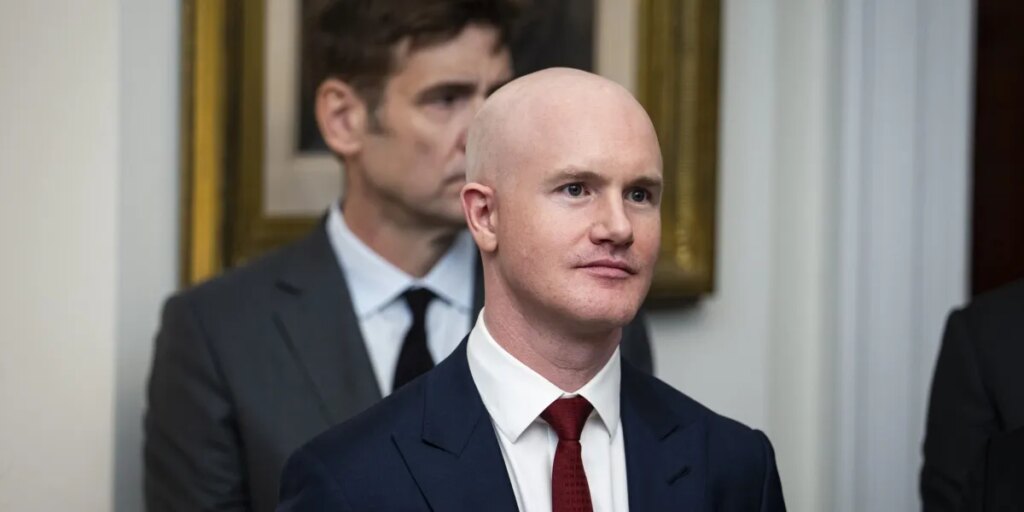
Elon Musk isn’t the only billionaire who has a contrarian view of philanthropy. Coinbase CEO Brian Armstrong admitted on a recently published episode of the Katie Miller Pod he doesn’t think charities have much of a positive impact on the world.
“The common view is that philanthropy is like this noble cause,” said Armstrong, who is worth nearly $10 billion. “I guess I have sort of a contrarian view, which is like a lot of charities and philanthropies are actually net negative on the world, and they get captured.”
He went on to argue it’s “remarkably hard to find” a philanthropic organization that hasn’t gotten captured by ideology and hasn’t had unintended consequences on the world. Armstrong, the CEO of the world’s largest cryptocurrency exchange, gave the example of a hypothetical nonprofit organization focused on criminal justice reform that ultimately “just increased crime.”
Armstrong said his main fear about setting up a foundation is “that it just gets captured by some ideology [and] that I lose control of it.” He drew a comparison to Henry Ford, who he argued would be “turning over in his grave” if he knew what the Ford Foundation was doing. That organization awards grants to reduce poverty, stop injustice, and advance human welfare and has awarded about $4 billion across thousands of grants.
Armstrong said, though, he does have a donor advised fund (DAF), “and I just try to put money toward things that I think are helping civilization advance,” although he didn’t mention exactly what those causes are. DAFs essentially serve as a personal charitable savings account allowing people to set aside money for charity, get an immediate tax break, and choose where the money goes later.
While he didn’t say he would never form a foundation, he said it would be “crazy” to do so now.
Other billionaires’ perspectives on giving
While some billionaires, such as MacKenzie Scott (who has given away more than $26 billion) and Melinda French Gates, have been on a giving spree, other ultrawealthy people don’t see the same ease or value in making philanthropic donations.
Musk, the world’s richest man, has infamously lamented how difficult it is to give away money effectively. He also made a direct jab at Scott, arguing her philanthropy was making the world a “worse place.”
Peter Thiel, the venture capitalist and PayPal cofounder, also said the Giving Pledge—the campaign urging the ultrawealthy to give away most of their fortunes—has “really run out of energy,” adding he’s nudged fellow signatories to walk it back.
“I’ve strongly discouraged people from signing it, and then I have gently encouraged them to unsign it,” he said. Thiel has also said he warned Musk his fortune would otherwise flow to “left-wing nonprofits that will be chosen by Bill Gates.”
Meanwhile, other critics of so-called slow philanthropy note many billionaires keep money in foundations and DAFs, which grant immediate tax benefits but carry no requirement to move money to working charities quickly. DAFs have no annual payout mandate, and private foundations must distribute just 5% of assets a year.
The debate isn’t just academic: French Gates, a Giving Pledge cofounder, said in late 2025 that the effort had fallen short of its promise, ripping into a billionaire class she argued has been too slow to part with its wealth. Her critique isn’t at philanthropy itself, but at how little of it actually reaches the people it’s meant to help and how slow it can be.
That said, that fear hasn’t universally stopped philanthropic giving. From Jensen Huang’s $75 million Vanderbilt gift to a resurgent Giving Pledge, plenty of Armstrong’s peers are betting structured philanthropy is still worth it.
The post Billionaire Coinbase CEO Brian Armstrong says most charities are ‘net negative’—and that he has no plans to make his own foundation appeared first on Fortune.