The U.S. Postal Service is poised to play a critical new role in determining which mail ballots are delivered to voters this fall. If the Supreme Court allows President Trump to move forward with an executive order he issued in March, the agency would screen ballots after they are submitted by election officials and would deliver only those that comply with new rules. Two dozen states have sued to halt the plan, calling it unconstitutional.
Here’s how the process would work, according to notices issued by the Postal Service:
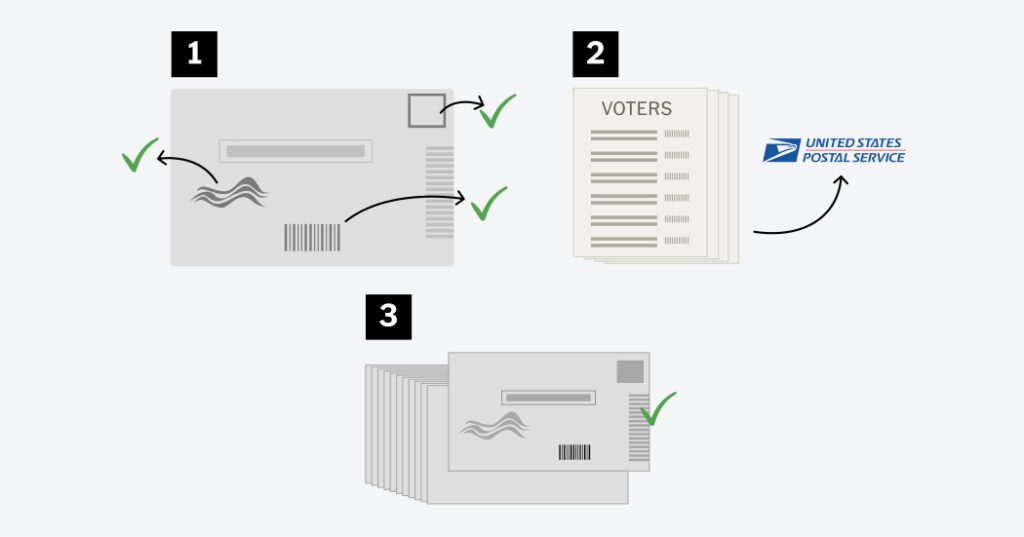
Ballot envelopes must comply with three new standards. Envelope designs must be reviewed and approved by the Postal Service.
Each ballot envelope must:
-
Include the official Election Mail logo
-
Be able to be scanned by Postal Service machines
-
Bear each voter’s unique Postal Service bar code
Some states already voluntarily follow some of these guidelines. But for those that do not, redesigning ballot envelopes this late in the process and getting them approved by the Postal Service could be logistically challenging or impossible and cause delays, according to election officials.
States must create lists of voters who are approved to receive mail ballots and upload the lists to a new Postal Service portal.
The Postal Service will deliver mail ballots only to the voters on these lists.
Each list must include three key pieces of information for each voter:
-
Name
-
Address
-
Unique bar code
This adds a new step before mail ballots can go out. The chief election officer in each state is responsible for uploading lists in a standardized format or delegating that task to other officials. The portal is still under construction. The Postal Service has said it is expected to be ready soon for states to begin to voluntarily comply.
States take their mail ballots to a Postal Service facility. Before the mailing is accepted, the service checks to see whether ballot envelopes comply with the new regulations.
These bulk mailings can contain tens of thousands of ballots, often in plastic-wrapped pallets. The ballot envelopes must comply with the new design requirements and must have bar codes that match the list of approved mail voters that states submitted to the portal.
If a ballot envelope is not in compliance, the mailing will be rejected and returned to election officials. Election officials must address and fix any errors before resubmitting the mailing, which would delay the delivery of ballots to voters.
The post Here’s How the Postal Service Could Refuse to Deliver Your Mail Ballot appeared first on New York Times.