Republicans’ prospects to stay in power in Congress and in several key governor’s mansions for the final two years of President Donald Trump’s time in office are looking increasingly dire.
Ahead of November’s midterm elections, Trump’s low approval ratings are not improving as his mass deportations and tariffs have yet to produce jobs, economic growth and lower prices. His handling of the economy is deeply unpopular. Gas prices are high amid an Iran war with no obvious end in sight. Beef and other groceries remain expensive. Even on immigration — one of Trump’s stronger issues — most voters disapprove.
The electorate is downright angry about the party in power. There’s evidence that key voter groups like White women and Latinos are turning away from the party. Democrats seem significantly more motivated to votethan Republicans.
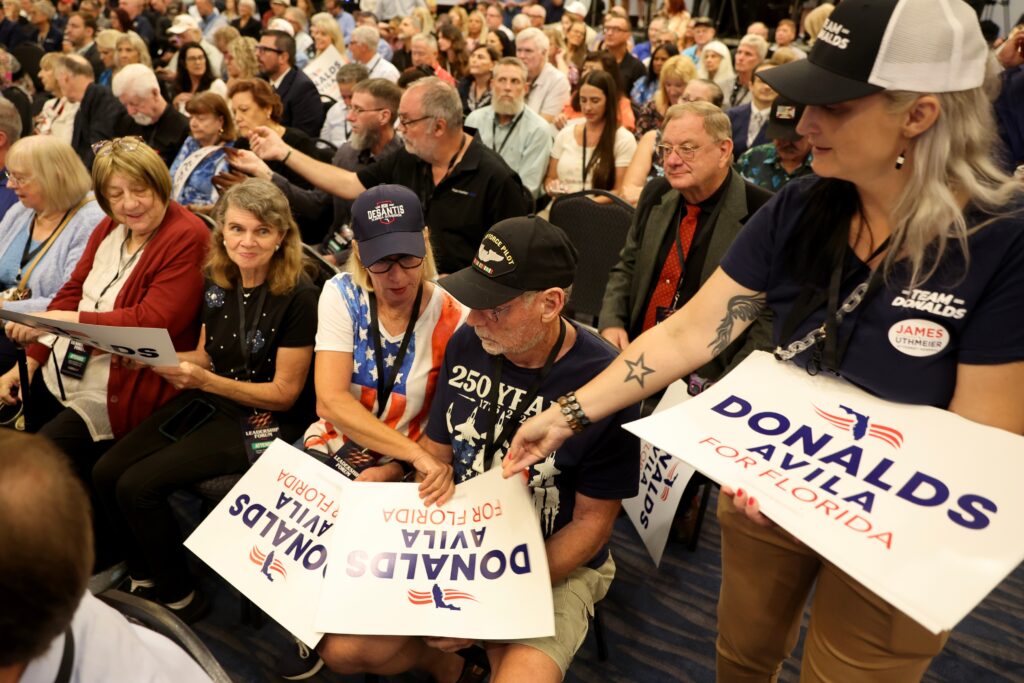
Against this backdrop, Trump and Republicans are holding a convention in Dallas this week hoping to energize their voters and highlight what they’ve done to improve Americans’ lives.
Here’s what they plan to talk about there and on the campaign trail.
Get The 5-Minute Fix in your inbox
Affordability
Multiple Republican strategists and lawmakers have expressed concern that gas prices have remained high through the summer driving season and now beyond Labor Day. Forty-one percent of Americans are concerned about being able to afford groceries in the next few months, according to a July AP-NORC poll.
But Republican lawmakers can talk about other ways they’re trying to make lives more affordable, said Sarah Chamberlain, president of the Republican Main Street Partnership, which supports Republican lawmakers in competitive congressional districts
Congress passed a bill designed to make housing more available and cheaper. (It became law even though Trump refused to sign it.) Trump is working, mostly through executive orders, to try to lower the pricesof commonly used prescription drugs.
Republicans in tough elections in New Jersey and New York can campaign on securing much higher deductions for residents who pay high state and local taxes.
“Affordability is the top issue,” Chamberlain said in a recent interview.
Trump’s tax cuts
Republicans passed a tax bill last year designed primarily to extend tax cuts from Trump’s first term.
What little voters say they know about the legislation, they say it will mostly benefit wealthy and big businesses. When the tax cuts went into effect this spring, a number of Americans received higher tax refunds. The bill does offer larger tax breaks to the wealthy and includes tax breaks on tips and overtime, an expanded child tax credit and small-business relief.
“Cutting taxes was this Congress’s signature achievement,” said Republican strategist Alex Conant in a recent interview, “and it’s popular with our base and independents.”
Yet the legislation is controversial even among Republicans in Congress. To help pay for the tax cuts, the One Big Beautiful Bill significantly cut health care and food assistance for millions of Americans. Three Republican senators voted against it, citing concerns that cutting Medicaid, a widely used public health insurance program for low-income Americans, would hurt rural health care.
Many states won’t fully feel the loss of Medicaid funding until later this year, but in California’s farm country, House Republican David G. Valadao could lose his seat after voting for the bill, given 64 percent of the residents in his district are Medicaid recipients.
Democrats
Trump is not a topic that many Republicans in tough election battles bring up on the campaign trail. “They’re on the ballot,” Chamberlain said, “not the president.”
But Democrats have an identity crisis of their own, say Republicans. The Democratic Party risks being defined by the progressives and democratic socialists who are on the ballot in places including New York City, Denver and Michigan.
Many of these candidates support universal health care, universal college, universal child care, publicly held housing and a significant increase in the minimum wage; policies they argue are popular with working-class Americans. Republicans are quick to frame that as extreme and expensive, and point out that many also support abolishing U.S. Immigration and Customs Enforcement.
“You’ve got Republicans that are campaigning on commonsense ideas,” Rep. Brian Jack (R-Georgia), who helps run House Republicans’ election group, told Politico. “You’ve got Democrats that are being drawn to the absolute most extreme left of their party.”
Some Republicans feel like Trump and other candidates go too far when they try to brand the entire Democratic Party as “communists.” (Democratic socialism and communism are not the same thing.)
“You can’t just scream ‘socialism and communism,’” said one Republican strategist speaking on the condition of anonymity to talk candidly about Trump’s midterm strategy. “We have to talk about health care and gas prices, and what to do about it.”
Culture wars
Republicans are also leaning into culture-war targets that they hope can motivate right-leaning independents and Trump’s base to get out to the polls.
Trump has issued an executive order trying to block transgender girls from playing in female youth sports; his administration is fighting for state bans in court and aggressively investigating schools that allow such athletes. He’s also banned transgender troops from the military.
Trump is still trying to limit mail voting and to make it harder to register to votein an effort to prevent immigrants from illegally casting ballots.
He continues to push for his White House ballroom and triumphal arch, to put or keep his name on buildings, to rename parts of the country that share names with foreign nations and to attack journalists.
Amber Phillips writes The 5-Minute Fix newsletter, a quick analysis of the day’s biggest political news. Send her an email here, or ask a question that could be featured in an upcoming newsletter.
The post What Republicans are campaigning on for the midterms appeared first on Washington Post.