Eric Schmidt is the former CEO and chairman of Google and chair of the Special Competitive Studies Project.
One night this summer, as my colleagues and I traveled by train from eastern Ukraine to Kyiv, we received warnings that dozens of Russian ballistic missiles were inbound. We pulled into Kyiv and joined the crowds rushing to the underground shelters. Within minutes, multiple explosions roared nearby as the missiles rained down, shaking the train station we were hiding in. Hundreds of passengers were crammed in there with us, many of them families with children, all waiting for the Russian onslaught to cease.
I have traveled to Ukraine throughout its long war with Russia, helping the Ukrainian military develop cutting-edge battlefield technologies. But I came away from this most recent trip more worried than at any time since the earliest days of the invasion.
Russia is getting much better at waging this conflict, and Washington needs to recognize that it is moving toward a strategy of total war, mobilizing its factories and manpower to bombard Ukraine into submission. Defeating Russia now requires more than the transfer of weapons. Ukraine will need the West to marshal its collective resources on a scale sufficient to outproduce and outlast its enemy.
For much of the conflict, Ukraine’s great advantage was its ability to adapt and innovate. Russia had more soldiers, more money and a far larger industrial base, but creative Ukrainian engineers could develop a new weapon or system, test it on the front line and modify it within weeks. Its decentralized networks of soldiers, engineers and defense tech companies iterated faster than Russia’s lumbering military bureaucracy could keep up.
That advantage is rapidly diminishing. When Ukraine developed interceptors that could destroy Russia’s swarms of Shahed drones, Russia adapted, deploying faster jet-powered Shaheds that are much harder to intercept. Russia is in the process of deploying a satellite constellation to rival Starlink, which Ukrainian drone units use to strike Russian forces in occupied Ukraine. For years the Kremlin’s strategy consisted of throwing industrial mass at Ukrainian innovation, but it is now combining that mass with its own innovations.
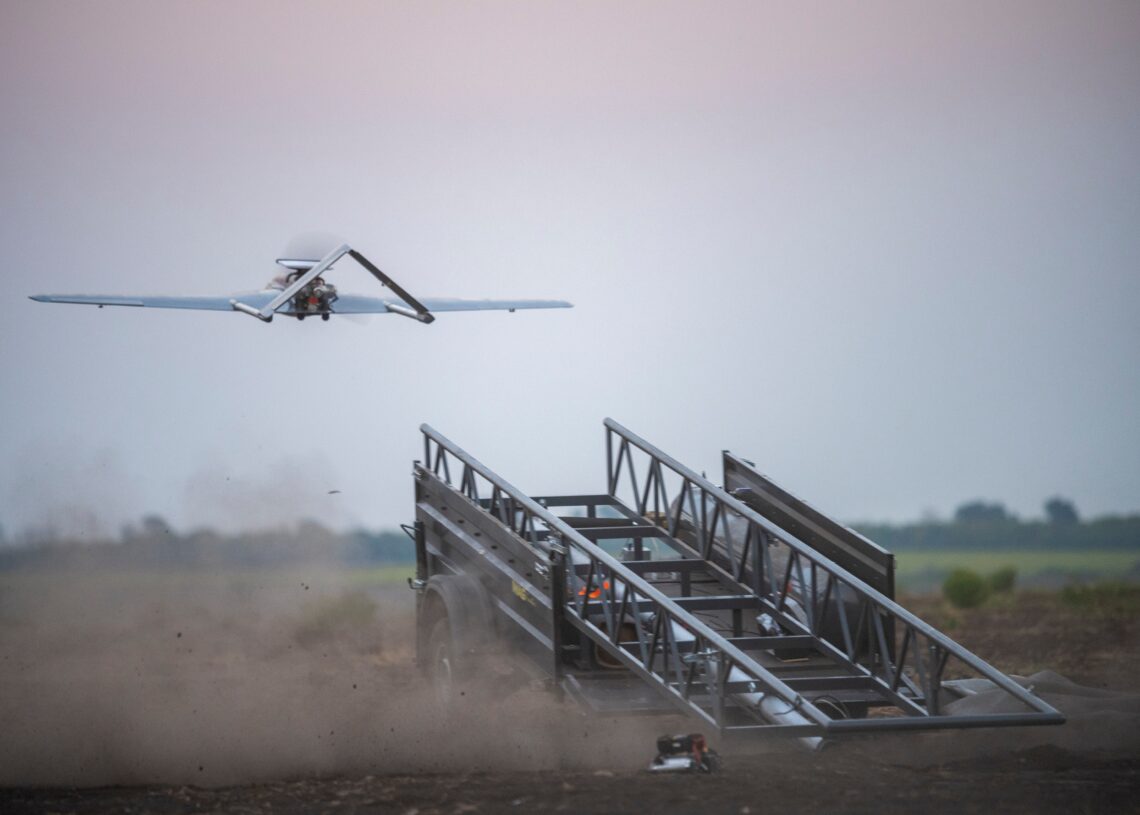
In Ukraine I saw a battlefield that would have been unimaginable when this war began. Commanders sit deep underground monitoring video sensor feeds while thousands of unmanned vehicles conduct surveillance, deliver supplies and hunt soldiers and vehicles. Movement above ground has become almost suicidal. Fully 80 percent of Ukraine’s casualties occur when troops are moving between positions. Once they reach the front line, some remain underground for months because exposure is so dangerous.
Yet this war is anything but static. It involves the fastest-moving technological competition we have ever witnessed. A drone can be highly effective when introduced and become useless within months. The enemy can change the radio frequencies he uses, build a jammer or a faster interceptor, or otherwise modify tactics. And then the adaptation cycle starts again.
Ukraine is excellent at this process, but innovation alone cannot solve the problem of scaling production to meet the voracious demands of all-out high-intensity warfare. I spoke with commanders who know what they must do to stop the Russians but lack the systems to do it. One told me that his unit had stopped looking for targets because they did not have enough drones to strike all the ones they had already identified. This is a central feature of the war today. A brilliant drone produced in the hundreds is interesting, but a good drone produced in the hundreds of thousands is what will change the tide of war.
Russia is mobilizing for total war. It is considering another vast call-up of troops, which Ukraine expects to happen this fall, and is building the industrial capacity to produce weapons in extraordinary quantities. Ukraine cannot match such enormous capacity on its own. This coming winter will be critical. Russia is already exploiting Ukraine’s lack of ballistic missile defenses to strike power plants and substations with the objective of soon plunging Ukrainian people into darkness, cold and misery.
Ukraine has the engineers, the resolve and the spirit of innovation to fight this total war. What it lacks is the industrial scale that only its Western partners can provide. Ukraine urgently needs interceptors, ammunition and long-range strike weapons, alongside investment to expand its own manufacturing capacity. The West should treat Ukraine’s defense industry as an extension of its own, co-producing weapons, eliminating supply bottlenecks and ensuring Ukrainian commanders never have to ration their targets.
Ukraine’s battle-hardened and incredibly lethal military is forging the future of warfare on the front line every day. By integrating more closely with them, Western militaries can help secure Ukraine’s victory, absorb the critical hard-won lessons of modern warfare and strengthen the international order against the threats that will define the decades ahead.
When the immediate threat passed that night in Ukraine, we left our underground shelter. Russia fired dozens of cruise missiles, as well as ballistic and hypersonic missiles at Kyiv that night; 17 people were killed and more than 40 injured, with victims dug out of the rubble of a school and a children’s hospital. For more than four years, Ukraine has absorbed blows that would have broken many countries. It refuses to give up.
But lauding Ukrainian resilience is not a strategy, and courage alone cannot defend its cities or win its war. Ukraine has bought the West four years with the blood of its soldiers and the ingenuity of its engineers. We cannot let it face another winter alone under Russian bombardment.
The post Ukraine’s way of fighting war can’t match what’s coming appeared first on Washington Post.