For a city-state with neither abundant natural resources nor a large population, the key to prosperity was ensuring things just worked, said Lee Kuan Yew, the founding father of modern Singapore.
And keeping the country running smoothly, from its seaports and airports to financial services, were strict and unbendable rules, enforced by a phalanx of well-paid public servants.
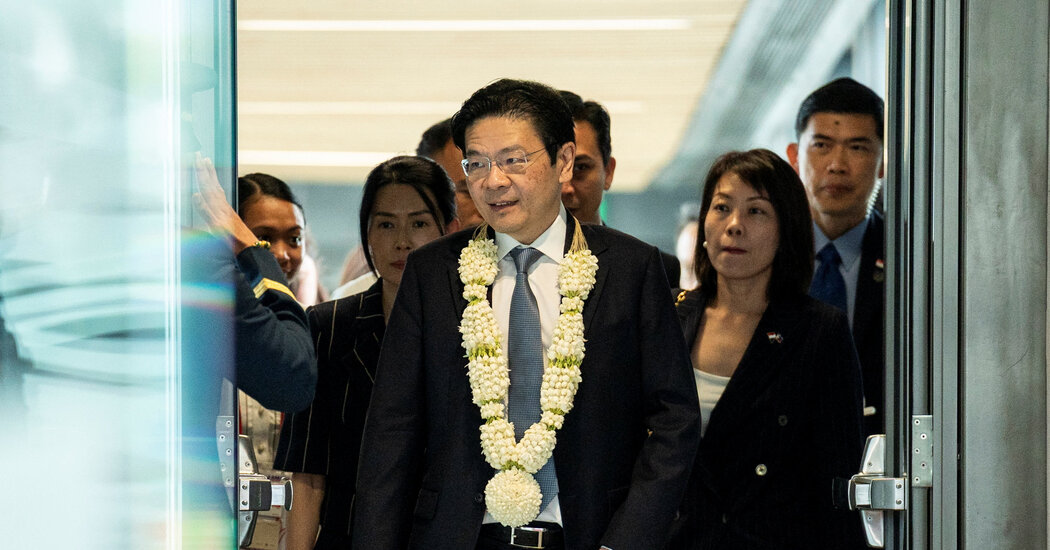
The idea was reaffirmed on Tuesday, as Prime Minister Lawrence Wong announced ministerial wage increases that will bump his annual salary by 64 percent to $3.6 million Singapore dollars ($2.85 million).
The move was part of a broader hike to cabinet ministers’ pay in Singapore, which has long had the highest political salaries in the world.
Junior ministers’ salaries will jump from the equivalent of $870,000 to as much as $1.4 million.
In a statement delivered to the country’s Parliament, Mr. Wong said that political salaries had been stagnant for 15 years, and that it was becoming harder to recruit top talent from the private sector at a time when the country needed to furnish the next generation of leaders.
“We recognize that highly able people have alternatives outside politics,” he said. “So we pay political officeholders salaries that are competitive, but with a substantial discount to reflect political service.”
Singapore has been governed by Mr. Lee’s People’s Action Party since 1959. Its leaders have long argued that high wages for officials were a deterrent against corruption, as well as a way to attract competitive candidates who might otherwise take high-paying jobs at private companies.
In 1985, Mr. Lee famously said: “I’m one of the best paid and probably one of the poorest of the Third World prime ministers. You abandon this for hypocrisy, you’ll end up with duplicity and corruption. Take your choice.”
Today, Singapore is one of the world’s richest countries per capita, a thriving financial hub and, thanks to its ports, a maritime giant.
Even before the latest raise, the prime minister of Singapore was already the highest-paid public servant in the world, far out-earning the president of the United States, whose annual salary is $400,000 and was last increased a quarter-century ago.
Though Singapore has consistently been ranked as one of the least corrupt countries in the world — with the 2024 trial of a former transport minister marking the first major corruption case in 50 years — the ministerial wage policy has also faced criticism.
In 2012, cabinet salaries were slashed by around 36 percent amid accusations that high ministerial wages, which are pegged to the median annual income of Singapore’s top 1,000 earners, made the country’s leaders out of touch with the realities of ordinary citizens.
In his comments on Tuesday, Mr. Wong appeared to brace for such criticism. “Political salaries are a difficult and emotive issue,” he said. “The sums involved are more than what most citizens earn. So I understand why Singaporeans scrutinize them closely, and why many feel strongly about the matter.”
While the economy is performing well, many Singaporeans still say they feel anxious about the high cost of living.
On Tuesday, Mr. Wong said that, in light of his role in the salary adjustments, he would donate the full increase in his salary to charitable causes.
“This is my own decision,” he said. “I do not expect other officeholders to do the same.”
The post Why This Politician Is Getting a 64% Raise appeared first on New York Times.