On Feb. 26, 1993, eight years before 9/11, Islamist terrorists drove a bomb-laden van into the garage of the World Trade Center in Lower Manhattan, aiming to bring down the Twin Towers. The terrorists killed six people, but their grand plan fizzled: The towers still stood.
That attack launched me on a three-decade journey into the world of jihadist terrorism to understand who these Islamist militants were and why they were so bent on attacking the United States. My early focus on Al Qaeda meant that I was the first to produce an in-person television interview of Osama bin Laden in 1997. It also meant I was one of the few reporters with a view of the organization as it grew and changed before and after the attacks that destroyed the World Trade Center and hit the Pentagon four years later.
Over the past 25 years, the causes and consequences of the 9/11 attacks have faded from memory. And as time has passed, new facts have come to light, some of them uncomfortable for what they reveal about our enemies, our allies and ourselves. Many of the vulnerabilities that Al Qaeda and its founder, Osama bin Laden, revealed are still with us, and the mistakes we made in responding have proved just as costly.
As the 25th anniversary of the attacks approaches, it is important to set the record straight so that we can avoid self-inflicted mistakes and renew our efforts to prevent a similar attack from happening again.
In March 1997, Al Qaeda was taking no chances with our CNN team. Picking us up at a zero-star hotel in eastern Afghanistan, heavily armed men bundled us into a van and gave us crude blindfolds. We drove through the night to a mud hut high in the freezing mountains, where bin Laden suddenly appeared out of the darkness.
Little was then publicly known about the small, secretive group that bin Laden founded in the late 1980s. On camera, he railed against American foreign policy in the Middle East and declared a war against the United States. He made no mention of hating American freedoms, which President George W. Bush would later claim was Al Qaeda’s motivation for this war. And in fact, bin Laden’s political motivations turned out to be only part of the story, as one uncomfortable fact would soon make clear.
After the 9/11 attacks, bin Laden explained, in a statement broadcast by Al Jazeera, that his war was, in his mind anyway, “fundamentally religious.” The key religious authorization for Al Qaeda to attack American civilian targets came from a fatwa by the Egyptian cleric Sheikh Omar Abdel Rahman, a fanatic who was imprisoned in North Carolina during the 1990s. Bin Laden had no formal religious training and believed he needed the fatwa of a prominent cleric to justify his holy war, which most Islamic scholars would not have authorized. Bin Laden’s war was in that sense religious, albeit reliant on a far-from-mainstream interpretation of Islam.
That interpretation is related in turn to a second uncomfortable fact. Fifteen of the 19 9/11 hijackers were Saudis, and that was not an accident. Bush officials said comparatively little about Saudi Arabia’s role in promoting their hard-line Wahhabi ideology at home and globally, and the influence that had on bin Laden. Since 2024, however, a lawsuit filed by the families of some 9/11 victims has uncovered disturbing evidence that a Saudi national living in the United States may have had some foreknowledge of the attacks, and that he played a role in supporting two of the 9/11 hijackers who flew a passenger jet into the Pentagon. The evidence suggests that Al Qaeda enjoyed some level of support in Saudi official circles.
The next uncomfortable fact is that we Americans created the post-9/11 quagmire in the Middle East, not bin Laden. Some commentators have claimed that the 9/11 attacks were a diabolically clever ploy to drag the United States into unwinnable wars in the Muslim world. But in the lead-up to the attacks, bin Laden truly believed that America was a paper tiger and likely expected, in retaliation, only limited cruise missile strikes or bombing raids against his camps in Afghanistan. His intention was to drive the U.S. from the region. He could not foresee that a year and a half after 9/11, Mr. Bush would launch his disastrous war of choice in Iraq.
Bin Laden nonetheless showed the danger that one capable person, with even a relatively small support network, can cause. Even while on the run after 9/11, bin Laden remained a hands-on manager of Al Qaeda, not an isolated figurehead as the C.I.A. and some scholars assessed. We know this from the documents found in bin Laden’s hideaway in Abbottabad, Pakistan, where he lived the final five years of his life. Those documents contained another unexpected discovery: Two of bin Laden’s wives, both with Ph.D.s, played a significant, previously unknown role in shaping his strategic thinking and public statements.
Lastly, while the memory of 9/11 has faded, its political effects stay with us, often to our detriment. On his way to the White House in 2016, Donald Trump preyed on voters’ fears about terrorism, which remained the top issue for voters after the economy. His infamous “Muslim ban” was an exploitative response to terrorist threats posed by ISIS, the Islamist extremist group that grew out of America’s post-9/11 war in Iraq.
That fact, as much as any, shows the importance of understanding 9/11, 25 years later.
Fanaticism, religious or otherwise, can drive dangerous, nihilistic attacks by those who don’t care what happens to them or their followers. That is particularly worrisome in an age when artificial intelligence could be used to develop and deploy bioweapons against which we have only weak defenses.
Second, just as bin Laden was able to evade and attack the United States, even after declaring war against it, rogue actors can still threaten today. In an era of near-total surveillance, a Saudi military officer connected to Al Qaeda killed three American sailors in Pensacola, Fla., in 2019. And the weapons available to fanatics are proliferating. As militant groups around the world are deploying armed drones, it is only a matter of time before those weapons are unleashed against targets in the United States.
Finally, in responding to threats, we are potentially our own worst enemy. This story is well enough known, but worth repeating. We didn’t need to go to war in Iraq. Unscrupulous politicians can exploit our lesser instincts for their own ends, often to our detriment.
We can all hope that America and the world won’t face again the kind of surprise attack that bin Laden launched against the United States on 9/11. But at a moment of extraordinary disruption and uncertainty, it’s more important than ever to see clearly the facts about Al Qaeda, 9/11 and its aftermath, in case we do.
Peter Bergen is the author of six books about terrorism, and of the just-published “All the Presidents’ Wars: Twenty-Five Years of America’s War on Terror.”
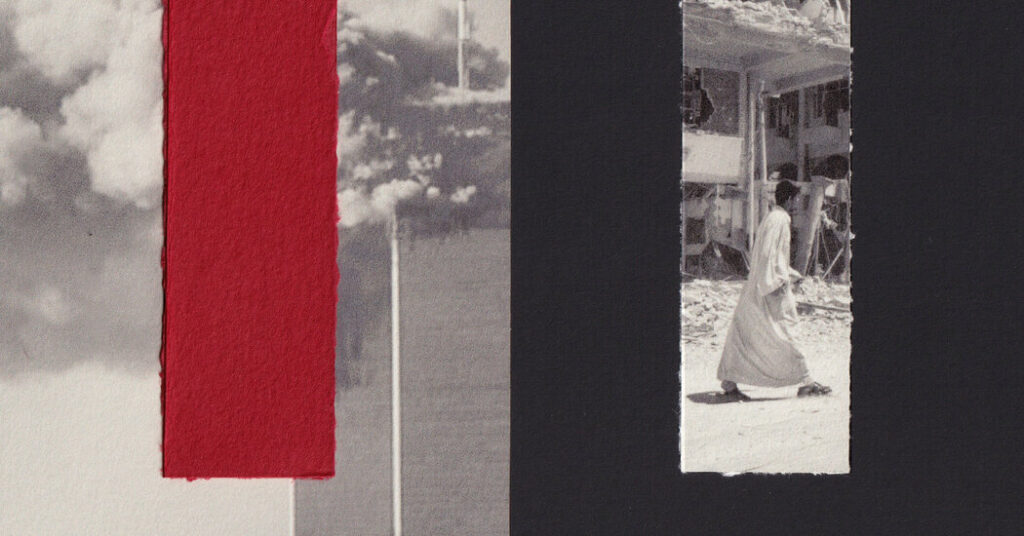
Source photographs by KARIM SAHIB and Staff/Getty Images
The Times is committed to publishing a diversity of letters to the editor. We’d like to hear what you think about this or any of our articles. Here are some tips. And here’s our email: [email protected].
Follow the New York Times Opinion section on Facebook, Instagram, TikTok, Bluesky, WhatsApp and Threads.
The post We’ve Forgotten the Most Important Lessons of 9/11 appeared first on New York Times.