Oil prices rose slightly on Sunday after the United States and Iran traded attacks on ships in and around the Strait of Hormuz in recent days, leaving a vital oil export route stuck in what analysts described as a lethal stalemate.
The price of Brent crude, the global benchmark for oil, was up about 1 percent to nearly $97 a barrel. West Texas Intermediate crude, the U.S. benchmark, was also about 1 percent higher, at a little over $92 a barrel.
OPEC Plus, the cartel of influential oil-producing nations that helps control oil prices by coordinating supply decisions, opted on Sunday to keep production flat for October. It was the first time since April that the organization decided against increasing production. The increases, though, have been largely symbolic because the Iran war has disrupted exports and the worldwide oil trade.
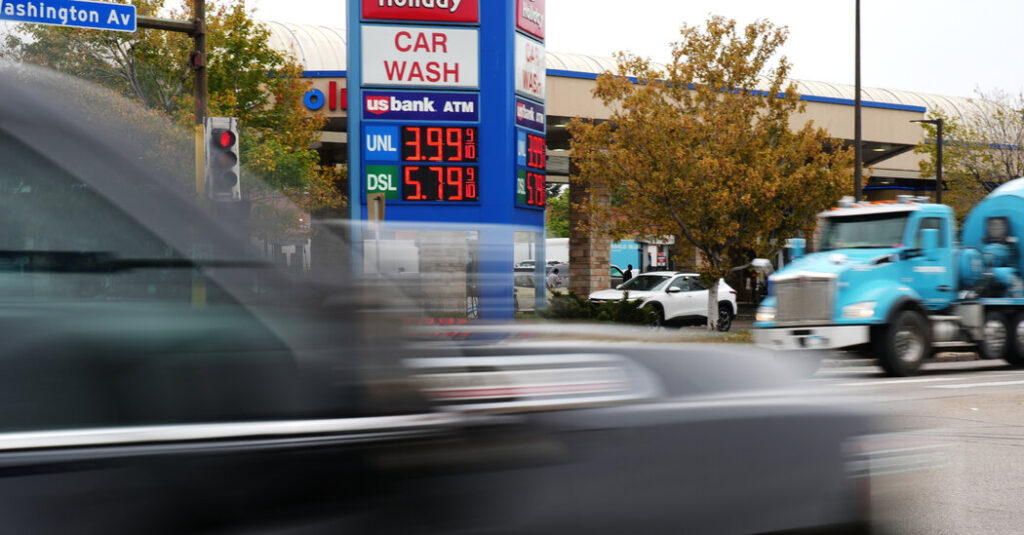
The national average price for a gallon of gas was nearly $4.15 through Sunday, according to the AAA motor club. The Labor Day weekend is traditionally a road-trip heavy period.
AAA said the price was the highest average it had ever recorded for this time of year. The previous record of $3.82 a gallon for Labor Day weekend was set in September 2012. But, adjusting for inflation, that price surpassed this weekend’s. (The 2012 price would today translate to an average price of $5.51, according to the U.S. Bureau of Labor Statistics’s inflation calculator.)
Rising fuel prices also affected holiday weekend air travel: AAA said tickets on flights to 10 of the most popular domestic destinations — including Orlando, Fla., New York and Las Vegas — were up nearly 20 percent compared with last year.
Oil and gas prices have risen sharply since the Iran war began in at the end of February, choking off shipments through the strait. Brent crude has risen more than 33 percent since the war’s start, and West Texas Intermediate crude has jumped a little over 37 percent. The national average price of regular gas has increased nearly 40 percent from its prewar average of $2.98 per gallon.
The U.S. military’s protection efforts have helped get millions of barrels of oil out of the Persian Gulf each day, but attacks from Iran have made the trip extremely risky. Two crew members on a Saudi vessel were killed last week when their ship was struck near Oman’s coast.
The war between Russia and Ukraine has added pressure through disabling strikes on Russian oil refineries, leaving the world with less capacity to turn oil into gasoline and diesel.
The post Oil Prices Rise Slightly After U.S. and Iran Trade Strikes appeared first on New York Times.