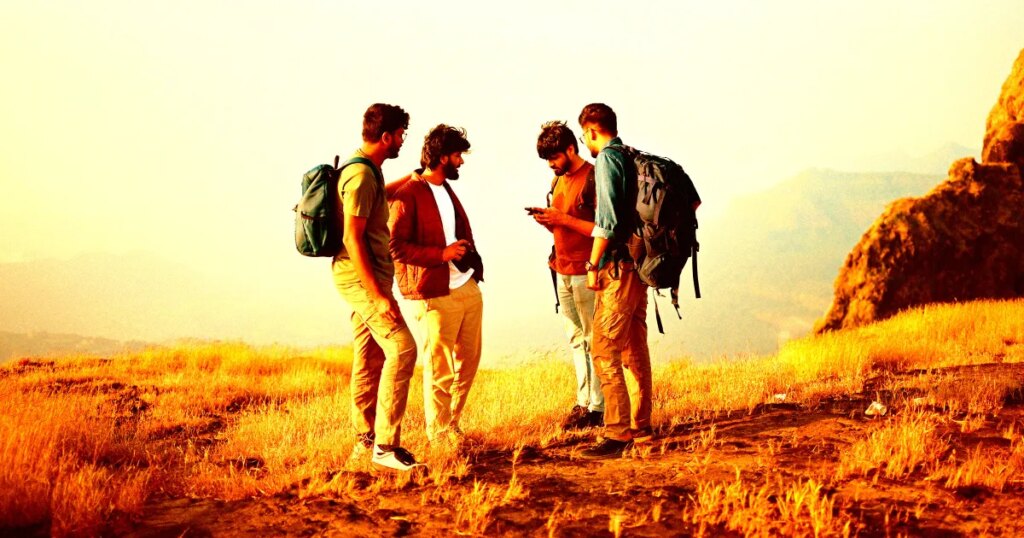
Three hikers who extensively used Google’s Gemini to plan their trip to the summit of Mount Shasta in California’s Cascade Range had to be rescued by Forest Service rangers when the chatbot’s advice went horribly awry.
As the Chicago Tribune reports, the three young men from outside of Sacramento attempted to reach the potentially active stratovolcano’s 14,179-foot peak earlier this week late into the night, despite hikers being advised not to attempt the trek past noon before turning right back.
The three “novice hikers” ended up having to descend the steep slopes well into the dark. They called the Siskiyou County sheriff’s office for directions, but opted to veer off course, ending up in an adjacent canyon. That’s where they decided to sleep overnight, with one of them having suffered an injured knee.
According to the Tribune, volunteers from the local search-and-rescue service and the US Forest Service rangers had to escort them back to safety the next morning.
It’s a walk of shame that could’ve easily been avoided if they had followed the instructions of human experts instead of turning to Google’s AI. According to the sheriff’s office, the three were “advised by Gemini to bring far less food and water than their group required, especially when their planned 8-hour ascent became a multiday ordeal.”
“It is always advisable to call the local USFS Mount Shasta ranger station ahead of your trip to ensure you have the most accurate information, and to never rely solely on AI for your trip planning,” the sheriff’s office added in a statement.
It’s only the latest in a string of incidents involving hikers who haplessly follow the instructions of an AI chatbot. Case in point, hikers trying to tackle a mountain near Vancouver last year were forced to call in a rescue team after they stumbled into snow. The hikers were wearing sneakers and didn’t catch onto the fact that the mountain range might still be snowy in early May after consulting ChatGPT.
We’ve also come across tourists being sent to nonexistent landmarks in hazardous locations by AI chatbots, like two tourists who tried to reach a nonexistent “Sacred Canyon of Humantay” in the Andes Mountains last year.
Fortunately, a nearby tour guide overheard them, advising them to stay clear of danger.
“The elevation, the climatic changes and accessibility [of the] paths have to be planned,” the tour guide, Miguel Angel Gongora Meza, told the BBC in October. “When you [use] a program [like OpenAI’s ChatGPT], which combines pictures and names to create a fantasy, then you can find yourself at an altitude of 4,000m without oxygen and [phone] signal.”
More on hiking with AI: AI Chatbots Are Putting Clueless Hikers in Danger, Search and Rescue Groups Warn
The post Hikers Rescued After Using Google AI to Plan Disastrous Trip appeared first on Futurism.