Hollywood has not made its views on President Donald Trump a secret, devoting its award shows to mocking him and making movies to criticize him. But Trump can’t spurn the glitz and glamour, and the movie industry will put aside its political convictions in favor of its true North Star: money.
Trump recently announced support for a federal tax credit for film production to encourage making more movies in America. This comes after his call last year for tariffs on foreign movies, which hasn’t happened because it isn’t possible.
The credits would amount to between 15 and 25 percent of production costs or labor costs. Details are being negotiated. These aren’t deductions, which reduce taxable income, but rather subsidies from the government, issued through the tax code.
The Screen Actors Guild-American Federation of Television and Radio Artists is a major union pushing for this giveaway. Trump was a member until 2021, when he resigned and the union banned him from rejoining.
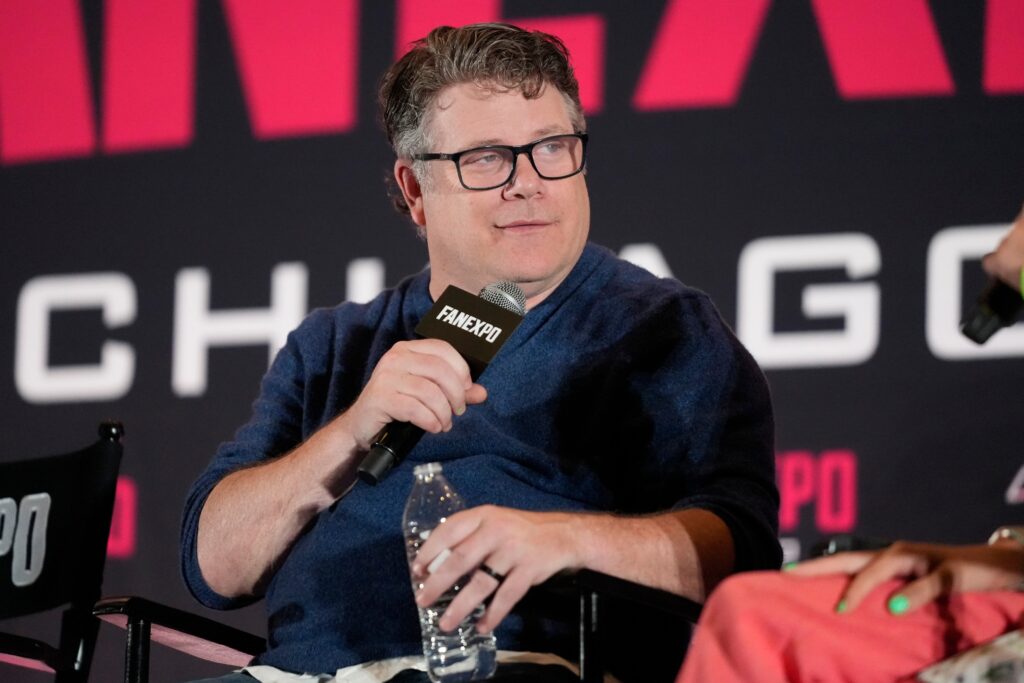
Actor Sean Astin has been the president of SAG-AFTRA since 2025. A lifelong Democrat, he campaigned for Hillary Clinton and Kamala Harris. When Trump threatened to cut federal funding for California after wildfires in 2019, Astin directed an obscenity at the president online and described him as a “disgusting monster.”
Close readers might notice the subtle change in tone now that Trump could distribute taxpayer largesse to Astin’s industry: “President Trump’s vocal and determined leadership in calling for federal production incentives is exactly what the entertainment industry needs,” the “Goonies” and “Lord of the Rings” star said in a statement on Tuesday.
Sen. Adam Schiff (D-California) built his national profile on fighting Trump, and Gov. Gavin Newsom (D-California) is one of the leading contenders to succeed Trump as president. Both support raising federal taxes on the rich. But now they’re in league with ultra-wealthy studio owners, such as David Ellison, as they implore Trump to pass self-serving tax breaks. “I am in strong agreement with the President,” Schiff tweeted.
Trump claims the idea for tax credits arose from a conversation with actor Jon Voight, but this effort to expand corporate welfare is hardly new. Newsom asked Trump to pass $7.5 billion of tax credits for Hollywood last year, and it has been one of Astin’s top priorities when lobbying lawmakers in Washington.
If the federal government creates a film tax credit, it would be replicating costly and ineffective local policies at scale. More than 40 states have offered tax incentives for movie production at some point, but over a dozen have repealed them after their manifest failure.
States don’t make back in tax revenue or economic growth the money they spend on the credits. In Georgia, the government receives only 19 cents for every dollar it spends on credits. Studios have so little need for them that they sell them to other taxpayers. Some production facilities sit empty.
Perhaps the only redeeming quality of a federal tax incentive would be wiping out the wasteful state-level credits. But the proposal under discussion would stack the federal tax credit on top of any state credits, compounding the error. (Amazon, whose executive chairman, Jeff Bezos, owns The Post, profits from state tax credits.)
The truth is that the tax code is not a significant cause of film production moving overseas. California is paying $21 million in credits for the reboot of “Baywatch” to be filmed in the state. Amid high costs, complex union contracts, and state and local regulations restricting how beach space can be used, the show’s producers still had to negotiate with elected officials to keep the filming in California even after receiving the payout.
At any moment, a nonunion set can “flip” to become unionized. Hiring one union member, even unknowingly, can cause union work and compensation rules to apply to the entire production. Once a set flips, the rules apply retroactively, which could mean repaying people for work they already did. Union representatives are trained to visit and report nonunion film sets and tell workers to walk off the set if the producers don’t agree to a union contract.
As California has become pricier, travel has become cheaper. It might have made financial sense 50 years ago to construct a simulation of a foreign locale in California rather than go there. Now, it’s often easier to go there, and as other countries have become richer, they have developed experienced film production crews. These are long-running economic trends that have little to do with government subsidies at home or abroad.
Hollywood should remember that with government money comes the potential for government control. It’s easy to imagine Trump saying tax credits should apply only for movies that are sufficiently “patriotic” in his eyes or threatening to remove the credits for “woke” films. An industry that prides itself on speaking truth to power is now begging for government help — that’s a plot twist moviemakers may come to regret.
The post Hollywood loves to hate Trump. But it loves money more. appeared first on Washington Post.