CIUDAD JUÁREZ, Mexico — Above a crowded highway outside the grandest shopping mall in this Mexican border metropolis rises one of the most recognizable names in the American commercial lexicon.
Big, red, shimmering in the desert heat: SEARS.
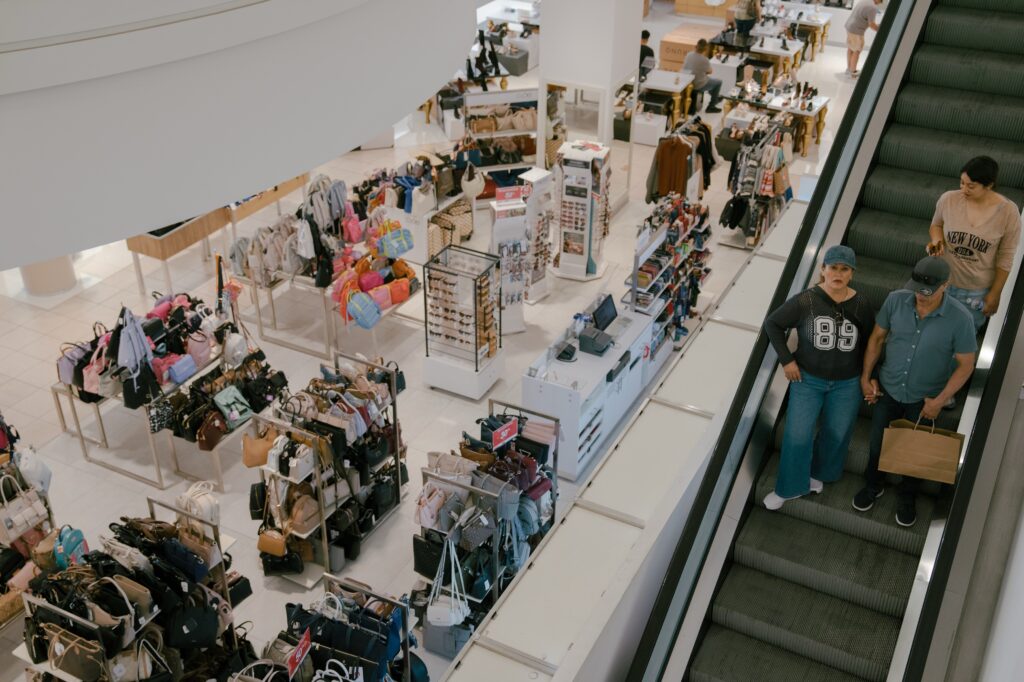
The letters are affixed to a colossal structure whose interior feels plucked from America’s childhood: cavernous halls stuffed with toys, clothes, electronics, jewelry, tools, furniture and escalators — all of it bathed in that familiar fluorescent light. As soon as the security gate rolled open on a recent Monday, in came the customers.
“They always have deals,” said Mario Cruz Vasquez, 38, as he hustled through the store. “I got to take advantage.”
Six miles away, on the other side of the border in El Paso, lost inside Cielo Vista mall, is another Sears — one of America’s last. It was at the end of a malfunctioning escalator, beneath a SEARS sign whose “R” had blinked out.
The location last year relinquished most of its second floor to the European fast-fashion retailer Primark. But even then, it doesn’t seem to have enough merchandise to fill what square footage remains. Not that it seemed to matter much on a recent Monday afternoon. The store was vacant, with nary a customer.
Two Sears. One Mexican, the other American. One thriving, the other fading into history.
Together, they tell the story of the diverging fortunes of perhaps America’s most storied retail brand, a necessary postscript to all of the obituaries that have been written about the department store’s demise:
Sears isn’t dead. It’s alive and well in Mexico.
In the United States, the 140-year-old business has been devastated by e-commerce, squeezed by rivals Target and Walmart, undercut by a disastrous merger with Kmart and unable to recover from chronic mismanagement. Once America’s largest retailer, Sears declared bankruptcy in 2018 and was sold the next year to a holding company.
Sears’s American presence, which once numbered thousands of locations, has dwindled to just five stores — in Miami, Orlando, the San Francisco Bay Area, suburban Boston and El Paso — and market analysts don’t expect them to be around for much longer. Their most frequent visitors, if Instagram is any guide, appear to be influencers on nostalgia tours.
“The stores still exist,” said Vicki Howard, a business historian at the University of Essex. “But it’s no longer the same store.”
Transformco, the U.S. holding company, did not respond to requests for comment. Through a store manager, it declined a request by The Washington Post to photograph inside the Sears location in El Paso.
Across the border, it’s a different story — for Sears and its owner. The Mexico locations were bought in 1997 by billionaire Carlos Slim, who folded them into his retail empire.
Sears now commands more than 90 locations in Mexico, and more than a dozen in the Mexico City area alone, where it occupies some of the toniest real estate. One store is nestled beside the Palacio de Bellas Artes in the historic center. Another anchors the megamall Perisur. One more is rising in Polanco, one of the capital’s wealthiest neighborhoods.
On social media, the business has millions of followers in its budget-friendly thrall, where it trumpets its hashtag #searsmeentiende, or “Sears gets me.”
“Here in Mexico, the market for this type of store still has a very long runway,” market analyst Samuel Gutiérrez Padilla said.
Even Woolworth — a U.S. department store chain that closed its last American shops in 1997 — has found new life south of the border, where it maintains dozens of locations.
How these vanquished American brands continue to thrive in Mexico reveals to some degree the widening gulf between shopping habits in two countries that at one time both loved them.
In the U.S., Sears was once the king of commerce — an icon of a booming postwar America. Pioneering catalogues and mail-order sales, it sold practically anything any American could want: clothes, hardware, tires, cars, even houses. By the 1960s, it accounted for 1 percent of the U.S. economy. In tribute to itself, the company in 1973 built the Sears Tower in Chicago, the world’s tallest building for the next 25 years.
Then it all came apart.
America fell out of love with budget malls — once Sears’s wheelhouse. The number of malls has shrunk from a peak of 1,100 in 2008 to roughly 900 today. Consumers embraced the ease of online shopping. Sears, slow to adapt, became increasingly anachronistic.
Mexico, which welcomed its first Sears in 1947, has gone in the opposite direction. The number of commercial centers here over the past decade has surged nearly 50 percent, from 584 to 887. And in contrast to U.S. consumers, Mexicans came out of the coronavirus pandemic with a renewed zeal for shopping in physical stores.
“I was surprised, but we’ve returned to our roots,” said Gutiérrez Padilla. He predicted Sears would remain relevant in Mexico for decades.
Not all agree.
“If you’re middle class and you bring a present to a party, and it’s in a Sears shopping bag, you don’t look good — you look old,” retail analyst Ernesto Cofiño said. “The present will not be different, it will be generic.”
He said the brand is in trouble in Mexico. He pointed to sales by its parent company, Sanborns Group, which in recent years have been largely flat, while revenue by its chief competitors, El Palacio de Hierro and Liverpool, have continued to grow.
Cofiño, Palacio de Hierro’s former purchasing director, didn’t mince words. “It’s a boring store,” he said. “I never go to Sears.”
Sears Mexico declined to make an executive available for an interview.
At the Sears in Juárez, where every spare inch was covered with merchandise, few seemed to concur with Cofiño.
Some said they would come to use their Sears credit — a holdover from Sears’s budget-friendly model in the U.S. Others said they would come out of habit. And still others said they would come for no reason at all. They just liked being in Sears.
In the shoe department, Jesús Holguin, 56, was picking up and analyzing boots. He hefted a black pair and considered their weight. Then a brown pair. He ran a finger over a seam.
“Look at this,” he said. “The seam looks like it would come undone. I would never buy this product for 2,199 pesos” — around $130. He set the boots back down.
“I’m of a generation that doesn’t buy on the internet,” he said. “You have to touch the product, you have to see it.”
In the women’s department, Velia Chaires couldn’t stop grinning about Sears. As a loyal customer, she said, she had been good to the retailer — and in return, it had been good to her. The store had raised her store credit to around $4,700, and now she was considering how to use it.
Told that Sears hadn’t fared as well north of the border, she shook her head.
“That’s why everything’s wrong in the United States!” she said.
Janet Robles, 46, who was shopping for clothes for her children, said she used to cross the border to shop. Now, she stays in Juárez — where there’s Sears.
“I even now see people coming from over there to do their shopping here,” she said.
Six miles away, across the border and down the unmoving escalator, the American Sears was neither dirty nor dilapidated, but it felt faded. Some of the exercise equipment for sale looked used. The shelves in the toy department were half-empty. There was not a name brand in sight.
The deals were extraordinary. Puffer coats for $4.99. Jeans for $4.99. Few were taking advantage. (While waiting for a customer to interview, a Washington Post reporter tried on several shirts. Alas, none fit.)
Then, after an hour, one finally appeared: a customer.
She was Mexican.
Alejandra Galindo, 34, said she preferred Sears in America. It wasn’t much to look at, she said, but it was cheaper.
“In Mexico, it’s so expensive,” Galindo said, and then set out into the silent store.
The post Sears isn’t dead. It’s alive and well in Mexico. appeared first on Washington Post.