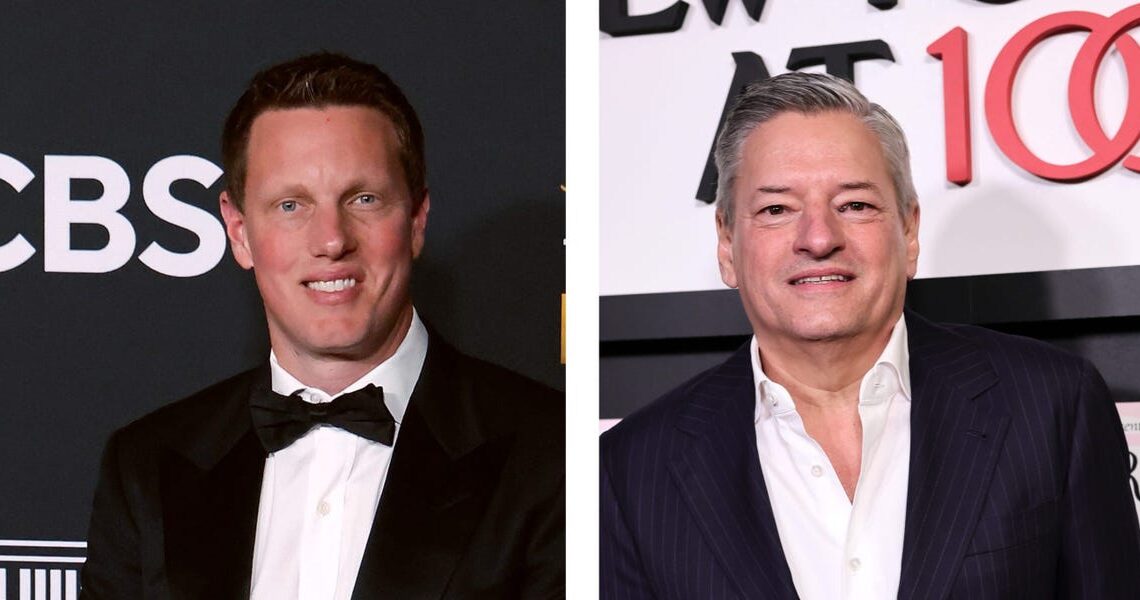
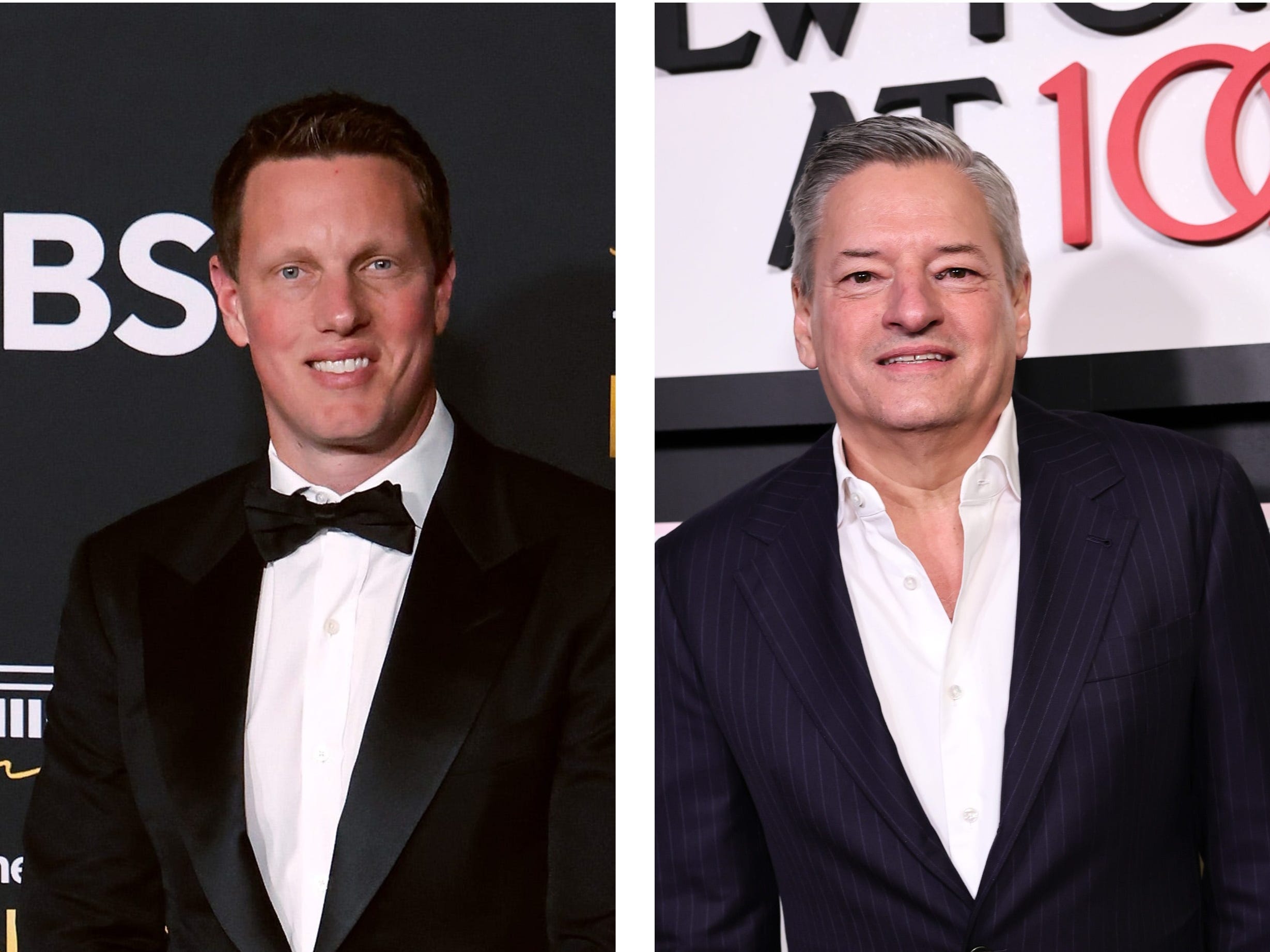
Hollywood’s latest high-drama battle of the titans: Paramount versus Netflix.
David Ellison’s Paramount made a hostile bid for Warner Bros. Discovery after WBD rebuffed its multiple offers and accepted Netflix’s offer to buy its studio and streaming business.
This means Ellison, who is backed by his billionaire father, Larry Ellison of Oracle, is making his case directly to shareholders on why he’d be the best owner for WBD.
“We have faster regulatory certainty to close,” Ellison said. He called the deal “pro-consumer, pro-creative talent,” and “pro-competition.”
Netflix didn’t respond to the hostile bid but has said that by combining its streaming hits with WBD‘s classic library and prestige HBO fare, it can supercharge its offering.
“Together, we can give audiences around the world even more value and choice, and get one step closer to being the most loved and the most valued entertainment company,” Netflix co-CEO Ted Sarandos said in announcing the deal Friday.
Here’s how the companies made their cases to various stakeholders, which include investors, employees, Hollywood talent, and regulators.
Paramount Skydance says it is offering a higher price and more certainty
Financials: Paramount offered $30 per WBD share for all of WBD, compared to Netflix’s offer of $27.75 per WBD share for its streaming and studios business, excluding its TV networks, such as CNN and TNT. While Netflix’s offer was a mix of cash and stock, Ellison emphasized that Paramount’s offer is all cash, and $17.6 billion more than the Netflix deal, an $82.7 billion offer that includes $72 billion in equity.
Approval: Ellison repeatedly argued that he’s more likely to win regulatory approval than Netflix is. He said he anticipated approval coming in as little as 12 months. President Donald Trump said he’ll be “involved” in evaluating the deal. Larry Ellison is a longtime ally of Trump, and the firm of Trump’s son-in-law, Jared Kushner, is part of the Paramount offer.
Hollywood and consumers: Ellison argued that the Paramount deal would be good for jobs and consumers. He said Paramount is committed to growing the film and TV output of both businesses, including a theatrical slate of 30-plus releases a year. It’s a pointed contrast with Netflix, whose preference for getting movies onto its streaming service quickly has created friction with the film industry. (Netflix has said it would continue to release Warner Bros. movies in theaters.) Ellison said adding WBD would make Paramount a robust competitor to Netflix, while Netflix buying WBD would extend its dominance in streaming and give it more power to raise prices to consumers.
Netflix says its offer would be better for consumers and creators
Financials: Netflix said the deal would give it a number of financial benefits. While Netflix is the top subscription streaming service, it has a ways to go in creating culture-defining IP. A big part of Netflix’s pitch is that it’ll be able to build on WBD’s famous franchises like DC Comics and Harry Potter, fueling a flywheel that’ll expand its business. WBD would have to pay a $2.8 billion breakup fee if it accepts a different offer, which Netflix said limited its risk. On the other hand, Netflix would have to pay a $5.8 billion breakup fee if the deal were blocked by regulators.
Approval: Wall Street analysts have generally characterized Netflix as having a tougher approval path. However, the company has been making the pitch to Trump and his administration. Trump said Sunday that Netflix co-CEO Ted Sarandos visited him last week. Trump said Sarandos was a “great person” who has done “one of the greatest jobs in the history of movies.” However, Trump added that Netflix has “a very big market share,” which “could be a problem.” Netflix expressed confidence in the approval process, saying it expects the deal to close in 12 to 18 months, after WBD completes its spinoff of linear channels into a new company, Discovery Global.
Hollywood and consumers: Netflix said the deal would provide better choice and value for consumers by bringing together the Warner Bros. film and TV show libraries with its own offerings, and help the WBD’s creators reach a bigger audience. Netflix said many of its subscribers don’t subscribe to HBO Max.
With Hollywood employment stagnating, Netflix also argued that the addition of Warner Bros. would let it expand its production and increase jobs over the long term. It expects to achieve $2 billion to $3 billion in cost savings from the deal, primarily coming from eliminating overlapping support staff.
Read the original article on Business Insider
The post Netflix vs. Paramount: Why each media giant says it has the best Warner Bros. Discovery offer appeared first on Business Insider.