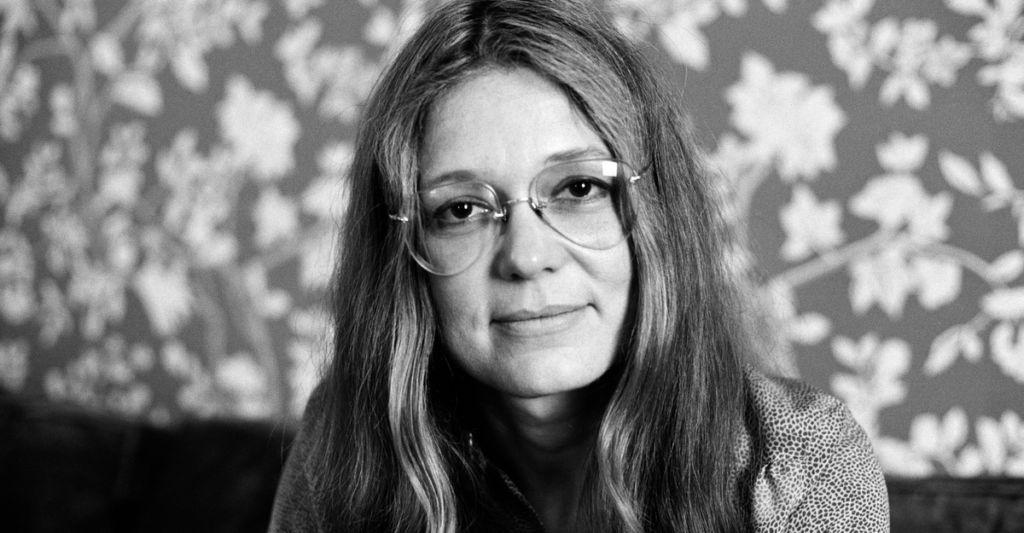
Throughout most of Gloria Steinem’s life, two versions of her existed. Publicly, Steinem was a figurehead: the glamorous co-founder of Ms. magazine, a totem for second-wave feminism and a bull’s-eye for its detractors, gorgeously inscrutable behind her curtains of streaked hair and tinted glasses. Privately, she was a workhorse: someone who hid behind her accessories, felt she’d come to the women’s movement late (in her mid-30s), and spent much of the rest of her life hustling to make up for it. If these two identities came into conflict—the persona and the person, the superstar feminist who was terrified of public speaking—Steinem, who died Wednesday at the age of 92, simply pushed on. Her politics and her life both revolved around her steadfast commitment to the idea that all women were human beings deserving of equal opportunity, and that uniting around this concept could change the world.
Steinem has said she was radicalized in 1969, around her 35th birthday, when, as one of the founding journalists working for Clay Felker’s New York magazine, she covered an abortion-rights “speak-out” in Greenwich Village, where she learned that as many as one in three American women had terminated a pregnancy. The statistic shocked her, if not the procedure—a little more than a decade earlier, when Steinem was 22 and a recent Smith College graduate, she’d had one herself. Years later, the way she’d been led to cordon it off as a private incident got stuck in her brain. It was, she later wrote in her 2015 memoir, My Life on the Road, a “click of consciousness—namely, that I had been silent and silenced.” (She dedicated that book to the London doctor who had performed her abortion.) She realized that, like so many other women, she’d “been made to feel at fault, not realizing there were political reasons why female humans were not supposed to make decisions about our own bodies.” For New York, Steinem wrote a report titled “After Black Power, Women’s Liberation,” one of the first major dispatches on a national movement that was starting to take form.
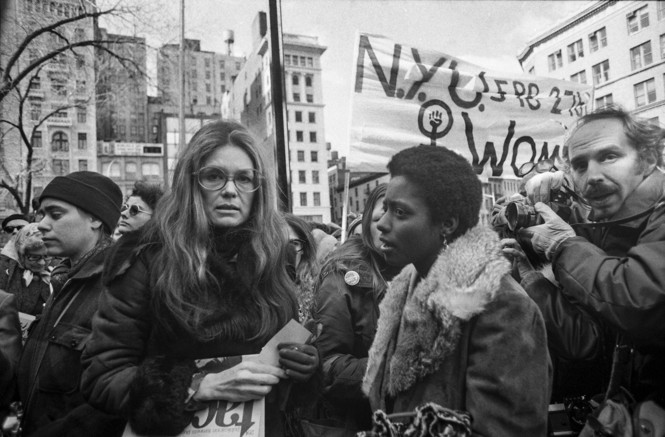
In her article, Steinem set out her thesis that for the women’s movement to be effective, it would have to be inclusive, bringing together different factions and activist groups. Throughout the 1960s, feminism had manifested most publicly as an expression of discontent among middle-class white women in the suburbs, while Black feminists worked on the fringes of the civil-rights movement, and domestic workers struggled to be recognized by labor organizers. In 1963, Betty Friedan had published The Feminine Mystique, a book that exposed the pervasive unhappiness of so many overeducated, underemployed housewives. By 1969, it had become clearer to many activists that forming alliances on behalf of all women might, as Steinem wrote, “forge the final revolutionary link.”
Feminists were rallying around the idea that the personal is political, something Steinem knew intimately. Her mother, Ruth, had been a reporter and editor for a newspaper in Toledo, Ohio, and her paternal grandmother had been one of the first Jewish women elected to public office in the United States. Before Steinem was born, her mother had had a nervous breakdown, and she became addicted to the chloral hydrate prescribed to her by a doctor. Her father, a traveling antiques salesman, took the family on the road for much of every year. When Steinem was roughly 10, her parents separated, and she was left to care for Ruth alone, bringing her toast and coffee while her mother lay in bed “with eyes closed and lips moving in occasional response to voices only she could hear,” as Steinem would later describe it. Steinem didn’t blame her mother for an intensely difficult childhood, seeing Ruth’s life as proof of how unequally women were suffering.
[Read: No, women aren’t the problem]
“The middle-class, educated and disillusioned group gets larger with each college graduation,” Steinem wrote in 1969. But she saw, too, that women for whom work was a need, not an opportunity, were equally in need of representation. When she was asked to speak publicly about women’s liberation after her New York report was published, she decided to take a friend, Dorothy Pitman Hughes, with her. “Right away we discovered that a white woman and a black woman speaking together attracted far more diverse audiences than either one of us would have done on our own,” she wrote in her memoir. She formed lifelong partnerships and friendships with some of the 20th century’s most influential activists—Florynce Kennedy, Wilma Mankiller, bell hooks—and was the treasurer for the legal fund for the defense of Angela Davis.
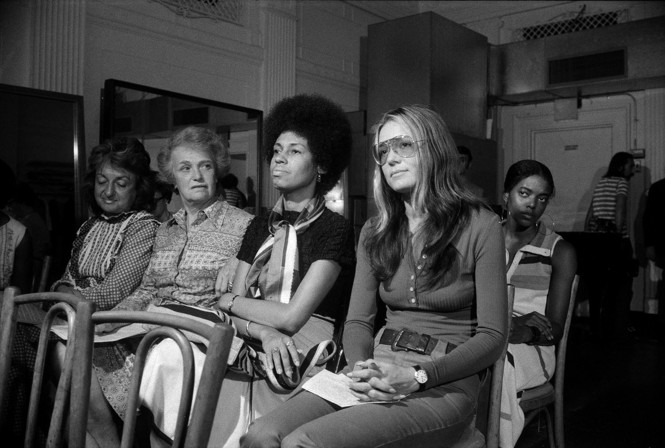
At the end of 1971, Steinem, with a collective of writers and editors, launched Ms., a magazine that debuted as a 40-page insert tucked inside New York. The idea for a feminist publication came about during meetings when people in the movement lamented that they couldn’t get meaningful stories about women published. Steinem suggested a newsletter. Brenda Feigen, who’d co-founded the Women’s Action Alliance with her, countered with the idea of a glossy magazine, a product that seemed familiar enough to appeal to women who weren’t already aligned with the cause. Even from the beginning, there were fractures between those who saw the insurgent potential of a mainstream feminist magazine and those who wanted something more radical. “We came out against marriage and motherhood,” the feminist writer Vivian Gornick said of the latter faction, in a 2011 oral history of Ms. “Gloria was uptown; we were downtown. She hung out with Establishment figures; we had only ourselves.” (Steinem pushed back later by saying that the only reason she lived uptown was that she couldn’t afford a place in the Village. She herself never had children and joked that she only married in 2000, at the age of 66, to help secure the immigration status of her husband, the entrepreneur and activist David Bale; Bale died of cancer three years later.)
The first full issue of Ms., published in January 1972, featured an image reimagining the Hindu goddess Kali as a housewife, each of her eight arms clutching a different household item while tears stream down her face. Inside the magazine were articles on sisterhood among feminists, raising children without adhering to traditional gender roles, and a groundbreaking statement signed by 53 women—Steinem, Anaïs Nin, and Billie Jean King among them—noting that they had had abortions. All 300,000 printed copies sold out in eight days. Mailbags jammed with letters began arriving at the office. The magazine was broadly mocked in mainstream publications, on TV news, and even in the White House: President Richard Nixon was caught on tape deriding Steinem to Henry Kissinger.
Anyone co-opted as a figurehead becomes vulnerable to charges of grandiosity, but the vitriol directed at Steinem for much of the ’70s and ’80s was almost unprecedented. In 1963, while trying to establish herself as a freelance writer, she’d worked undercover at Playboy’s Bunny Club in Manhattan, detailing how women were subjected to internal gynecological examinations, and were routinely groped and otherwise harassed under horrific working conditions. The report caused a stir, but it also cast Steinem in many people’s minds as a lightweight who used her looks to get ahead. Because Ms. often struggled to sell ads, Steinem was obliged to fundraise for donations to keep the magazine going, appearing in public as a spokesperson for feminism in a way that galled other women in the movement. Steinem’s sphinxlike distance—she hid behind her hair, she said, because she’d always been sensitive about the roundness of her face—also fueled her detractors. “Gloria has all the irritating qualities of a saint,” Liz Smith wrote in 1971, according to Vanity Fair. By 1975, radical feminists publicly distanced themselves from Ms., whose politics the writer Ellen Willis described as “a mushy, sentimental idea of sisterhood designed to obscure political conflicts between women.”
[Read: The surprising tale of the bunny suit]
In her memoir, Steinem was sanguine about experiencing decades of what a Ms. article described as “trashing,” or “the dark side of sisterhood.” Needing approval, she wrote, “is a female cultural disease, and often a sign of doing the wrong thing.” What often gets obscured in any discussion of feminist infighting is the scale of what the women’s-liberation movement managed to achieve during the 1970s: landmark legal victories regarding reproductive rights, sex discrimination in the workplace, and access to education; the establishment of dozens of shelters across the country for women who were victims of domestic abuse; the passage of the Equal Rights Amendment, although it was never ratified.
For Steinem, the most significant moment in her life was the 1977 National Women’s Conference in Houston, an event Steinem later described as “the most important event nobody knows about.” In 1971, she’d worked with three female representatives, Bella Abzug, Shirley Chisholm, and Patsy Mink, to establish the National Political Women’s Caucus. Now Abzug was drafting all three women to help support the unimaginable: an official platform for women in America, voted on by delegates for diverse groups from all over the country. Steinem was asked to be a “token” by groups from the so-called Minority Women’s Plank, to record their concerns and conflicts and draft language that could be combined into a single text. “Before Houston, I had known that women in small groups could be courageous and loyal to each other and respect each other’s differences,” Steinem recalled in her 2015 memoir. “After Houston, I’d learned that women could do this in large numbers, across chasms of difference, and for serious purpose.” She was prouder of her role at the conference than of anything else she’d ever done.
For the rest of her life, and the rest of her career as an activist and a writer, she maintained this belief in what women are capable of when they can find common ground. “We are linked,” she once said, “not ranked.” She felt that true feminism would ultimately liberate everyone, not least men. And she was adamant that in-person meetings, in which people could gather to listen to one another, were crucial for bringing about change and fostering community. She continued to host “talking circles” at her home into her 90s, discussing reproductive health, inclusivity, and AI over the past year, and she placed her apartment in a trust so that others can continue her work there in years to come. She saw herself fundamentally as an activist, not a theorist, and believed that the diversity of the women’s movement was also its strength. “I think I’ve wasted some of my time, but used most of it well, and have realized that my life is not separate from other people’s lives or from the universe,” Steinem told Interview in 2011. “I think our moments of happiness really come from a feeling of unity.”
The post Gloria Steinem’s Feminism for All appeared first on The Atlantic.