An independent audit of a 2024 electrical explosion that stranded 4,000 subway riders found “systemwide failures” in oversight and maintenance of New York City’s trains.
The report, expected to be released Thursday by the Metropolitan Transportation Authority’s inspector general, found a pattern of deferred maintenance and missed warnings at electrical hubs called substations, one of which was the site of the explosion on Dec. 11, 2024.
That blast, at the State Street substation in Downtown Brooklyn, was so intense that it knocked a door off its hinges and sent flames through a sidewalk grate. No one was injured, but the explosion caused widespread delays across a system that serves more than four million people a day.
The audit, which included visits to 16 of the city’s more than 200 substations, as well as a review of agency records, found that nearly one in five required maintenance inspections were never performed in 2024. One work crew missed more than half of its scheduled inspections, according to the report.
The report comes as the M.T.A., the state agency that controls the city’s subway, is pushing to restore faith in its aging transit network and pouring billions of dollars into its capital improvement plan, the largest in its history, to renew decades-old infrastructure across the region by 2029.
The authority plans to spend $4 billion on new power systems, including upgrades to 75 subway substations. That is three times as many as were renovated during the last major round of repairs, which ended in 2024.
But the inspector general, Daniel G. Cort, said in a statement that the State Street explosion had “exposed serious gaps in maintenance and oversight that could put the public and N.Y.C. Transit employees at risk.”
Demetrius Crichlow, the president of New York City Transit, a division of the M.T.A., said that major improvements had been made since the explosion, including the rehabilitation of 30 substations.
“Missed inspections of power substations are unacceptable, and leadership of the Power Division has been restructured to focus on improving maintenance practices and upgrading critical infrastructure,” he said.
Mr. Crichlow said that no disciplinary actions had been taken against workers, but that the restructured team now recorded substation maintenance records in a centralized digital system.
The M.T.A. improved its maintenance record after the inspector shared its findings with the agency last year, completing 90 percent of checks on the equipment in 2025, according to the report.
But problems persisted: According to the audit, 14 of the 35 scheduled maintenance checks at the State Street substation were not completed between April and November 2025.
The report also found that substation workers did not always wear adequate protective equipment while working with high-voltage electricity, and that employees ignored error messages on fire alarm systems at six of the substations visited by inspector general personnel. Such warnings could have indicated a range of minor to serious problems with the systems.
The inspector’s office also criticized the M.T.A.’s internal investigation of the State Street explosion, which started after the copper tubing in a transformer split, causing water to mix with oil and create the blast. The audit found that the staff member who had inspected the damage was trained as a carpenter, not an electrician, and that the equipment had been mishandled during the authority’s inspection.
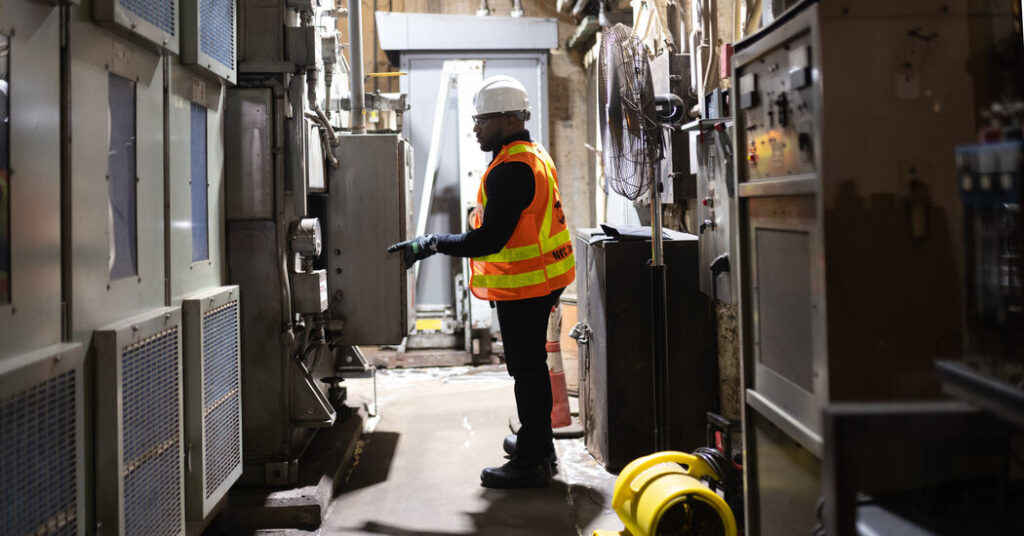
Substations are the out-of-sight workhorses of the subway system, housing massive machines that convert high-voltage electricity from the grid into lower-voltage power that can be delivered to the third rail, which powers the trains.
Dozens of the facilities, many located underground, have components that have gone decades without substantial upgrades, including some machines that were installed in the 1930s. Major substation failures are rare, because each hub is part of an interconnected network with backup equipment. But when things go awry, they can be the source of some of the most disruptive train delays.
Jamie Torres-Springer, the president of the construction and development division at the M.T.A., said that more than 70 substations were expected to undergo major improvements under the agency’s capital plan, including 21 full replacements. But he acknowledged that much work remained to shore up the century-old subway system.
“This is the system we inherited, and our obligation is to upgrade it as effectively as we can,” he said.
The post Subway Explosion in 2024 Revealed ‘Systemwide Failures,’ Audit Finds appeared first on New York Times.