The Trump administration has rolled out several programs intended to pacify consumers frustrated with high beef prices and ranchers angered by beef imports.
On Monday, Brooke Rollins, the agriculture secretary, opened a “Ranchers First Initiative” to provide more financial certainty to ranchers who chose to invest in growing their cattle herds.
The action came days after President Trump said he was “authorizing legal documents” to allow farmers and ranchers to process their own food, a potential challenge to large meatpacking companies.
The president’s announcement followed his signing a proclamation in August that would allow 300,000 metric tons of lean beef trimmings to enter the United States at a reduced tariff rate over the next three months. That triggered immediate blowback from ranchers and even a number of congressional Republicans, concerned that foreign beef would eat at domestic profits. Beef imports are already up 13 percent this year compared with 2025, according to Agriculture Department data.
“This is a pure gift to the big four meat processors, so that they can bring in substandard beef and sell it at U.S. beef prices,” said Walter Schweitzer, the president of the Montana Farmers Union.
Industry groups representing ranchers and meat processors said the moves could threaten food safety, and agricultural economists said they would cause chaos in the cattle market and do little to bring down the high cost of beef.
“These policies should not be expected to increase beef supplies or lower retail beef prices in the next year or two,” said James Mitchell, a livestock economist at the University of Arkansas.
A pound of ground beef cost $6.89 on average in July, according to the Bureau of Labor Statistics, up 10 percent from a year ago. With the midterm elections two months away, Mr. Trump is quickly trying to appease both consumers concerned with affordability and ranchers who form an important voting bloc that benefits from high cattle prices.
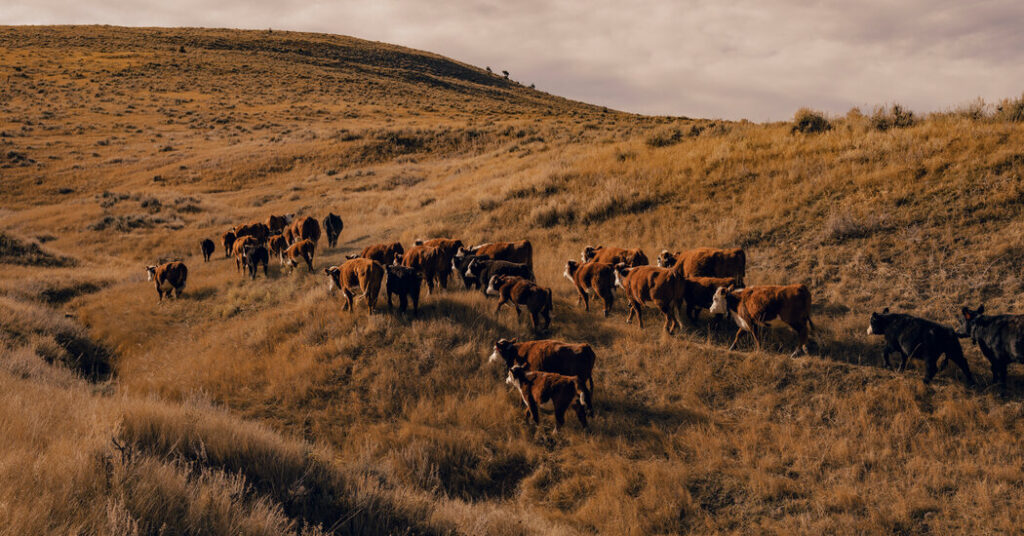
The U.S. cattle supply is at its lowest level since 1951, because years of drought and low prices led ranchers to shrink the sizes of their herds. Normally, high cattle prices encourage producers to hold back heifers and cows they might otherwise send to slaughter, so that they can grow their herds and take advantage of the high prices for longer. That shift takes several years to materialize because cows birth only one calf a year. A larger cattle supply would eventually stabilize or lower beef prices.
The initiative that was introduced by the Agriculture Department on Monday attempted to mollify ranchers, but contained few specifics about implementation. It included a new type of insurance to encourage ranchers to retain heifers to birth more calves, assistance to help ranchers recover more quickly from wildfires and loan guarantees for small and regional slaughter facilities.
The guarantees take particular aim at the market power of the big four meatpackers — JBS, Tyson Foods, Cargill and National Beef — who collectively slaughter more than 80 percent of the cattle in the United States. The president said on social media he would “break this powerful monopoly” of the big four, which have long faced criticism that they push out smaller processors, which reduces competition and raises the cost of beef.
But even some who compete with the large processors criticized the president.
“I think it’s crazy what he’s recommending,” said Jim Hertzog, who owns a small meat processor that slaughters around 100 head of cattle a week. He is concerned that the president is suggesting relaxing slaughtering regulations.
“We have the best and the safest beef in the world, and why in the world would you want to lift regulations to make it easier?” he asked.
The remaining processing market is made up of smaller independent meat processors like Mr. Hertzog and what is called “custom exempt” processing. Smaller processors have Agriculture Department inspectors on site, while custom exempt processors do not. They can only slaughter animals for personal consumption, and cannot sell their meat to the public.
While groups representing the big four meatpackers and feedlots echoed Mr. Hertzog’s concerns, not everyone was opposed to changing meat processing regulations.
“This is a step in the right direction,” said Bill Bullard, the chief executive of Ranchers-Cattlemen Action Legal Fund, which represents independent cattle producers. He said reducing regulations around the food safety plans that all meat processors must implement, no matter their size, could reduce burdens for smaller processors.
And even some political opponents, like Representative Chellie Pingree, Democratic of Maine, support strengthening small processors. “The issues related to small-to-medium sized farmers having adequate slaughterhouse capacity is huge,” she said. She has introduced bipartisan legislation that would allow custom exempt processors to sell meat within their states.
But beyond stating that regulations could be tweaked, Ms. Pingree said President Trump’s beef and cattle policies were vague and incoherent.
“This is emblematic of this Trump administration, which just seems to have chaotic and incompetent strategies and no coherent policy you can look at and say, ‘This is what they are doing to support cost or the supply,’” she said.
Even though the president labeled the big four processors a monopoly, his administration moved to rescind updates to the century-old Packers and Stockyards Act. Former President Joe Biden implemented those changes to increase competition in meat processing and to protect ranchers from abusive practices.
Todd Blanche, the attorney general, confirmed in May that the Trump Administration was investigating potential antitrust issues in the meatpacking industry. Grocers have long argued they are forced to buy meat at inflated prices because of the meat processors’ concentrated market power, and have won millions in settlements after suing them.
On Tuesday the Justice Department said it sent letters to eight grocers in July that questioned them about high beef prices, the first indication that its meatpacking investigation could widen to include beef prices and grocers. Kroger, Publix, Walmart, Albertsons, Aldi, Costco, Amazon and Ahold Delhaize USA, which operates Stop & Shop and Food Lion stores, received the letters.
Still, volatile federal policies, along with drought in key cattle areas and the re-emergence of the flesh-eating screwworm fly, have made the economics for ranchers even more challenging.
“We like to say that growing the size of the U.S. cattle market takes the three P’s: profit for producers, pastures and patience,” Mr. Mitchell said. “Right now, we only have one of those. We have profits.”
There is also widespread skepticism that, even with a leg up, small meat processors can truly compete with and blunt the power of the multinational conglomerates, whose beef businesses are currently bleeding money.
Tyson Foods projected that it would lose at least $500 million on its beef business this year, and JBS said it lost $427 million on its North American beef business in the first half of 2026 alone. Rising cattle costs have erased gains made by charging more for beef, and both companies are closing unprofitable cattle processing facilities.
The White House’s policy announcements and statements have left many in the industry confused. About 80 percent of the beef Americans consume comes from cattle raised in the United States, and the only way to increase the supply of domestic beef is for ranchers to rebuild their herds, but that takes years to accomplish. While some of the president’s policies support that goal, his increasing beef imports effectively lowers the price ranchers receive for cattle and would probably lead them to reconsider investing in raising more cattle.
“All he is doing now is just blowing smoke, trying to cover his tracks, and it is absolutely ridiculous what he is trying to do,” said Mr. Hertzog, who encouraged people to vote for Mr. Trump in 2024.
The post Trump’s Tactics to Lower Beef Prices and Appease Ranchers Fall Short appeared first on New York Times.