When a 7.4-magnitude earthquake struck Colombia last month, vital systems broke down for more than a million and a half people in the region: no water, no electricity, no cellphone signal.
Civilians rushed to help, setting up donation points where people could drop off or collect aid in homes, cafes, universities, churches, gyms and at least one brewery. But the effort was haphazard: Some sites had food but no water. Others had water but no clothes. Diapers disappeared, and one day, everyone seemed to need underwear.
“We’re very disorganized when it comes to the donation drop-off points and the distribution of help,” said Sebastián Mejía, who set up three at his coffee shops in Pereira, a city not far from the epicenter. He asked a tech entrepreneur friend, Felipe Restrepo Lebrun, about building an app to help.
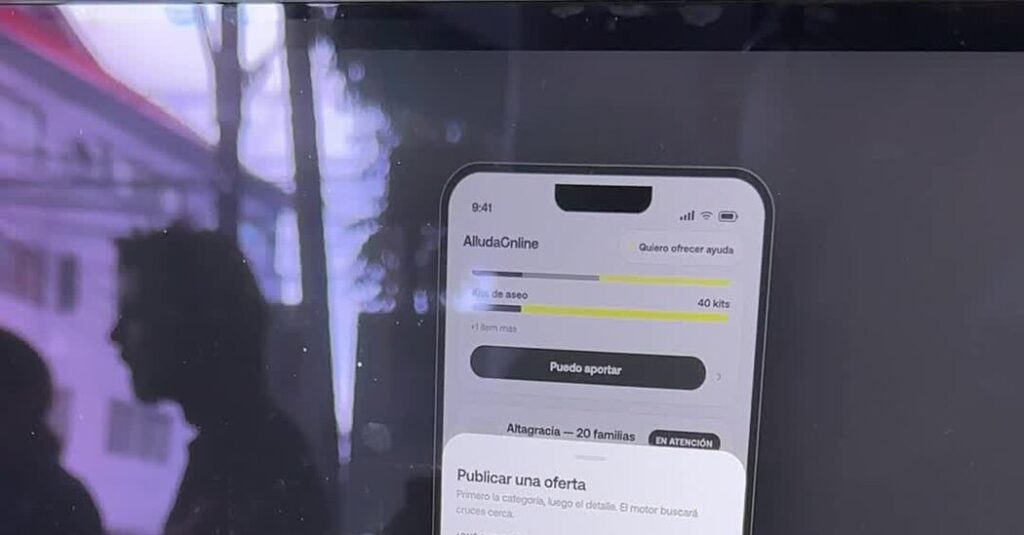
The message didn’t reach Mr. Restrepo Lebrun until the next day because of spotty internet service. But within two hours of receiving it, he had used A.I. to make a website mapping donation points and organizing aid.
The project, like civilian-led efforts in Venezuela after the earthquakes there, sought to fill gaps in the government response to the disaster. The quake in Colombia killed more than 300 people and injured more than 4,500 others, according to officials, and the epicenter was in a remote region where much of the population lives in poverty, leaving many in dire need.
Mr. Restrepo Lebrun, 44, said he would have liked to help on the ground, as he had as a teenager in 1999, when he delivered food as a volunteer firefighter after a quake that killed more than a thousand people. But today, he has severe arthritis in his ankles, so after this month’s terrifying, two-minute earthquake, he had to help another way — with his computer.
He began by making a map for Pereira using two paid accounts for the most sophisticated version of Anthropic’s A.I. coding tool, Claude Code Max. But he still needed help. To promote it, he turned to Miguel and Juan Camilo Sierra, brothers who had tried to make a similar website with A.I. but lacked the technical expertise to launch it.
The brothers used social media to share the app widely. Just three days after the quake, users had uploaded 100 donation points across 25 cities and towns. The rollout was far from perfect — electricity and internet service were still offline for many, and the site briefly collapsed after 23,000 visits. And with limited staff to oversee or verify content, its operators have little ability to prevent people from exploiting the system or committing fraud.
They achieved their immediate goal, though: They got it running quickly.
The site, initially called Ayudas Pereira and renamed alluda.online after users outside the city requested help, grew to offer a range of features beyond just mapping aid. Drop-off points can list their supplies, and users can request or offer free goods and services, like help transporting goods by car.
“We are very proud, because we have done the role of the government,” said Daniel Zuluaga, a volunteer at the Bajo Cuerda brewery, one of the most active of the sites. “The government, you know, is very slow, very bureaucratic.”
Officials in the Pereira city government said there was only one official aid collection center, and called for people to rely on the city’s official channels to avoid fraud. At the regional level, though, Diana Ramírez, coordinator of disaster management for the Risaralda Department, whose capital is Pereira, said she saw potential in the app.
“The work we do is sometimes very manual, and being able to rely on technology would make it faster and easier,” she said. She plans to bring Mr. Restrepo Lebrun together with a team of disaster experts from her office, she said, to discuss collaborating.
Nationally, some Colombians’ criticism has centered on the federal government’s speed and the housing minister’s departure for vacation just days after the earthquake. The minister apologized, saying that he had continued working on the trip, and officials from the disaster management agency and housing ministry did not immediately respond to requests for comment.
Bajo Cuerda, like most civilian donation points, operates on good faith. Mr. Zuluaga said they understood that even people who couldn’t prove that their houses had collapsed might be struggling because they were unable to work. He said the brewery’s all-volunteer operation had received deliveries from dozens of box trucks and pickups, 10 tractor-trailers and even a plane.
Still, the scale of the disaster is stark. The earthquake affected more than 198,000 houses, including more than 37,000 that require total reconstruction, according to Colombia’s National Unit for Disaster Risk Management.
Blanca Salazar, who lost her house in the quake, learned about donation hubs via social media. With the help of her granddaughter, she used the app to request a tent, bedding, and enough food to share with her community in Villa Santana, a historically poor part of Pereira that went days without electricity.
“I’m also a victim, but I like to help,” she said.
The post After the Earthquake, They Used A.I. to Mobilize Aid appeared first on New York Times.