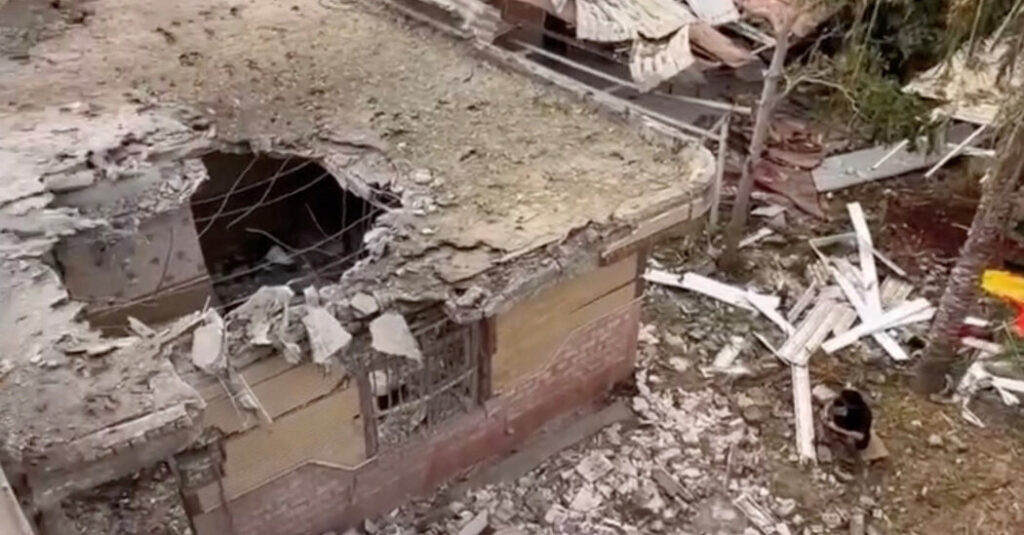
The United States and Iran exchanged a barrage of strikes overnight, an outburst of violence that killed both military personnel and civilians in Iran, including four people at a wedding, according to Iranian news media and officials.
U.S. Central Command, which oversees the military’s operations in the Middle East, said that it had struck Iranian military targets in retaliation for attacks on ships and American forces in the region.
Four members of the aerospace division of the Islamic Revolutionary Guards Corps were killed in a U.S. strike in the western city of Kermanshah, according to a Revolutionary Guards statement published on Wednesday by Tasnim, an Iranian news agency. At least 12 people were killed in strikes across Iran’s southern region, the Iranian state outlet Press TV reported on Wednesday.
Among the locations hit by the U.S. military was a wedding in a residential area in the small port town of Kuhestak in the Hormozgan province of southern Iran, according to Iranian officials. Four people, including a child, were killed in the attack, with around 50 others wounded and hospitalized, Iranian state media reported.
U.S. Central Command said it was aware of the reports. “The U.S. military never targets civilians, unlike the I.R.G.C.,” the military said, referring to the Revolutionary Guards.
In a social media post on Wednesday, Esmaeil Baghaei, spokesman for the Iranian Foreign Ministry, condemned the strike and vowed that Tehran would respond “with firmness.”
In response to the latest attacks, the Revolutionary Guards said in statements on Wednesday morning that they had launched missiles overnight at an American military base in Jordan, at U.S. military equipment warehouses in Iraq and at an air base in Kuwait hosting American forces.
The military in Jordan said on Wednesday that 13 ballistic missiles had entered the country’s airspace. Ten were intercepted and three others fell in remote, unpopulated areas, the military said on social media. Kuwait’s military said on Wednesday that its air defenses were confronting attacks by Iranian drones, and Bahrain’s military said that it had intercepted Iranian aerial attacks.
The deadly back-and-forth was a demonstration of the stalemate between Washington and Tehran more than six months after President Trump launched strikes on Iran and said that he expected a quick resolution.
The Revolutionary Guards said on Wednesday, in a statement carried by state news media, that two oil tankers trying to transit the Strait of Hormuz had struck mines, exploded and were on fire. That claim could not be immediately verified.
Iran has insisted that it should control the passage of ships through the strait, which sits on its southern coast and, before the start of the U.S.-Israeli war, was a key waterway for the passage of oil and other critical resources. The U.S. Navy has been helping ships navigate a southern route through the strait, near the coast of Oman, drawing Iran’s ire.
In the statement, the Revolutionary Guards promised unspecified “additional punishments” for ships that took the U.S.-backed route.
The post U.S. and Iran Survey the Damage After a Night of Intense Strikes appeared first on New York Times.