Iran retaliated against new U.S. strikes overnight, launching missiles and drones toward U.S. positions in the region in defiance of President Donald Trump’s warning Tuesday that such actions would see Iran “hit again at a much harder and higher level.”
The overnight attacks came after U.S. forces launched a new round of strikes inside Iran, military officials said Tuesday, an expansion of attacks that recently resumed after weeks of a tenuous ceasefire.
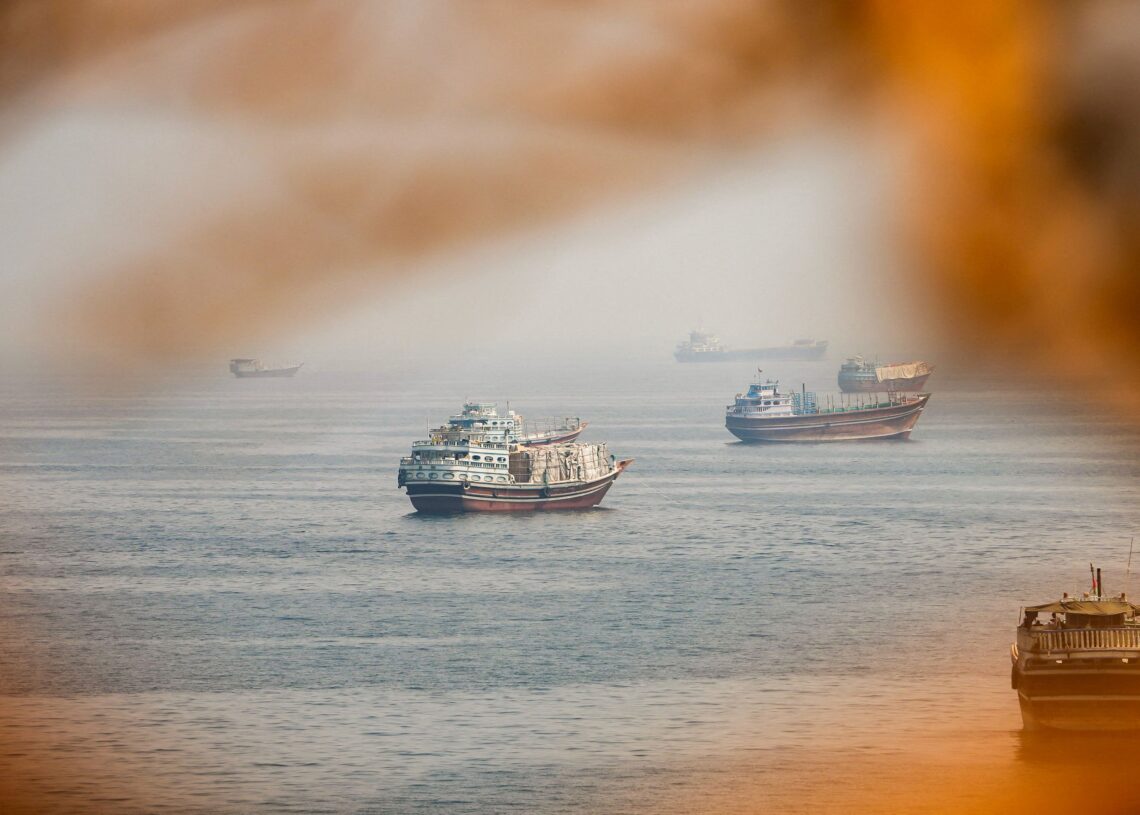
The U.S. strikes were in response to attempted attacks by Iran on commercial shipping in the Strait of Hormuz and U.S. service members in the Middle East, according to Central Command, which oversees operations in the region. The strikes targeted air defense sites, radars, equipment used to distribute mines and other systems, Centcom said.
Iranian officials said civilians were killed in the U.S. strikes, including at a wedding taking place in a home in southern Iran.
Esmaeil Baqaei, the spokesman for Iran’s Ministry of Foreign Affairs, said more than 50 people, including women and children, were killed or wounded during the attack.
“More dangerous than the bomb itself is the normalization of bombing; and more dangerous than silence is the conversion of silence into legitimacy,” he wrote in a statement on X. “Iran will respond to these savage crimes with firmness.”
Centcom denied claims of civilian deaths, saying it does not target civilians.
U.S. forces were intercepting strikes into the night, a U.S. official said, though it was unclear whether they resulted in damage or casualties. The official, like others, spoke on the condition of anonymity to discuss ongoing operations.
A spokesperson for Jordan’s military said the country, which hosts about 4,000 U.S. military personnel and has repeatedly come under attack by Iran, dealt with 13 ballistic missiles. The spokesperson said 10 were destroyed and three fell in “remote areas.” No injuries or deaths were reported.
In Kuwait and Bahrain, which also hosts U.S. forces, the respective militaries said early Wednesday that they had confronted attacks from Iran.
Many of the 50,000 U.S. troops in the region have focused on enforcing Trump’s naval blockade, designed to inflict economic pain on Iran and to protect commercial vessels from attacks.
Two oil tankers in the strait were struck by unknown projectiles Monday, according to ship monitors, raising concerns that safe commercial passage through the critical waterway is not yet guaranteed by U.S. personnel.
The Trump administration has said it is still working toward a negotiated end to the conflict contingent on several requirements, including Tehran surrendering its nuclear ambitions. That key goal, outlined by Trump at the onset of hostilities, has not been achieved through military force.
“Our goal is to get Iran to come to a deal. They understand what we want out of a deal,” a White House official said. “We’ve been very clear about that. And it’s incumbent upon them to come to that conclusion.”
The renewed hostilities began Sunday, when the United States conducted airstrikes on missile launchers on Larak Island that were preparing to disperse sea mines into the strait, U.S. officials said.
In response, Iran fired ballistic missiles at a Jordanian base housing U.S. troops. Trump said on social media Tuesday that eight missiles were intercepted, and there were no reports of casualties from U.S. officials.
Isaac Arnsdorf contributed to this report.
The post Iran retaliates with missiles and drones, defying Trump’s warning appeared first on Washington Post.