President Trump will roll out a $12 billion bailout for struggling farmers on Monday as he looks to shore up the finances of some of his most loyal supporters whose financial fortunes have been hurt by his trade war.
The rescue package, which is expected to be unveiled at a roundtable at the White House, is an acknowledgment by the administration that Mr. Trump’s trade policies have had negative consequences for the American agriculture sector. Although his plan to raise tariffs were intended to spur domestic production and open export markets, China — the biggest buyer of American crops such as soybeans — retaliated by halting purchases of U.S. farm products this year.
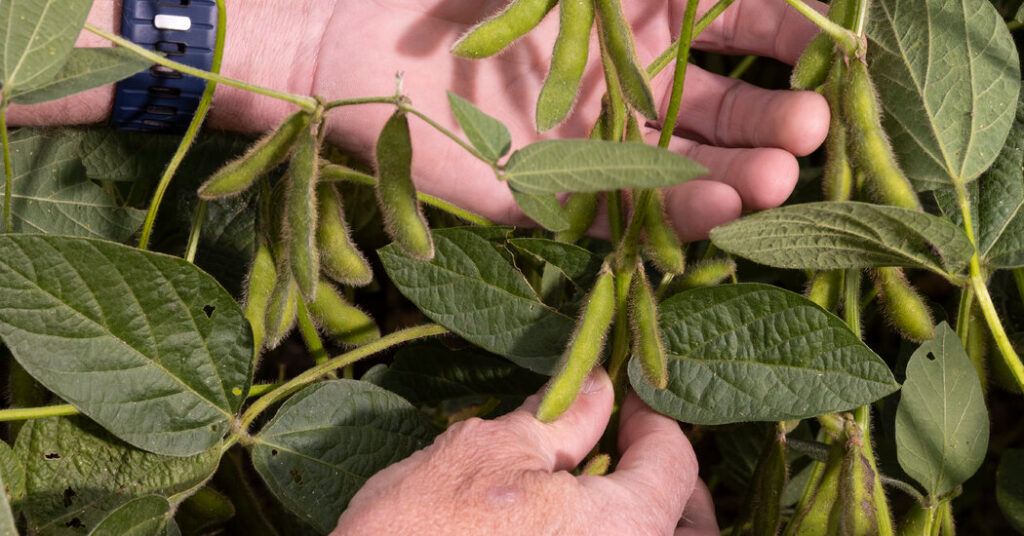
Most of the relief funds will come from the Agriculture Department’s Farmer Bridge Assistance program. According to the White House, the money will go to corn, cotton, sorghum, soybean, rice, cattle, wheat and potato farmers.
The need for the rescue package reflects the limits of Mr. Trump’s trade agenda, which relies on tariffs as leverage to strike new trade deals. American farmers have been warning of the worst crisis since the 1980s as China turned to Brazil, Argentina and other markets for food products.
The White House sought to blame former President Joseph R. Biden Jr. for failing to protect American farmers and manufacturers and said that Mr. Trump was doing what was necessary to make global trade more fair.
“President Trump is helping our agriculture industry by negotiating new trade deals to open new export markets for our farmers and boosting the farm safety net for the first time in a decade,” said Anna Kelly, a White House spokeswoman. “Today’s announcement reflects the president’s commitment to helping our farmers, who will have the support they need to bridge the gap between Biden’s failures and the President’s successful policies taking effect.”
This is not the first time Mr. Trump has had to send money to farmers hurt by his trade policies. During his first term, Mr. Trump funneled more than $20 billion in economic support to farmers after China boycotted U.S. products in response to Mr. Trump’s tariffs.
As part of a trade deal with China reached during Mr. Trump’s first term, Beijing agreed to buy an additional $200 billion of American farm products. However, after relations with the U.S. deteriorated during the pandemic, China failed to meet those purchase commitments. According to the Peterson Institute for International Economics, China bought only about 83 percent of the U.S. farm products that it had committed to purchasing through 2021.
China curbed purchases of U.S. farm products even more significantly this year. But following a trade truce in late October, China agreed to buy 12 million metric tons of soybeans from the United States this year and at least 25 million metric tons of soybeans in each of the next three years. The 25 million metric tons were in line with the 25 to 30 million metric tons that it had purchased in recent years.
Treasury Secretary Scott Bessent said on Sunday that China used American farmers as a “pawn” in trade negotiations and that the relief money would help them with financing and planning for next year.
“We are going to create this bridge,” Mr. Bessent said on CBS. “Because, again, agriculture is all about the future.”
Alan Rappeport is an economic policy reporter for The Times, based in Washington. He covers the Treasury Department and writes about taxes, trade and fiscal matters.
The post Trump Giving Farmers $12 Billion to Blunt Trade War Fallout appeared first on New York Times.