On a Monday evening in May, Treasury Secretary Scott Bessent sat down for dinner at a ritzy Japanese restaurant tucked inside a 400-year-old garden in central Tokyo.
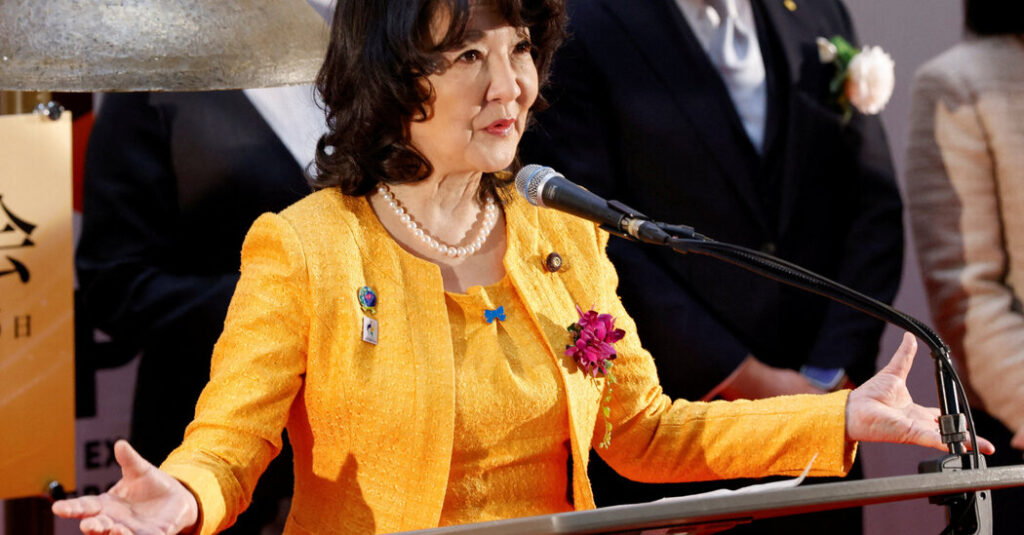
Across the table was Satsuki Katayama, Japan’s sharp-tongued finance minister, who made history last year as the first woman to hold the post. Mr. Bessent was scheduled to meet Japan’s prime minister, Sanae Takaichi, the next day. But first, he had grievances to air.
Over two hours, Mr. Bessent, who closely followed the country’s economy as a hedge fund manager, unloaded his frustration with the economic direction set by the Japanese leader. Ms. Takaichi had expanded government spending while leaning on the Bank of Japan to keep interest rates low. The strategy was driving capital out of Tokyo, sending Japan’s currency to four-decade lows.
In Mr. Bessent’s view, the yen had slumped too far. It was making inflation in Japan worse, but it was also a problem for his boss, President Trump, who has long argued that Japan’s weak yen hurts American exporters.
The situation could be remedied, Mr. Bessent said, if Japan’s central bank raised interest rates. Why, he pressed, was the Bank of Japan not being given autonomy? Why were some economic advisers around Ms. Takaichi preaching the benefits of a weak yen?
In late July, Ms. Katayama and Mr. Bessent took the extraordinary step of coordinating a joint intervention in currency markets. The move temporarily strengthened the yen, which had fallen as low as 164 to the dollar.
The policy involvements between the countries were on display again this week.
On Monday, Ms. Katayama met with Mr. Bessent at a Group of 20 finance meeting in Asheville, N.C. Investor fears over Japanese government spending pushed 10-year bond yields to a 30-year high on Tuesday amid a broader global sell-off of bonds.
She told reporters she had explained to Mr. Bessent the Takaichi administration’s policy of increasing the government’s spending while reducing its debt relative to the size of its economy. Mr. Bessent, she said, “understood and appreciated” her explanation. She denied reports that Mr. Bessent had suggested to her that the Bank of Japan raise interest rates.
Ms. Katayama, 67, has emerged as a crucial intermediary between a frustrated Washington pressing for a stronger currency and a Japanese prime minister whose free-spending agenda has weakened the yen and stoked jitters about the country’s staggering debt levels.
“People see her as a very important bridge between the Japanese monetary authorities and the U.S. side, and someone who’s seen as trying to pull back Prime Minister Takaichi’s aggressive instincts on fiscal policy,” said Izumi Devalier, chief Japan economist at Bank of America. “That’s not an easy job.”
Before turning to politics, Ms. Katayama spent more than two decades inside the Ministry of Finance — the often vilified bastion of fiscal conservatism in Japan. She has publicly supported the Bank of Japan’s independence.
Pressures on Ms. Katayama are mounting as the yen’s gains have quickly faded in the month since the intervention, with the currency slipping back to the symbolically important level of 160 yen to the dollar. Analysts and economists say it will take a significant policy shift to bolster the currency more permanently.
This article draws on Ms. Katayama’s own writings and interviews with four people who know her personally or are familiar with how she works and requested anonymity to speak frankly. The account of her private dinner with Mr. Bessent is based on interviews with two of those people who had direct knowledge of the meeting. The Finance Ministry declined to make Ms. Katayama available for an interview for this article. The Treasury Department did not respond to a request for comment.
Ms. Katayama is no stranger to navigating challenging terrain.
In 1978, she was one of just 15 women in a humanities class of 630 at Japan’s most prestigious school, the University of Tokyo. One classmate recalled her “standing out in every way.” In lifestyle magazines, she was ranked the campus’s “prettiest girl.” She has conceded that she routinely lied to dates about which school she attended to avoid intimidating them.
In 1982, Ms. Katayama became the sole woman in her entry cohort at the Ministry of Finance, a famously male-dominated institution. She wanted to “follow the money” of national budgets to gain a bird’s-eye view of how the country operated.
Ms. Katayama recalls that her early years were marked by isolation. Senior management treated her presence as an experiment, rotating her through departments and excluding her from conversations. Undeterred, she pressed forward — divorcing a husband she said failed to understand her commitment to work. She routinely landed on the ministry’s informal “dinosaur ranking” of the most feared officials.
In 2005, Ms. Katayama traded the bureaucracy for a seat in Japan’s House of Representatives, building a reputation for blunt remarks and a wardrobe of pastel power suits that cut through parliament’s sea of dark-suited men. During a 2017 television broadcast, a relaxed and visibly tipsy Ms. Katayama said she harbored ambitions to eventually lead the country, a rare display of confidence in Japan’s modest political culture.
When Ms. Takaichi appointed her last October, Ms. Katayama returned to her roots to become Japan’s first female finance minister.
Tensions emerged immediately.
Ms. Takaichi had long championed low rates and aggressive spending to spur growth, once dismissing the prospect of raising Japanese interest rates as “stupid.” Schooled in Japan’s finance ministry, Ms. Katayama had generally taken a more orthodox stance, noting that the yen was too weak and that Japan needed to live within its means.
But after Ms. Katayama returned to the ministry, bureaucrats feared that her ties to Ms. Takaichi, a longtime political ally, would blunt her ability to rein in government spending.
“As a former Ministry of Finance official, Katayama clearly values fiscal discipline,” said Motohiro Sato, a professor of public finance at Hitotsubashi University in Tokyo.
In the past, strong finance ministers have been able to check prime ministers’ spending appetites. But Ms. Katayama “lacks the level of clout to say ‘no’ to Ms. Takaichi,” Mr. Sato said. “She seemingly has more or less gone along with the prime minister’s direction.”
In December, Japan approved its largest-ever annual budget proposal, totaling more than $780 billion, driven by increased spending on technology investments and defense. When Ms. Takaichi promised tax cuts the following month, market anxiety over Tokyo’s debt burden pushed Japanese bond yields to multiyear highs. The yen plummeted.
People familiar with the interactions between Mr. Bessent and Ms. Katayama — they have held roughly a dozen talks — said they have a friendly rapport. But they come from different backgrounds. He was a private-sector investor who has historically advocated for free-market policies. She was a longtime bureaucrat more comfortable with state-directed economic intervention.
Each holds a firm conviction about what is best for the Japanese economy.
Shortly after the joint intervention, speculation swirled in Japanese media that Ms. Katayama might be removed in a cabinet reshuffle in September.
Weeks later, those reports gave way to coverage indicating she would stay, in part because she was seen as an important link between Japan and the United States, and between Ms. Takaichi and Mr. Bessent.
Koichi Hamada, a professor emeritus at Yale University, knows both Ms. Katayama and Mr. Bessent from his days as a top economic aide to former Japanese Prime Minister Shinzo Abe. He said he views both finance officials as reasonable people.
As with Mr. Bessent and Mr. Trump, Ms. Katayama and Prime Minister Takaichi “probably have some difference of views,” Mr. Hamada said. “If Mr. Bessent and Ms. Katayama keep talking, that will be a good thing.”
The post The Woman at the Center of Japan’s Currency Fight appeared first on New York Times.