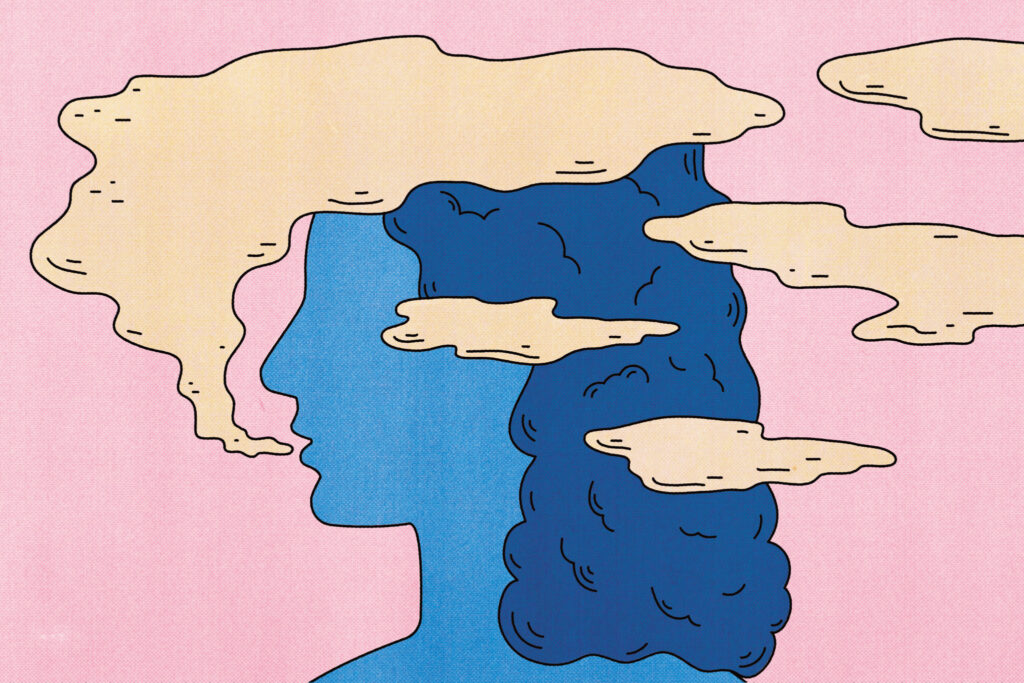
Cannabis is more popular than ever, with more than 21 percent of Americans 12 and older saying they used it in the past year. Older adults are the fastest-growing group of cannabis users in the country, and there are now more daily or near-daily users of cannabis than alcohol, according to a 2024 study.
Many people who use cannabis say they enjoy the buzz or feelings of relaxation; others may use it to help with sleep and treat pain.
But despite perceptions of cannabis’s safety, there are still many unknowns about how long-term use can affect our health. “We don’t fully understand why some people and not others have negative consequences to using cannabis,” said Deepak D’Souza, a professor of psychiatry at Yale University School of Medicine.
So how much cannabis is okay to use? Because cannabis can affect people differently, whether some is “okay” depends on the individual. But overall, the consensus among scientists is that the lower the dose and frequency, the lower the risks in general.
Unlike for alcohol or cigarettes, there is no “standard” unit of cannabis. “Dosing is tough because cannabis is not a standardized product, so it’s hard to measure it,” said Deborah Hasin, a professor of epidemiology at Columbia University, Department of Psychiatry.
Here are a few things scientists want you to know about the latest research on cannabis.
Cannabis is much stronger today
On average, the concentration of cannabis’s main psychoactive ingredient, THC, has risen sharply.
In the 1960s to 1970s, cannabis typically had 4 percent THC, D’Souza said. “We now have a staggering array of products that have very high THC content which wouldn’t occur in the natural world,” he said. Some products, such as vape cartridges and “dabs,” can hit 90 to 95 percent THC.
“There’s certainly reason to suspect that that could be having a role in some of the negative consequences that only seem to be really emerging as trends now,” said Joshua Gowin, an associate professor of radiology at the University of Colorado Anschutz who studies the effect of drug use on the brain.
Cannabis can affect people differently
How cannabis works its magic is due to its action in the brain. THC binds to specialized receptors in the brain’s endocannabinoid system. “These receptors have not evolved to be part of the brain for us to get intoxicated,” D’Souza said.
Instead, the endocannabinoid system is involved in many functions — sleep, appetite, memory, circadian rhythm — and THC, as a result, impacts them as well.
But “what the THC in cannabis does and what the endocannabinoid system is doing are very different,” D’Souza said.
The cannabinoids that the brain naturally synthesizes are released in a tiny area and last very briefly. In contrast, THC from weed is more blunt, activating receptors all over the brain and over longer periods of time, causing the high and euphoria.
While on cannabis, people can experience impairments to memory and cognition. Interestingly, while many people use cannabis to relax, “some people, for reasons we don’t really understand, can have the exact opposite effect,” D’Souza said. They can have a panic attack under the influence of cannabis, he added.
The research on long-term risks is murky
It’s unclear whether cannabis can have longer-term consequences on adults. Results have so far been mixed on cognitive effects.
In a 2025 study published in JAMA Network Open, Gowin and his colleagues assessed how lifetime cannabis use may differ from the short-term effects by neuroimaging of over 1,000 people aged 22 to 37. They found that heavy cannabis users, who self-reported over 1,000 uses over their life, had lower brain activation during a working memory task — where they had to hold on to information for a brief period of time.
“Potentially there could be some sort of brain reorganization that happens when the brain is exposed to THC over a long period of time,” Gowin said. “The reorganization could decrease the amount of the brain that’s able to come online or become active when performing a working memory task.”
The researchers didn’t detect any differences in brain activation during cognitive tasks between people with moderate cannabis use (10 to 999 lifetime uses) and that of nonusers, meaning fewer than 10 uses.
When conducting research studies that require cannabis users to abstain, D’Souza said people who used repeatedly “feel like a fog has lifted. They are thinking more crisply, thinking more clearly and they recognize that cognitively they are performing better,” he said. “But while they were using, they were unaware of that difference.”
Whether there is recovery of cognitive function after long-term cannabis use has also had mixed findings, D’Souza said.
The more you use, the higher the addiction risk
It’s a myth that people can’t get addicted to cannabis. There’s a real risk of getting cannabis use disorder, where “essentially, a person loses control over their use of the drug,” and they spend too much time, effort and money on cannabis despite negative consequences to their life, D’Souza said.
Because use is increasing, cannabis use disorder is increasing, too, Hasin said.
Recent research conducted by Hasin and her colleagues shows that about 3 in 10 people who use cannabis develop a cannabis use disorder.
But it’s unclear why some people are more susceptible than others. Research does show that the more frequent the use, the higher the risk of addiction; for daily or near-daily users — which are about 1 in 3 users — more than half develop a cannabis use disorder, Hasin said.
Certain groups are especially vulnerable
Cannabis “does have harms and it’s useful to keep those in mind so that people will use carefully and think about it some instead of just thinking it’s gonna be fine with no potential for harm at all,” Hasin said.
Some populations are especially vulnerable:
- Teenagers. Adolescents are more vulnerable because the endocannabinoid system is important for neuroplasticity, and THC seems to disrupt it; there is evidence of increased risk of psychosis, especially with earlier and heavier cannabis exposure. But it’s also true that this critical neurodevelopmental period coincides with a time of exploration and self-discovery. “I would tell teenagers to delay cannabis use to the extent possible,” D’Souza said. “If they do intend to use, they should be really, really mindful of what product they’re using and importantly what the THC content of the products are.”
- Pregnant people. Rates of self-reported cannabis use during pregnancy has risen from 4.5 percent in 2012 to 7 percent in 2018, according to a 2024 study. Research shows that THC exposure can harm the fetus’s development.
- People with elevated mental health risk. While there are many individual risks that are not known, “the only obvious risk factor we know of is having a family history of serious mental illnesses or if the person themselves already has serious mental illness,” such as schizophrenia or bipolar disorder, said D’Souza, who wrote a 2026 review on cannabis’s relationship with mental health. For people with preexisting conditions, there’s a risk of worsening or increased symptoms.
- Older people. Older adults — those 65 and older — may be more vulnerable to certain effects already affected by aging, such as balance and psychomotor skills when driving. Given the increased potency, they shouldn’t make the mistake of using the same dose as they used to in their 20s, D’Souza said.
Experts say experiencing symptoms of addiction indicates you may be overdoing it.
“If they start feeling like they need to use in order to not feel bad, they probably should consider stopping for a little while and seeing if the bad feelings just clear up with a couple weeks off,” Hasin said.
Other people in your life may be more keen observers of negative impacts of cannabis; if they say you’re overdoing it, it’s a good idea to listen. And it’s important to be aware of potential health risks.
“I hope the message that we convey broadly is that people are able to make their own informed choices” based on the current research and known risks, Gowin said.
Do you have a question about human behavior or neuroscience? Email [email protected] and we may answer it in a future column.
The post We asked scientists: Is it okay to use a little bit of cannabis? appeared first on Washington Post.