With remarkable speed, more colleges and universities are crossing a new threshold: charging undergraduates over $100,000 for tuition, housing, books and fees. Fifteen schools cost six figures now, whereas a year ago there was only one, according to the Princeton Review.
At least nine other colleges are on the cusp of joining the $100K club, and higher education experts say the trend will only continue.
But how much does that matter? And what does it say about the state of college affordability?
The prevalence of six-figure institutions seems to give credence to the sentiment that higher education has become unaffordable, but college pricing is far more nuanced than the numbers suggest. In fact, research shows that while the cost of attendance is going up, the actual amount students pay has stagnated or even ticked down a bit for most families.
Sticker prices — the total cost of attendance — are published and widely circulated, but they are not the best indicator of what many families will pay because colleges offer scholarships and grants based on financial need or academic merit that reduce the cost.
One of the best ways for families to figure out whether they can afford a college is to check out the net price — what students pay after grant aid is applied. Net price calculators create estimates based on family income and other financial details.
Some of the most expensive schools provide some of the most generous financial aid to students from low- and middle-income households.
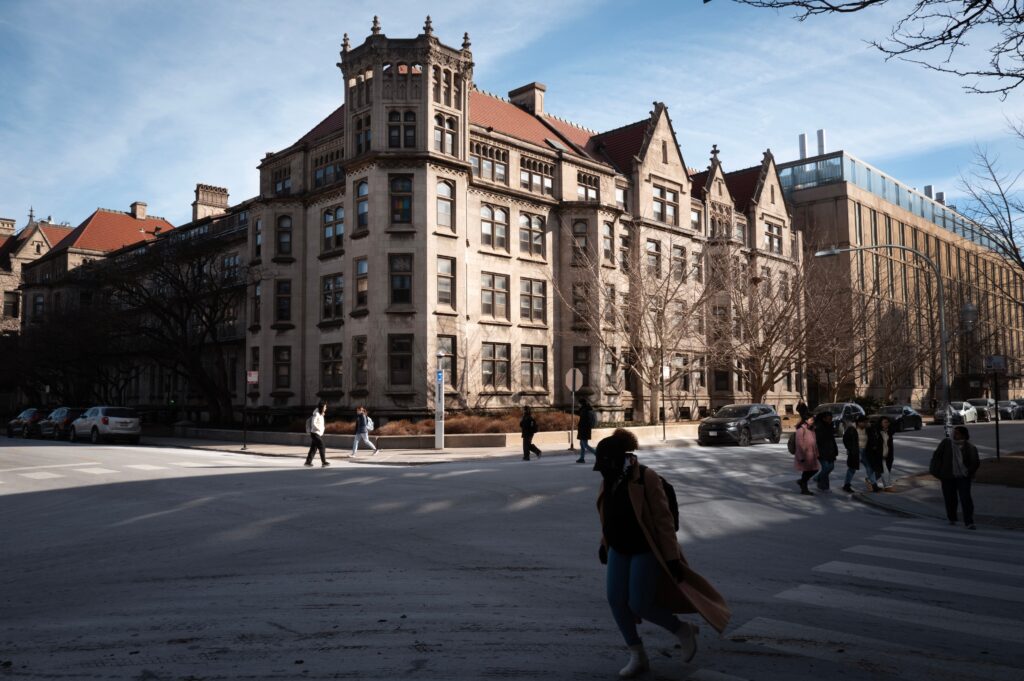
Take the University of Chicago, where the sticker price is $103,821 for the 2026-2027 academic year, but the average need-based scholarship for undergrads is $78,651. The university also covers tuition for families earning less than $250,000 a year — a growing trendamong prestigious (and expensive) schools. A Washington Post analysis found nearly 1,000 colleges and universities that offer free tuition (see the list here).
“Without question, when schools start to charge over $100,000, it starts to raise a lot of eyebrows … but there’s a great deal of available [financial] aid,” said Rob Franek, editor in chief at the Princeton Review.
Hefty sticker prices, he said, feed into families’ fears about taking on debt at a time when more people are questioning the value and utility of a college degree. In the Princeton Review’s 2026 College Hopes & Worries Survey, parents and students said their biggest worry was the level of debt they’ll need to afford college. They also said “sticker shock” was one of the most stressful parts of applying to college.
The money that colleges, states and the federal government provide students can make a big difference in what they pay. At the 15 institutions with six-figure price tags, the average discount for undergraduates with financial need ranged from 41 percent to 75 percent.
While sticker prices have climbed, net prices have come down over the years because of an increase in student aid and competition for enrollment, said Judith Scott-Clayton, a professor of economics and education at Columbia University’s Teachers College.
The College Board found the average net cost of attendance at private nonprofit universities fell from $40,480 in 2016-2017 to an estimated $37,380 in 2025-2026, adjusted for inflation. During that period, the average inflation-adjusted net cost at public four-year colleges went from $24,310 to $21,340.
“A lot of people aren’t aware of what’s been happening,” Scott-Clayton said. “We’re so used to increases that are way bigger than inflation because that was the story from 1980 to 2010 … but over the last 10 years prices in real terms are flat or even down.”
The trend does not negate the fact that college is a big expense, and families feel squeezed by the cost, especially as consumer prices continue to rise.
“It’s not like you pay for college in isolation,” said Dominique J. Baker, an associate professor of education and public policy at the University of Delaware. “You still have to put food on the table and pay for housing, so if people feel like they don’t have enough money for those parts of their life, then college can seem too expensive to handle.”
Still, Baker said families shouldn’t be scared off by the sticker prices at a handful of elite schools when there are thousands of good colleges at all price points. Focusing on schools that cost six figures, she said, gives the wrong impression of higher education costs. But it can be useful in helping people better understand pricing.
Colleges and universities will continue to raise their prices because their operating costs — health care, insurance, salaries — will continue to climb. Published prices are designed to offset some of that expense because there are families that can pay full freight.
“These prices exist for families with very high incomes, at least $300,000 or $400,000 a year,” said Phillip B. Levine, a professor of economics at Wellesley College. “They reflect the fact that most of these schools are spending more per student than they charge, and the cost of providing that education is rising at rates faster than inflation.”
Elite universities attract wealthy students, and as budgets get tighter, they’re working harder to recruit more full-pay students, said Robert Kelchen, a professor of education policy at the University of Tennessee at Knoxville.
A recent study by Preston Cooper, a senior fellow at the American Enterprise Institute, found that at many prestigious schools, including Georgetown University and Tufts University, more than half of students pay the sticker price without financial aid from the school or government.
Even at an annual income of $400,000, it’s not easy to cover a $100,000 college bill at an elite institution, said Sandy Baum, a nonresident fellow at the Urban Institute. Price increases, even nominal ones, can be difficult to absorb.
“For certain people, this is really significant,” Baum said of the increase in colleges costing six figures. “But to think this is what it costs to go to college … is very misleading.”
The post As more colleges surpass $100,000 price tag, here’s the true cost appeared first on Washington Post.