Subscribe here: Apple Podcasts | Spotify | YouTube | Overcast | Pocket Casts
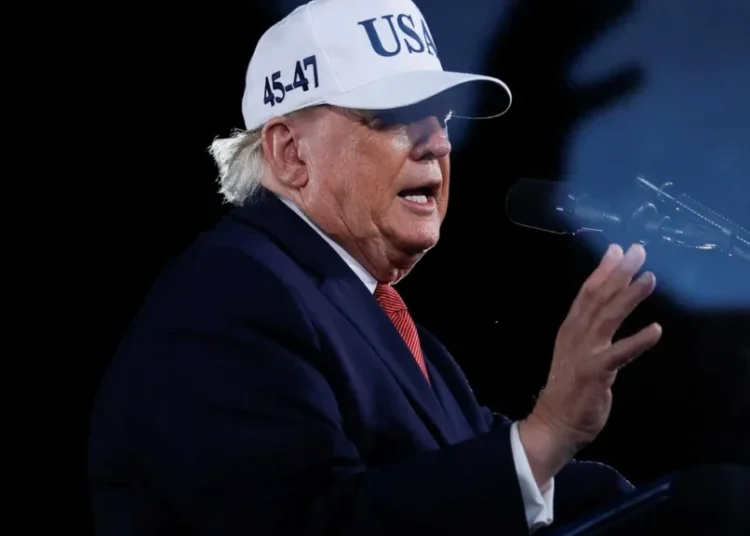
Midterm elections are almost always referendums on the policies of the party in power; President Trump is hoping that Republicans steer into the skid. Last week, my colleagues reported that the president—dogged by the war in Iran, the trade war with Canada, and an economy that has Americans dipping into their savings for groceries and daily expenses—hopes that Republicans seeking to win reelection or gain seats will use his time in office to sway voters.
But that strategy could play directly into the hands of Democrats hoping to take back both chambers of Congress. My colleagues the Atlantic staff writers Michael Scherer and Ashley Parker join me this week to discuss Congress, the economy, and the midterm elections.
The following is a transcript of the episode:
Ashley Parker: At the end of the day, one thing that President Trump is great at is getting people to sort of remember and understand what it is he ostensibly cares about, right? Whether that’s “Drain the Swamp” or Space Force. And Democrats need to find a way to signal—need an elevator pitch that voters can say, I’m voting for the Democrats because I know that my interest rate will go down to 3.875 percent.
[Music]
Adam Harris: This is Radio Atlantic. I’m Adam Harris, and this week, we need to think about the midterms.
The House of Representatives is back on Capitol Hill this week as the nation turns its attention to the general election. It’s the last opportunity for lawmakers to show they are working for their constituents.
Meanwhile, President Trump is trying to convince congressional Republicans to run on his record. But amid a war with Iran driving up the price of everyday items and a burgeoning trade war with Canada, Americans are feeling the pinch of the president’s agenda.
And Democrats, on the heel of bitter primary races around the country, are hoping to seize upon the president’s unpopularity, and they’re banking that Americans want something different. The question is: Are they right? I’m joined by my colleagues Ashley Parker and Michael Scherer to discuss.
Ashley, Michael, welcome to the show.
Michael Scherer: Thanks for having us.
Parker: Thanks for having us.
Harris: Ashley, I want to start with you first. Congress is back this week, and one of the first things that they must do is to fund the government, right? Do you think that Congress is more likely to get this done in a timely manner than we’ve seen in some of these previous spending cycles?
Parker: Yeah, I mean, a lot of these stopgap measures end up being incredibly fraught and going up to the last minute. This one is looking like it’s going to be less controversial, in part because what House members really wanna do is get back to their districts to campaign for the midterms. And so there’s a few things in there that might raise some eyebrows, but the sense right now is that they’ll be able to, they hope, push this through pretty quickly.
Harris: Speaking of kind of getting back to the districts for the midterms, right, this is a very important cycle. I feel like every cycle we say, It’s, you know—
Scherer: —most important election of your lifetime.
Harris: Exactly. The most important one of the lifetime. But this one is a pretty important cycle, particularly for Democrats hoping to stop the president’s agenda and for Republicans hoping to continue with the president’s policies moving forward.
Oftentimes, parties don’t like to make this a referendum on the presidency. I’m reminded of [Barack] Obama saying, I’m not on the ballot, but these policies are certainly on the ballot.
And you both have reported that Trump is planning to roll out a series of TV ads that are touting his personal record leading up to the midterms in November. What does this ad blitz say about the administration and how they’re feeling about the election prospects, Michael, and the president’s image?
Scherer: Yeah, so there’s a formula for midterm elections. It’s always a referendum on those in power. So the in-party—the people who hold the presidency, and if they also hold the House, the Senate—try their best to make it a choice, not a referendum, to basically put the opposing party in the spotlight, say, Look, they’re terrible and bad and have done all these awful things, and if you give them back power, it’ll be terrible. And they’re always fighting an uphill battle, because voters don’t see it that way, and voters tend to just, you know, say, I’m happy or I’m pissed off. And you know, for the last four decades, they’re almost always pissed off when it comes to a midterm.
This cycle is a little different because of voting patterns and the appeal of President Trump.
[It] used to be that Republicans turned out more than Democrats in midterms. Now that’s kind of reversed. Democrats are more likely to turn out in midterms. [It] used to be that presidents don’t really have much impact on who turns out in midterms, for the reasons I just said—you know, it’s a referendum, and people are upset. Republicans are betting on this idea that their biggest problem is motivation, that they have the voters out there, that if they can get those voters to the polls, they can stem their losses, they could actually overperform expectations.
But the polls right now show, you know, they’re not that excited. Like, a Fox News poll a few weeks ago asked, Are you extremely motivated to vote? Democrat voters were like 70 percent saying they’re extremely motivated; Republican voters, like 60 percent saying they were extremely motivated. And so the White House solution to that, the president’s solution to that, is to say, We’ve got the magic man on the stump here. We’re going to make this about President Trump, which really undermines the pattern I just described. You know, the Republicans and the Democrats now are in some way saying, We’re gonna make this a referendum on the president.
Parker: And to be clear, everything is always about President Trump. That’s just the rule of President Trump. And so as much as this strategy that Michael and I and our colleague Yvonne reported last week seems counterintuitive and is legitimately frustrating to some Republicans, the White House thinking and the president’s thinking is, It’s always about Trump, right?
And he likes it being about himself, and so if it’s gonna be about him, we might as well put him front and center and tout what we believe are his accomplishments.
Harris: Yeah, if he’s gonna be there, why run away from him? Might as well steer into the skid, right?
Scherer: The problem is that the more you’re talking about Trump and trying to convince people that he’s, you know, improved everyone’s lives when the polls show people don’t feel like he’s improved their lives in the last year and a half, the less you’re talking about Democrats.
And so, you know, that’s the choice they’re making. It’s not that it’s a terrible idea to be talking about the president.
You know, another pattern is, like, Obama would go out on the stump and, you know, [Joe] Biden went on the stump in his midterm elections, [George W. ] Bush went on the stump in his midterm elections, and would obviously talk about their own records. So it’s not like presidents don’t talk about themselves. The difference here is putting money on TV and digital media about the president.
Normally, the in-party only wants to talk about how terrible and bad the out-party is. And, you know, that’s especially true for super PACs. The president’s talking about spending. He’s got $400 million we know about. He may have hundreds of millions more in sort of dark money, basically independent money he’s collected. Normally, that money is just used to ravage the other side and just tear them apart. And the idea that the president’s gonna put some significant part of that behind convincing people that no tax on tips, or the stock-market highs, or the closed border have really done them well is what’s so controversial.
Harris: And how are congressional Republicans feeling about this? How have they sort of responded to the president trying to have his name sort of be more forward in the campaign?
Parker: In general, if they’re speaking candidly, which they don’t really do in public, because they’re fearful of the blowback from President Trump, they find him generally unhelpful in this moment, right? A lot of the things he says and does just further the sense that he and his party don’t care about voters like them.
So there’s some stuff he said. He was recently at a rally in South Carolina for Darline Graham, Lindsay Graham’s sister, who’s running to replace him, where he said, I know my economic numbers are bad, but they should actually be at 100 percent. I’m doing such a great job. That makes people—who, you know, are going to maybe two or three grocery stores right now to use their coupons to get the best deals on what they can—feel like, He has no idea what my life is like. That’s, like, a very clear one where he’s talking about the economy.
But some of his other favorite topics are the ballroom, the new construction of the helipad on the South Lawn. And among all the various controversies that Trump has, these are physical, tangible things that voters really latch on to that Trump loves to talk about. At his core, it’s, like, cool to be president, but he’s sort of more animated by being a developer, you know, and a construction magnate. And so when he is talking about the marbling or the gilding or the slope of the helipad, even though that has nothing to do with the economy, that’s sort of the problem. That reminds voters, Look, this guy is focused on things for himself and his rich friends that again have nothing to do with me.
So Republicans privately will say, This is a nightmare. But at the end of the day, he’s their president, he’s what they’ve got. They know now, in sort of our 12th, 13th year of Trump, he’s not gonna change, and so this is the landscape they live in.
Scherer: And the biggest issue right now is not what the president is saying; it’s what the president has done. He won election very clearly in ’24 on the idea that he would lower prices and sort of reverse the economic squeeze that had emerged under Biden. And if you go back to February, March, White House was saying, like, This is how we’re gonna message this. This is our plan: Gas prices are down; interest rates are down; homeownership’s more affordable; generally, prices, inflation is stabilizing and dipping down.
All that’s been reversed by the Iran war. And so the biggest issue is not what the president’s saying or not saying. It’s that on Sunday night, the U.S. again had kinetic strikes against Iran. And we talked to a bunch of Republicans last week, and every one of them said, Well, it’s gonna be okay because we’re gonna have less actual violence in the Middle East over the next couple months. Every time another bomb goes off in the Middle East, it’s a hit to Republicans at this point.
Parker: And which, by the way, Michael is talking about the president promising to lower prices. His other big promise was no more foreign wars, right? So the thing that is contributing to prices is another very clear broken promise.
Harris: Well, I wanted to ask: What are hearing about the administration’s strategy, current strategy in the war, right? As you mentioned, Michael, the bombings resumed over the weekend. Are we actually trying to get out of this war, and how are Republicans up for reelection talking to their constituents about it?
Scherer: What the White House and the political advisers want is basically a cease of violence right now for the next couple months. I mean, that’s their desire, and they want to keep squeezing the Iranians. The Iranians are not in a great position economically, so they can keep squeezing them. The problem is the Iranians have enormous leverage on Trump, as we’ve just been describing. And the Iranian position is: We control the Strait of Hormuz. The U.S. position is: You don’t control the Strait of Hormuz. So there’s, like, this deadlock at the center of the conflict. So every time, you know, the Iranians re-mine the Gulf or fire at another ship and the U.S. feels tempted to retaliate, it’s undermining the strategy the president has. And right now, the president doesn’t have control over that.
Harris: When we come back, Ashley and Michael on the burgeoning trade war with Canada and the Democrats chances in the midterm elections.
[Music]
Harris: So, Ashley, we have this actual war with Iran, but we also have this developing trade war with Canada. And it feels like the culmination of something that Mark Carney, the prime minister of Canada, said in January at Davos about the ways that countries with smaller economies needed to start renegotiating and looking out for themselves a little bit more. And there’s been a lot of tension between him and President Trump.
But I guess the thing that I keep coming back to with this trade war with Canada is: How did we end up back here? Why are we in this trade war with Canada?
Parker: Well, it’s the South Park truism of “Blame Canada,” right? Like, it’s just an easy thing to know. I mean, Trump likes tariffs. That’s clear and that’s true. And he’s very frustrated with Canada, in part because, as he said, you know, on the one hand, he’s sort of ready to get to trade-war footing with our neighbor to the north, and on the other hand, he’d happily make Canada a 51st state.
But therein is kind of the rub. If you hear Trump talk about it, he sort of says, Canada is getting all of the advantages of being a state, right? We’re subsidizing them to the tune of $200 billion. That’s not an accurate number, but that is what he says. And the thing that bothers Trump more than anything else is sort of, in his view, when people are taking advantage of him, profiting off of him. And, you know, that goes to, you know, former aides writing best-selling books from their time in the White House, to countries he believes sort of should be showing more deference to the United States than they are.
And then on the flip side, you mentioned Mark Carney’s speech to Davos, where he said what we’ve been hearing publicly a bit, and especially privately from a lot of our other especially European allies, which is: Originally, after Trump’s first term, they sort of thought it was, like, a fever dream that they could PTSD black out when Biden returned to the scene. And I remember going on Biden’s first foreign trip—I can’t remember if it was like a G7 or a G20—but that was literally his message. It was like, America, the America you know, the America you love; we’re back.
And then when Trump came back to power, the view, especially from our allies, was like, Maybe Biden was the aberration, right? And even though we know, you know, allegedly Trump was not gonna run for a third term, like, the allies’ thinking is, We have no idea if a new Trump, if a J. D. Vance, or if a populist on the Democrats’ side is gonna come in. And we kind of have to—we can’t count on the U.S., and these tacit deals we used to make with the U.S. (and by that I don’t mean a trade deal, but sort of that, like, We show deference to the United States because they are a bigger, more powerful, and ultimately benevolent force in the world)—we’re willing to take that; we’re willing to subjugate ourselves a bit.
They’ve decided, like, We’re not gonna do that anymore. So you also have a changing stance from our allies being much more willing to stand up for the United States and say, like, I’m not gonna bend my knee, because I can’t count on the United States. And by the way, I could agree to the worst trade terms with this president possible, and that might only placate him until his next Truth Social post.
Harris: Yeah, you know, actually, to that point of sort of the deference that was shown, we’ve also seen the ways that the president has sort of out-and-out attacked allied nations in recent weeks, from South Korea, thinking about some of the threats towards places like Oman.
And these aren’t small things, right? Even the fact that you mentioned something like the president saying that he’s not gonna run for a third term—to even to even think about a third term is sort of moving into an uncharted territory. Where does that leave the sort of long-term view of American responsibility as a world player?
Scherer: I mean, I think everybody’s just waiting out Trump to see what happens next. And I think what you’ve seen in Canada is their conclusion. I mean, exactly how that fell apart is, you know, there’s conflicting stories. But it does seem pretty clear that Canada views its maximum point of leverage as being right now. I mean, if they threaten to withhold electricity from the United States before midterm elections, that obviously it could have huge impacts on Trump. If they threaten to withhold electricity in early January, when Trump’s a lame duck, it may not have the same import.
I think the rest of the world is just coping with Trump. I mean, he’s so unpredictable. We don’t know how the last two years of his term will go. There’s just been a lot of preparation around the world to figure out how to reorient their own, you know, foreign policy to not depend on the U.S. going forward.
Harris: Yeah, we’ve talked about Republicans. I want to talk about the Democrats for just a moment. And Ashley, you’ve done some reporting on the Democrats and how they’re thinking about the midterms.
How much does the infighting of the primary, sort of the bitterness of the campaigns between Abdul El-Sayed and Haley Stevens in Michigan, races in Wisconsin, Florida, Maine, et cetera, sort of matter now to Democrats? And do Republicans sort of see an offset with the unpopularity of the president and the sort of discord that they might see among the Democrats?
Parker: I mean, it’s not helpful, right? One thing, when you talk about these races and you talk to people on both sides, and it’s always true, it’s like it’s a national referendum, but at the end of the day, candidates matter, districts matter, the dynamics of states matter, right? And so, you know, Susan Collins is someone who has great name recognition in Maine, fits the state very well. I’ve talked to Democrats who don’t vote for her, but they’ve told me, they’ve been like, I have to say, she has amazing constituent services, right? You know, when I was DOGEd, like, she was in constant contact with me.
And so, you know, for a state like that, or in Michigan, right, like, if you’re the Democrats, you want the best possible candidate for a general election. And there’s a sense among Democrats and Republicans that in some of these states and districts, they’ve done that, and in some of these states and districts, because of contentious primaries, they haven’t. That’s the first thing.
And it’s interesting: Republicans in many ways should be doing even worse than they seem poised to do, and when you kind of drill down on that a bit, one of the things you hear is, at the end of the day, every election is a choice, right? And Democrats have a pretty bad brand, universally.
Someone even said to me, Look, people don’t like the economy right now, what they’re feeling. And voters have short-term memories, but they still remember the Biden economy. And Democrats, again, individual candidates are doing things that are very compelling. But as a party, if I asked you, What is the Democratic Party plan to make this economic pinch better, to lower inflation, to cut prices?, almost no voter could tell you, because there doesn’t seem to be a bite-size talking point, cohesive, catchy, snappy Democratic plan.
Harris: People have pushed back against sloganeering and things like that, but not having a sort of digestible plan, not sort of having that digestible slogan, can also be an issue for voters who don’t necessarily see the big picture, right?
’Cause if you say, Well, we have a policy for supplemental nutrition benefits, and then we also have a policy for this and for this, it doesn’t sort of capture an economic picture. So how much does that sloganeering matter?
Parker: It’s Already I’m asleep, right?
Harris: Yeah.
Parker: I was talking to someone who runs focus groups among swing voters, and this person told me, You know, in a lot of these states, they will hold up the picture of the two Senate candidates running against each other in an election that’s now two months from now, and the voters can’t identify who either candidate is. And I don’t say that—I’m not making fun of voters. It’s a reality that like people are dealing with other things, right? Including the high cost.
So if you don’t even know the names of the candidates, the idea that you’re gonna remember like the third policy platform of an economic plan, it has to be something that—and I get the sloganeering and this kind of cheesiness about that. But at the end of the day, one thing that President Trump is great at is getting people to sort of remember and understand what it is he ostensibly cares about, right? Whether that’s “Drain the Swamp” or Space Force. And Democrats need to find a way to signal—need an elevator pitch that voters can say, I’m voting for the Democrats because I know that my interest rate will go down to 3.875 percent. To dream.
Harris: Yeah. Michael, Republicans have a lot of money going into this election. How are they spending it? Sort of putting the president’s TV ads aside, how are they currently spending that money, and will that have an effect, right? Will that matter?
Scherer: Yeah, normally, the last decade or so, Democrats go into midterms, even they go into presidentials, with pretty substantial financial advantages. This is reversed this time. You know, by some estimates, if the president spent all the money he’s raised—and there’s a lot of dark money we can just estimate; we don’t really know—you’re talking about a $600 million to $1 billion advantage on the Republican side.
We know there’ll be a couple hundred million that will be spent because these are in the congressional and the Senate committees and in the campaign committees. We don’t know what the president’s gonna spend. We know that they plan to spend something. We know some portion of what they spend will be on ads defending the president’s record. But, you know, the president said in a recent interview that he had, I think, $850 million. We don’t have that on documents; we don’t know if that’s true. But if that’s true and he decides to spend all of it, that could be enormously impactful in a race like this.
I think it’s more likely he doesn’t spend all of it. I think the chance he can re-raise that amount of money in his last two years of office are pretty slim, and he probably wants to continue to have leverage over the party going forward, going into the next presidential race. So there’s a lot of speculation.
What is also very clear is: They have not done the typical thing you do when you have a huge financial advantage, which is to go up early and spend money in the spring or, you know, even in the summer to sort of lay the groundwork when your opponents can’t afford to be up on the air, you kind of have the airwaves to yourself. They haven’t done that, really. So there’s a lot of suspense, I think, about how that’s actually going to play out in the final months.
Harris: I’m gonna ask both of you to sort of open your reporter’s notebooks and think about sort of the threads that you’re going to be following this week. So, Ashley, I’m gonna go to you first. Sort of open your notebook. What are you thinking about in this week ahead?
Parker: Sure, I mean, I alluded to it a bit before, but the bottom, by all accounts, should have fallen out for Republicans in this midterm cycle. Just the historical headwinds of a midterm election with an incumbent president, how that normally goes: An economic referendum when people feel the economy is not doing well; when the president and his party control the White House, both chambers of Congress; when voters don’t like the president’s approval numbers; and especially for this president in particular, who sort of sold himself not entirely accurately as a as a businessman; when his economic numbers are underwater for the first time.
And so one thing I think Michael and I together are going to be looking at is—and again, it’s not that Republicans are supposed to do fantastically well, but there is a sense that, sort of generically, they should be doing worse than it looks like they’re going to be poised to do, which is: It looks like they’re probably gonna lose the House, lose their majority, but not by a ton. And the Senate is gonna be a real squeaker, which they may hold; Democrats may win, but it’ll be super tight. So trying to get into: Why are Republicans, even with gas prices what they are in August approaching an election, still sort of managing to barely hang on?
Harris: And Michael, same question to you.
Scherer: Another thing Ashley and I’ve been looking at is Cabinet travel. The president’s actually been—the White House’s been pretty good at deploying people around the country in a rather organized and sensible fashion. And then I’ve been working on a story about the sort of under-the-radar battle between the U.S. and Iran over decapitation assassination threats, which has sort of been, like, a weird current from the start of this conflict—where we started the war with Israel taking out most of the leadership of Iran, and continues now to, you know, there’s billboards all over Tehran now with the faces of the president’s family calling for their assassination, bounties on members of the administration and the family. So I’m looking at that as well.
Harris: Well, there will be a lot to look at in the week and months ahead as we run up to the midterms. Thank you both for helping us understand it better, and thanks for joining the show today.
Scherer: Yeah, thank you.
Parker: Thank you for having us.
[Music]
Harris: That’s all for today’s show. This episode of Radio Atlantic was produced by Mike Pesoli. It was edited by Hadley Robinson. It was engineered and has original music by Rob Smierciak. Claudine Ebeid is the executive producer of Atlantic Audio, and Andrea Valdez is our managing editor.
If you like what you saw here, you can subscribe to Radio Atlantic on The Atlantic’s YouTube page, on Apple, or Spotify, or wherever it is you get your podcasts. And if you want to support this work and the work of my colleagues, you can subscribe to the publication at TheAtlantic.com/Listener.
Until next time, I’m Adam Harris.
The post Trump’s Economy Goes to the Polls appeared first on The Atlantic.