Nidhi Kalra is an information scientist at Rand, where she directs the Pardee Center for Longer Range Global Policy and the Future Human Condition. She was lead author of the report “A U.S. Strategy to Prevent the Creation of Mirror Life.”
“This includes creation of mirror organisms.” These six bland words appear as a footnote in the White House policy for “Stopping High-Risk Life Sciences Research” released in July — but they shouldn’t be treated like one.
If you’ve never heard of mirror life — the more commonly used term for mirror organisms — there’s a good reason: It doesn’t exist. But this sci-fi-sounding form of life could theoretically be built out of biological molecules that are mirror images of the ones that exist naturally.
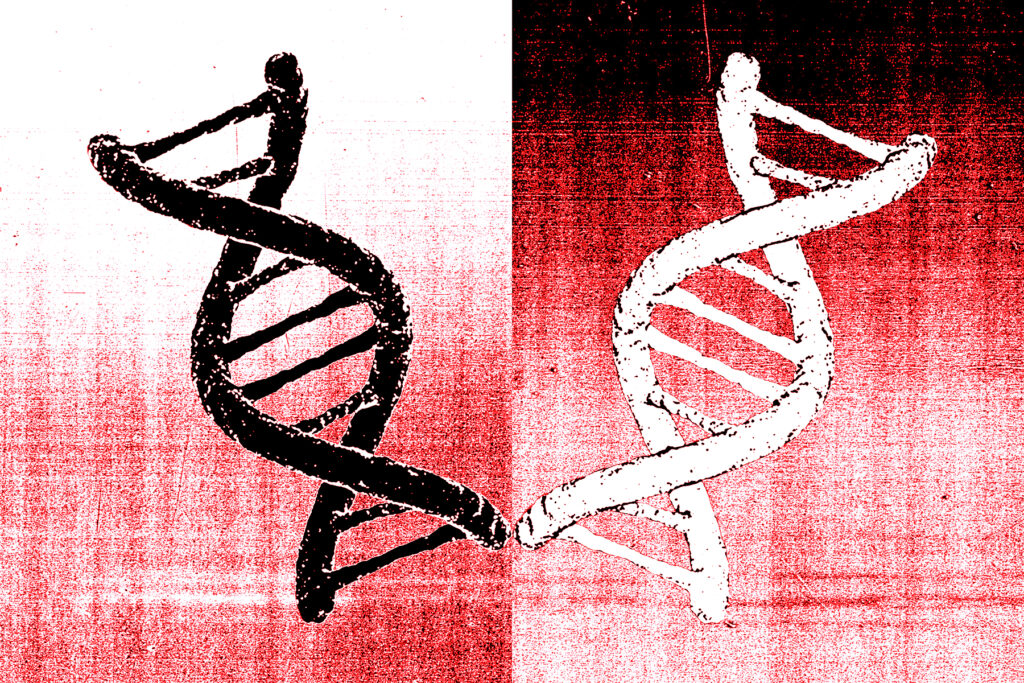
The idea emerges from the fact that nearly all biomolecules in nature have a kind of handedness — all DNA, for example, is built from right-handed sugars, and all proteins are made from left-handed amino acids. Thus, it’s possible to imagine — and maybe even create — a living organism made of mirror-image counterparts to natural biomolecules. The first would probably be mirror bacteria.
That may not sound like reason for alarm. But scientists warn that mirror bacteria could devastate most life on earth. In 2024, dozens of them issued an urgent call to prevent mirror bacteria from ever being created, saying, “We cannot rule out a scenario in which a mirror bacterium acts as an invasive species across many ecosystems, causing pervasive lethal infections in a substantial fraction of plant and animal species, including humans.”
Yet we are edging closer to the threshold of mirror life. Over the past decade, biologists have engineered specialized tools for replicating and assembling mirror-image biomolecules. These tools could have some uses: For example, medicines made from mirror biomolecules could evade the processes that normally break them down, so treatments based on them might be longer-lasting than treatments based on regular biomolecules.
But certain advances could also become stepping stones toward mirror bacteria, and that’s where the danger lurks. Mirror bacteria might not be recognized by the things — immune systems, enzymes and other predator microorganisms — that keep normal bacteria in check. Outside of a lab, it might spread out of control, which is why no one should ever create it.
The good news is that the breakthroughs required to make mirror life are probably 10 to 30 years away, and very few scientists are even equipped to make the attempt. If the world’s leading scientists desist, they will effectively deny the means to everyone else.
So here’s the call to action: As Presidents Donald Trump and Xi Jinping meet in September to explore areas of cooperation, they should put prevention of mirror life on the agenda. If the two leaders seek a topic of global importance they can agree on, surely this is it. Mirror life is a shared existential risk with no credible upside for either country.
Instead, they can lay a foundation for universal restraint. A first step would be for the two countries to articulate a shared belief that there should be boundaries between acceptable and unacceptable research in this field. They could produce joint ethical standards for researchers, plus issue public statements that make it clear that mirror life is not a legitimate area of scientific pursuit.
Deciding exactly where to draw boundaries regarding mirror life research should involve collaborative discussions. The goals should be to determine when potentially beneficial early research steps onto a slippery slope.
For instance, some scientists have suggested that the mirror version of a ribosome — the machinery in cells that makes proteins — could make it easier to produce mirror proteins for medical use. But a mirror ribosome would also be a huge step toward creating mirror life. Instead, the U.S. and China might agree to prohibit the development of mirror ribosomes and work together on other ways to make mirror proteins.
This should lead to formal agreements not to pursue mirror life, along with jointly establishing economic and logistical barriers to its creation.
Some will dismiss hopes of such cooperation between strategic competitors as gross naiveté. But history has shown that cooperation among rivals is possible when the stakes are high enough.
In 1967, in the depths of Cold War animosity, the United States and Soviet Union together championed the Intensified Smallpox Eradication Program. With joint leadership — money, logistics and more than a billion Soviet vaccine doses — smallpox was successfully eradicated worldwide in 1980. Beijing and Washington can take inspiration from this example to protect the entire biosphere.
It’s rare to meet a moment when the risks of a scientific breakthrough are so clear. More typically, it’s too early to tell or too late to fix. With mirror life, scientists have given world leaders both the foresight and the time to address the danger. What’s needed isn’t alarm but action to ensure that mirror life remains just a footnote in human history — and not its final chapter.
The post Mirror life is theoretical. The danger is anything but. appeared first on Washington Post.