It’s important to do certain regular screenings for heart health and talk with your doctor about your risk for heart disease — it remains the number-one killer of both men and women in the United States. But one increasingly popular test, which checks for plaque in the arteries feeding the heart, may not provide much value for many people, new research shows.
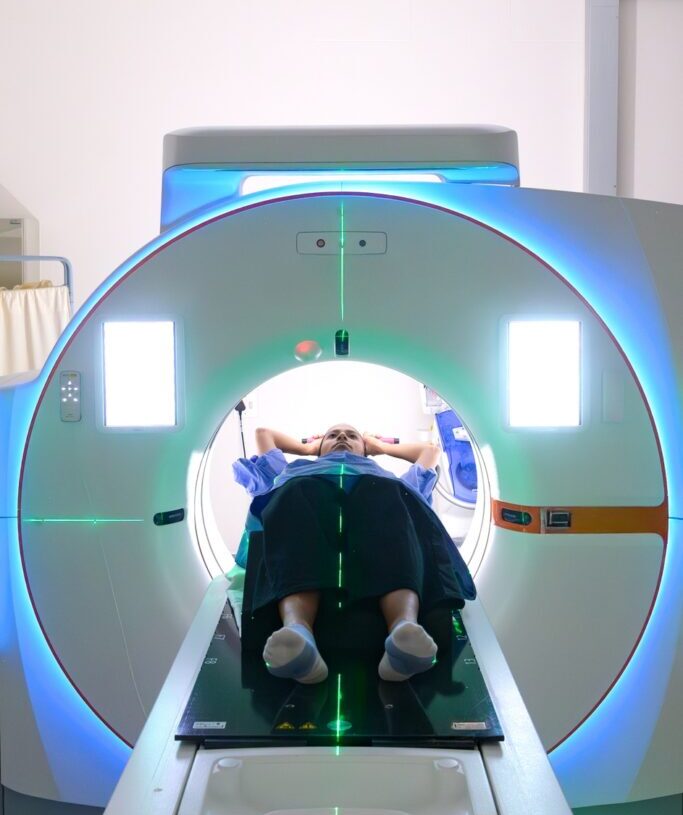
Called a coronary artery calcium (CAC) scan, the test involves a computed tomography (CT) scan of the chest and offers a prediction of how likely you are to have a cardiac event — such as a heart attack or stroke — within the next few years. A score of zero suggests no evidence of plaque and low risk of heart disease; anything above that reflects some degree of disease, with higher scores (above 100) pointing to more established disease and elevated risk of a heart event.
It turns out, however, that most people can glean the same information simply from using the American Heart Association’s risk calculator PREVENT, which accounts for many key factors influencing heart disease risk, including sex, age, blood pressure, cholesterol, whether you have diabetes, whether you smoke and even a measure of kidney function.
The new study, published in JAMA, found that a PREVENT estimate, on its own, could accurately predict who would go on to have a heart event — with one exception. Adding in a calcium score did help better classify the people labeled “borderline” or “intermediate” by PREVENT, or those with a 3 to 9 percent risk of heart disease within 10 years.
It’s a timely moment to weigh the utility of risk-prediction tools. On one hand, the PREVENT calculator is only just making its way into clinical practice — it was added to blood pressure and cholesterol guidelines in the past year. On the other hand, “the use of calcium scores has been exploding” as CAC scans have become more affordable and accessible, said Nilay Shah, senior author on the study and assistant professor of medicine in the cardiology division at Northwestern University Feinberg School of Medicine.
Who can benefit from a CAC scan
In the study, more than 6,000 people aged 45 to 79 received both a PREVENT estimate and a calcium score. The researchers then followed them for 10 years to determine the accuracy of these tools in forecasting who would go on to have a heart attack or stroke. Across the group, factoring in calcium scores barely made a difference; most people were correctly classified based on PREVENT score alone.
But when the researchers looked at just the people deemed borderline risk by PREVENT, they found that considering their calcium scores correctly reclassified most of them to a high- or low-risk category.
The results suggest a CAC score is best used as a “tiebreaker” for people in middle-risk groups for heart disease, Shah said, who may be unsure whether they should start a cholesterol-lowering medication such as a statin. Evidence of plaque (a CAC score above zero) would suggest starting medication, whereas a CAC score of zero would indicate they can hold off on the medication for now. This approach is in line with the most recent cholesterol guidelines released jointly in March by several medical organizations including the American College of Cardiology and the American Heart Association, which recommend CAC scans primarily to help guide therapy decisions in middle-risk groups.
“I don’t look at this as a negative study for CAC scores,” said Socrates Kakoulides, cardiologist and chief imaging officer of Baptist Health Heart & Vascular Care, part of Baptist Health South Florida. “What I do think is this really helps us refine which patients are going to get a CAC and are going to benefit from a CAC.” (Kakoulides was not involved in the study.)
The reason a CAC scan might show plaque in some people at borderline or intermediate risk but not in others is probably because of “risk-enhancing factors” that the PREVENT tool doesn’t account for, Shah explained. These are specific factors that we know are related to heart-disease risk but that we can’t quite quantify, he said, such as having a strong family history of heart disease or having experienced pregnancy-related conditions such as preeclampsia or gestational diabetes. Having a high level of a type of cholesterol called lipoprotein(a) is another factor that isn’t included in PREVENT, Kakoulides said, but could result in a high CAC score.
Why most people at high or low risk for heart disease may not need a CAC scan
The study suggests that for many people, a CAC scan isn’t necessary because the PREVENT calculator generally sorts people into the right risk bucket. In these cases, a CAC score would just confirm what you already know and wouldn’t change the course of treatment, Kakoulides explained. If someone is at high risk, their CAC scan will very likely show plaque; if someone is at low risk, it’ll almost definitely be clear. Per the guidelines, those at high risk would still wind up starting a statin, while those at low risk would generally defer.
That means that in plenty of people with established high or low risk for heart disease, a scan may just amount to unnecessary radiation and wasted time and money — versus offering any actionable information.
In the past, a CAC scan was a more broadly useful tool because the older risk-calculation models generally overestimated risk, Kakoulides said. But the PREVENT tool — which was developed on a more diverse population than previous tools, including several million people from all backgrounds — is quite accurate, Shah said, creating less reason for people to get a CAC scan.
That said, this is one study and reflects a general guideline, not a rule. There might be scenarios in which people at high or low risk of heart disease could still find utility in a CAC score.
For instance, a CAC scan can help determine if a person deemed high-risk is actually at very high risk, “a group for whom we would recommend adding additional [medication] such as aspirin,” Kakoulides said. There’s a difference, he pointed out, between a CAC score of 70 and of 400, for example; in both people, a statin makes sense, but the latter score suggests the need for even more intervention.
There could also be certain low-risk people, for instance those with a strong family history of heart disease, for whom a CAC scan might be sensible, Shah noted. If you’re deemed low-risk by PREVENT but still concerned about your heart health, Shah suggested having a conversation with your primary care doctor — rather than just going to get a CAC scan. That way, you can get a better understanding of what you might learn from a CAC score and the likelihood that this information ends up being valuable.
How to learn about, and lower, your risk of heart disease
It’s important to start a conversation with your doctor about risk, if you haven’t already. The recent cholesterol guidelines advise clinicians to use the PREVENT calculator to estimate risk in all patients aged 30 to 79. If you fall in this group, you can also complete the online PREVENT calculator yourself — it requires inputs such as cholesterol and blood pressure, which you can get at your next physical if you haven’t had these numbers checked recently.
Regardless of your result, discuss it with your doctor. If you’re at borderline or intermediate risk, it’s worth asking about a CAC scan to get a better understanding of what to do next. If you’re at high risk, there’s a good chance your doctor will recommend starting a lipid-lowering medication and possibly additional treatments.
Your score might also be helpful motivation to engage in heart-healthy behaviors such as eating a nutritious diet, getting plenty of physical activity, sleeping well and not smoking. These sometimes get “short shrift” in the guidelines because the most pressing issue for doctors is determining who needs to be started on medication and will get the most benefit from it, Kakoulides said. But that doesn’t negate the importance of these lifestyle interventions for everyone — even those at low risk. As Shah put it, “There really is no risk group that does not benefit from improving the quality of their day-to-day behaviors.”
The post Calcium testing for heart health may have limited value for many, study finds appeared first on Washington Post.