Fears of further flooding complicated recovery efforts Friday as authorities searched for hundreds of people still missing after devastating flash floods struck the Himalayan border between Nepal and China.
Nearly 1,000 people were still missing in Nepal, the country’s national disaster management authority said, while more than 550 reported missing in China, according to state news agency Xinhua.
Authorities in Nepal on Friday warned of potential further flooding in the same area of the Bhotekoshi River, urging rescue teams to stay alert and prepared to move to a safe area. Nepal’s police reported a burst water dam on the Tibet side of the border, but did not specify the exact location.
The death toll in Nepal has reached at least 540 people, police said Friday. Five people were killed in Tibet, Xinhua reported.
Geoscientists said initial assessments showed the floods were probably triggered by a landslide from a collapsing glacier. Tremors were initially mistaken for a 5.2-magnitude earthquake, though the U.S. Geological Survey later concluded the landslide was caused by a “glacial collapse and debris flow.”
China’s Ministry of Natural Resources said the disaster was triggered on the Nepal side of the border, according to state media. The ministry said falling ice and rock fell down a mountain slope, picking up loose glacial debris along its path before entering the Gyirong Zangbo River.
The seismic event unleashed a torrent of water, rock, mud and ice that swept through the border region, swallowing up homes, blocking roads and damaging infrastructure.
More than 660 tourists from about 30 countries are among those missing, the Nepal Tourism Board said. Many of them were on a pilgrimage to Mount Kailash, according to officials.
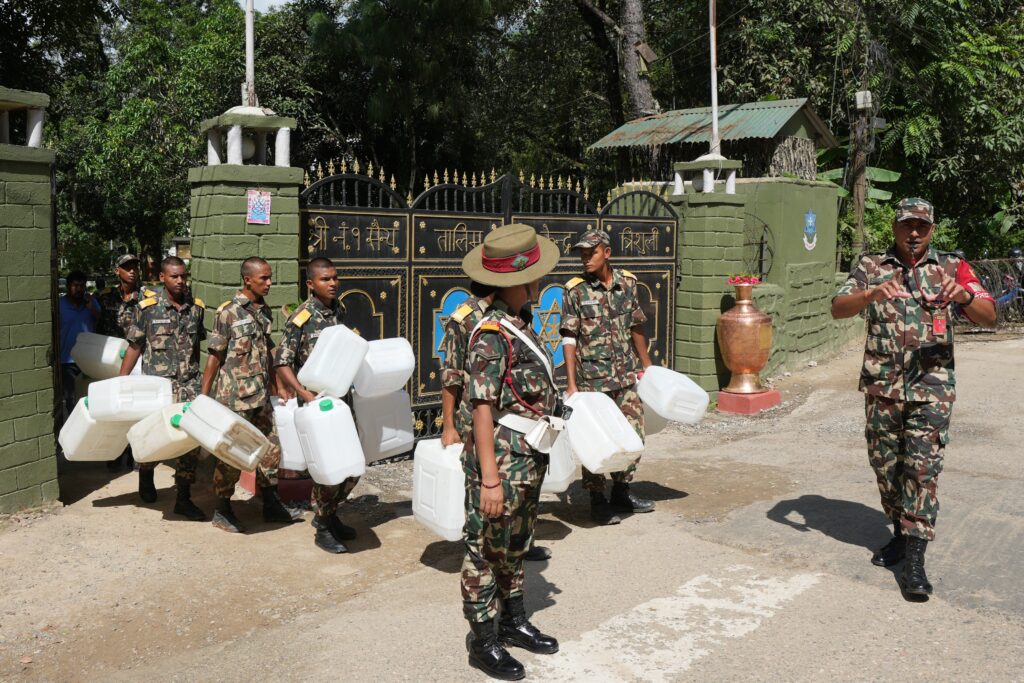
About 15,000 people have been deployed to help recovery efforts, Nepal’s disaster management authority said, including 4,200 army personnel.
Chinese leader Xi Jinping Friday chaired an emergency meeting on China’s response, state media reported, saying officials stressed that rescue plans “should be formulated in a scientific manner.”
China will provide emergency aid to Nepal and cooperate with international rescue efforts, the reports added.
Conditions in Nepal appear wetter than normal into early September, with monsoonal rains affecting the country. The unsettled weather could challenge recovery efforts and pose a new risk of flooding.
The U.S. Embassy in Nepal, citing the country’s Department of Hydrology and Meteorology, said Thursday that continuing rainfall could trigger local flooding, landslides and additional damage.
The post Flood risks hamper efforts to search for hundreds missing at Nepal-China border appeared first on Washington Post.