US Air Force medics are learning how to treat and evacuate patients as drones threaten field care operations and hospitals, confronting an emerging threat for which their traditional medical training hasn’t prepared them.
“Drones are a very real threat, and our medical Airmen are not prepared through their typical medical training to handle these UAVs,” Maj. Sarah Blackthorne, an Air Force medical planner involved in the training, said in a military news release. “We developed a drone stress inoculation event testing how they might evacuate a field hospital.”
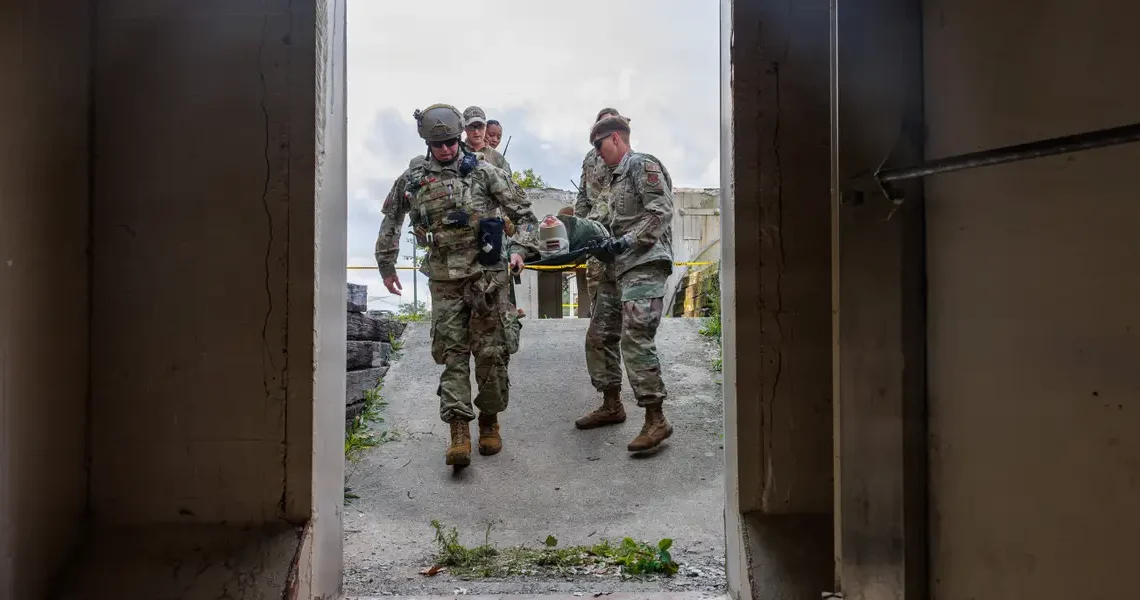
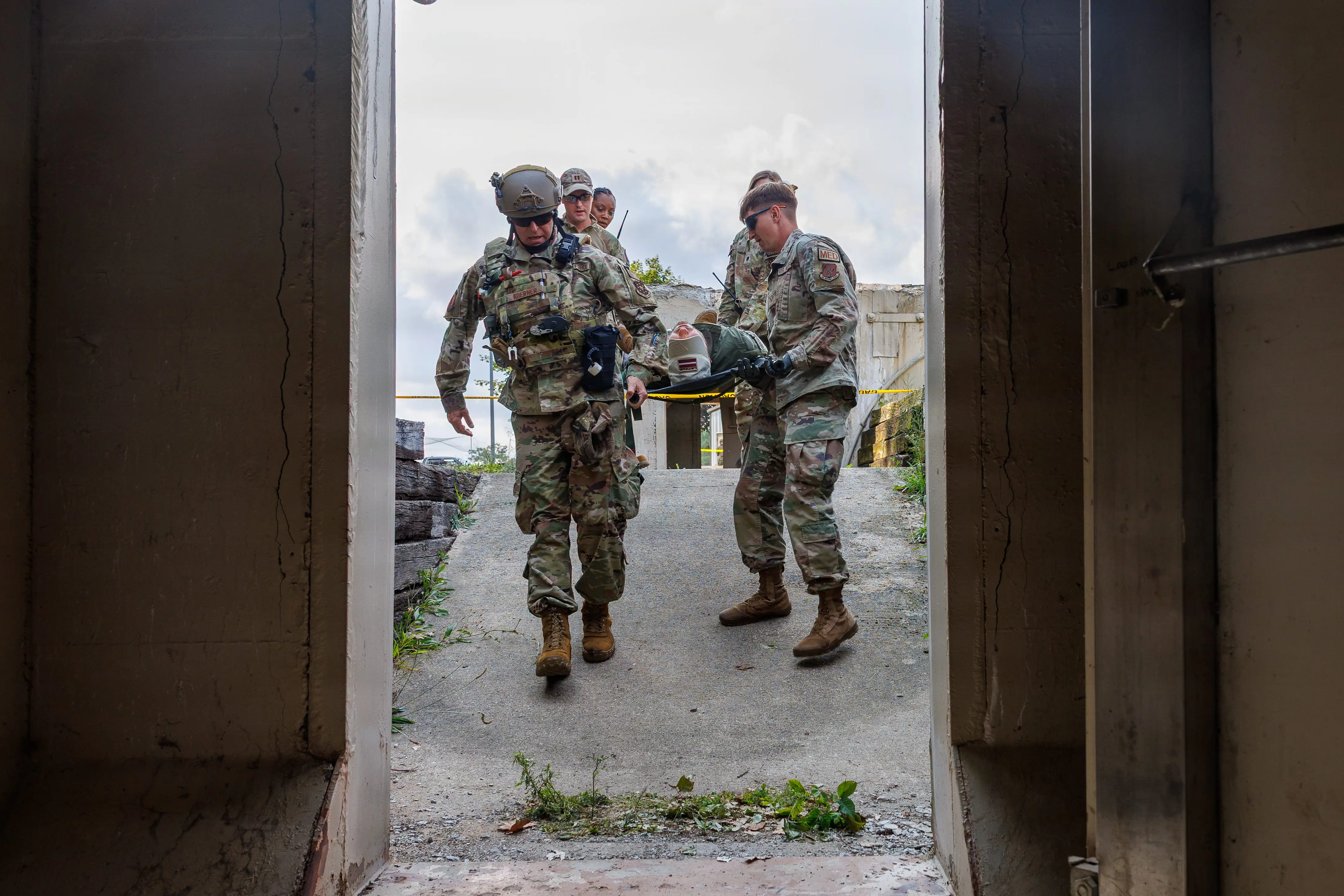
During the Northern Strike exercise in Michigan this month, active-duty Air Force and National Guard medics faced a simulated drone attack on a field hospital.
Troops strung up anti-drone netting, a common tool on Ukrainian battlefields, and used small-arms fire to counter uncrewed aircraft. They used an uncrewed ground robot to inspect downed enemy drones and then moved patients to an underground medical facility, moving beneath anti-drone netting for protection along the way.
Near the front lines in Ukraine, anti-drone netting can often be seen covering supply routes, troops are pushing support infrastructure like field hospitals underground, and uncrewed ground vehicles are becoming increasingly common for dangerous medical and logistics operations.
Defeating drones remains a challenge. Those that break through electronic warfare defenses may leave troops scrambling to fend them off with little more than a shotgun, and solutions are limited for countering these threats en masse.
US training planners sought to replicate some of the conditions confronting medical teams in Ukraine. The US medics worked from a Cold War-era underground bunker meant to mimic the hardened sites Ukrainian medical teams often use, Blackthorne said.
In Ukraine, medical facilities are targeted by aerial drones, rendering tents or other unprotected sites vulnerable. Hardened or underground facilities come with their own strains though, as medical teams are forced to contend with limited power and lighting, the shocks of nearby explosions, limited supplies, and logistics chains constricted by drone attacks.
“We don’t want it to be the first time they experience UAVs on deployment,” Blackthorne said. “Opportunities to get exposure here to those things, where they can work through the stress, are valuable.”
The recemt exercise reflects a major shift from the kind of medical operations the US military grew accustomed to during two decades of war in Iraq and Afghanistan.
US combat medics have long been trained to operate alongside other troops. Navy corpsmen, for instance, have long fought alongside Marine Corps infantry platoons. However, the vast majority of the military’s medical system spent the Global War on Terror operating under dramatically different conditions. Wounded troops were usually quickly evacuated from battlefields to medical facilities on large bases, fortified against gunfire and improvised explosive device blasts.
In a future fight against a drone-capable adversary, such evacuation may not be an option. Stockpiles of cheap drones could threaten not just troops fighting on the front lines, but also medical teams, treatment facilities, and supply and evacuation routes.
“As the threat environment changes, we need to change as well, along with the techniques we utilize,” said Air Force Surgeon General Lt. Gen. John DeGoes of the training. “It is important to work through these scenarios to not only be ready for the current threat but also be mentally ready.”
Read the original article on Business Insider
The post Learning from Ukraine, US Air Force medics are throwing up nets and pushing underground to survive drone attacks appeared first on Business Insider.