Lee Huebner, a media and public affairs professor at George Washington University, is the author of “Nixon’s Elusive Totality.”
Richard M. Nixon is having a moment. “Nixonmaxxing” young conservatives seem intent on repairing the disgraced former president’s reputation, wearing Nixon-emblazoned merchandise, praising his bare-knuckle approach to politics and holding him up as a victim of Washington machinations.
Vice President JD Vance in late June said of the scandal leading to Nixon’s 1974 resignation, “If Watergate happened tomorrow, it would be like a 12-hour news story. The idea that it would have taken down a presidency is crazy.”
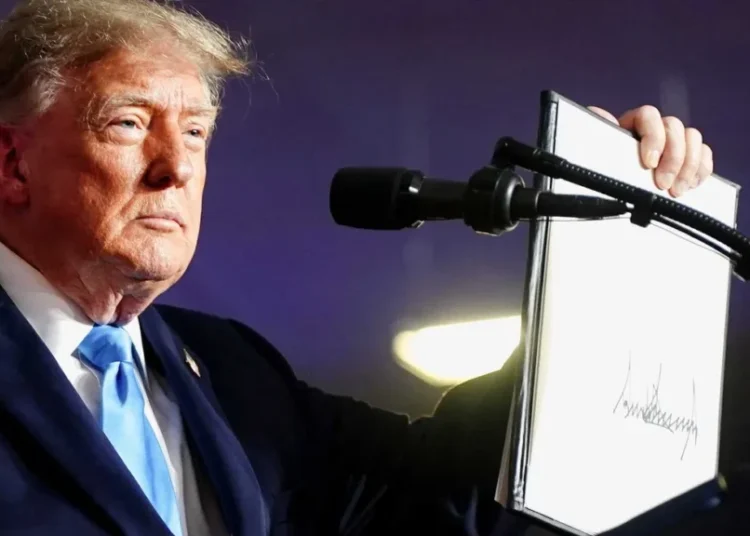
Nixon’s politics of resentment and his pugilistic style clearly appeal to the populist right. His antiestablishment sensibility is shared by President Donald Trump, a longtime admirer of the 37th president. But there is a fundamental difference between the two men, one that fully justifies paying fresh attention to Nixon — just not for the reasons that Nixonmaxxers imagine.
One of the most troubling aspects of Trump-driven MAGA politics denies election results and works to undermine confidence in America’s electoral system. And it likes to blame an amorphous, villainous “deep state” for the nation’s political problems.
Nixon, by contrast, battled against such impulses even though on one notable occasion doing so cost him a chance at the presidency, and on another cost him the presidency itself.
Thirty-two years have passed since President Bill Clinton, in a speech at Nixon’s funeral in 1994, urged the country “to remember President Nixon’s life in totality.” But that has never been an easy thing to do.
Clinton wanted the country to get beyond thinking of Nixon only, or primarily, in the context of the Watergate scandal, as many still do to this day. But the alternative outlook did not mean ignoring or dismissing that stain, as some of today’s Nixon fans prefer. To the contrary, as Nixon himself later acknowledged, “I made so many bad judgments” and “I brought myself down.”
But as serious as his mistakes surely were, and as Clinton also implied, a great deal can be learned from many more positive parts of the Nixon story, including his breakthrough foreign policies and his surprisingly progressive domestic record. As a former White House speechwriter for Nixon, and as a professor who has since been teaching a course about him, I have long focused my attention on the complexity of Nixon’s “totality.”
The element of his totality that may be most beneficial to appreciate right now involves two moments when Nixon refused to join Republicans who were urging him to deny election results and defy court rulings. His refusals bookended his career in presidential politics.
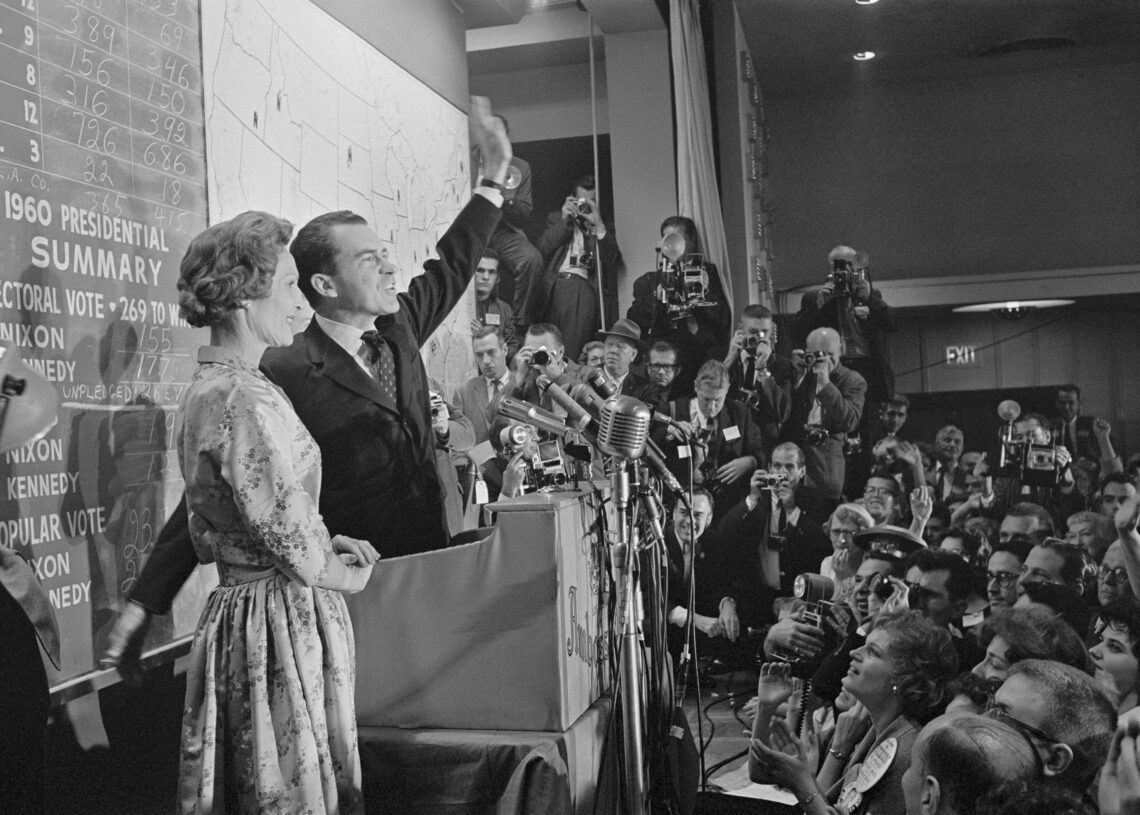
The first such reckoning came in the 1960 presidential election, when Nixon, the vice president, finished in a virtual tie with his Democratic rival, Sen. John F. Kennedy. A 118,000-vote margin for JFK out of 68 million votes cast. Kennedy’s success depended on his extremely narrow margins in two key states, Illinois and Texas, both of which had a history of dubious vote counting.
A broad chorus of his supporters urged him to contest the result, but Nixon quickly conceded, reportedly telling a friend, “Our country cannot afford the agony of a constitutional crisis.”
He may have agreed privately that he had won enough votes to elect him, but he discouraged Republican officials who began investigating the results and publicly emphasized his support for an orderly transition of power.
Nixon summed up his thinking when he had to announce his own defeat as he presided over a joint session of Congress on Jan. 6, 1961. His words provide a stunning contrast to the way America’s current leader and many of his followers still talk about the 2020 election. Nixon’s words are well worth fresh attention nearly two-thirds of a century later:
“This is the first time in 100 years that a candidate for the presidency announced the result of an election in which he was defeated and announced the victory of his opponent. I do not think we could have a more striking and eloquent example of the stability of our constitutional system and of the proud tradition of the American people of developing, respecting and honoring institutions of self-government. In our campaigns, no matter how hard-fought they may be, no matter how close the election may turn out to be, those who lose accept the verdict, and support those who win. … It is in that spirit that I now declare that John F. Kennedy has been elected president of the United States.”
Thirteen years later, holding the presidency but his political career unraveling amid the Watergate scandal, Nixon again demonstrated his commitment to constitutional order. When the Supreme Court on July 24, 1974, denied the president the use of executive privilege to protect Oval Office tape recordings, including the “smoking gun” tape that did him in, Nixon did not hide the tape, or destroy it, as many had urged him to do.
Nixon immediately decided not only to accept the decision but also to announce publicly that he was doing so. James St. Clair, his special counsel, read Nixon’s statement on live national radio and television that afternoon: “While I am, of course, disappointed in the result, I respect and accept the court’s decision, and I have instructed Mr. St. Clair to take whatever measures are necessary to comply with that decision in all respects.”
The White House tried to limit damage from the tapes’ release, to no avail. Amid mounting impeachment pressure, Nixon announced his resignation on Aug. 8.
Respect for democratic processes — specifically, election results and court rulings — is not in vogue today in some Washington circles, even among those who purport to admire Nixon. But such respect, especially when the chips were down, was a key part of Richard Nixon’s totality.
The post What MAGA fails to understand about Richard Nixon appeared first on Washington Post.