Nick Troiano is the executive director of Unite America. Scott Kendall, the author of Alaska’s 2020 electoral reform ballot initiative, was chief of staff to former Alaska governor Bill Walker.
The Nov. 3 midterm elections are fast becoming a clash of extremes. Candidates aligned with the Democratic Socialists of America are driving the Democratic Party further to the left, pulling off upsets in New York City, Michigan, Florida and elsewhere. For Republicans, unbending loyalty to President Donald Trump’s MAGA agenda is often the key measure of political viability. Horse-race headlines paint a picture of both parties’ voters moving toward the ideological fringes.
But the midterm results will not, in many cases, reflect the will of American voters. Nearly 90 percent of congressional races are decided in low-turnout party primaries by the most partisan sliver of the electorate. More than 16 million independents are locked out of these primaries entirely.
DSA and MAGA candidates should be able to compete alongside candidates from any other political faction — with an emphasis on “compete.” They should not be given disproportionate power through an unrepresentative process.
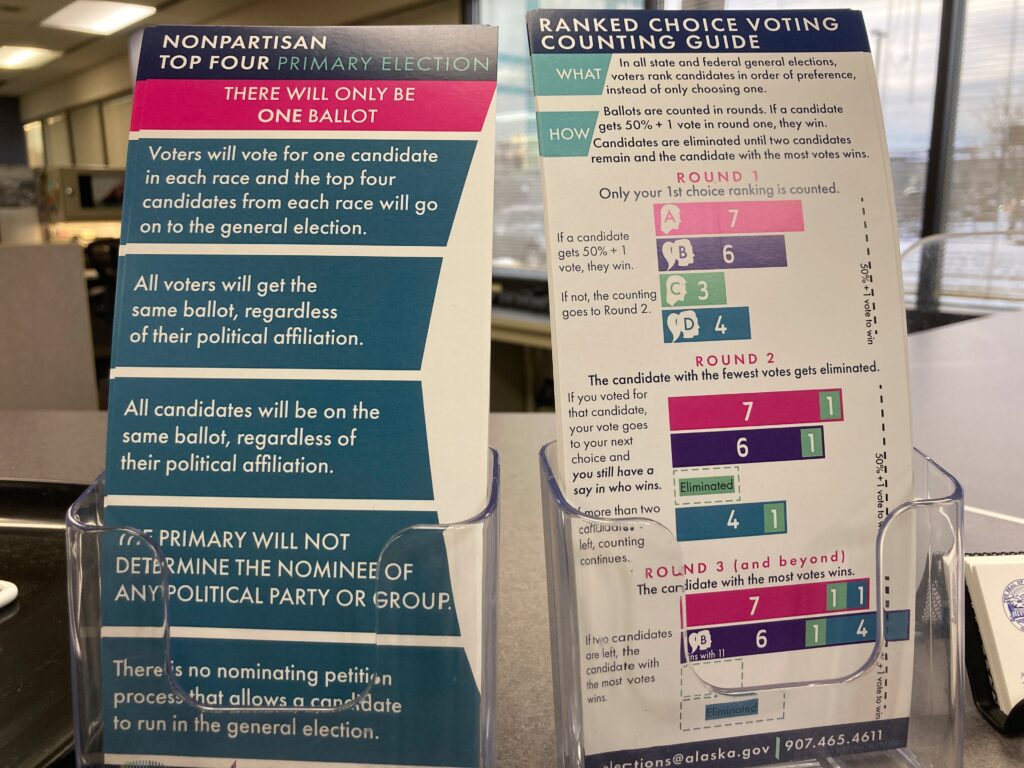
Alaska last week was an example of what an alternative could look like. The state’s 600,000 registered voters, more than 60 percent of whom are unaffiliated with either major party, had the opportunity to participate in a fully open primary. Since 2022, Alaska has had all candidates appear on the same ballot, and the top-four finishers — regardless of party — advance to the general election, where voters rank them. This process unlocks competition, even in gerrymandered districts or safe seats where there otherwise would be none, ultimately producing better representation.
In the first election cycle employing the new system, only 12 percent of Alaska’s state legislative general elections were uncontested, half the rate from 2020. There was also a nearly 60 percent increase in the share of voters who cast a “meaningful” ballot — i.e., one cast in an election that was not, in effect, predetermined by party affiliation. Seventy percent of state and federal general elections in Alaska this fall will feature competitions other than one Democrat versus one Republican, without the fear of “spoilers” — nonwinning candidates who affect the outcome of an election by appearing on the ballot.
More competition has resulted in different governing incentives. Incumbents no longer have to fear being “primaried” by a fringe minority if they step out of line with their party. Sen. Lisa Murkowski’s reelection in 2022 over a Trump-backed challenger, after she was one of just seven Republicans who voted to convict Trump in his second impeachment trial, is a case in point. She pledged in a campaign ad that election cycle to “work with anyone, from either party, to advance Alaska’s priorities.”
Removing the primary threat also allows legislators to focus more on state-specific issues instead of prioritizing their party’s national agenda. When listening to candidates running for office in Alaska, you are more likely to hear discussion of the state’s energy infrastructure, the intricacies of local fisheries or the challenges facing Alaska Natives than D.C.-centric debates concerning matters such as the White House ballroom construction.
In the general election in November, Alaska’s new system will face another test: a referendum asking voters if they want to keep it in place. It is the second time political insiders have succeeded in getting an initiative to repeal the system on the ballot. If the referendum passes, it will be a step backward for fairness in American elections. By scrapping the top-four model and returning to traditional primaries, the Democratic and Republican establishments will again have the power to choose their voters and ensure their handpicked candidates win.
There is no perfect one-size-fits-all election system, but two principles are critical to any: First, voters should be able to cast a ballot for any candidate, regardless of party, in taxpayer-funded elections. (California and Washington are examples of other states that have implemented this standard successfully.) Second, candidates should be required to earn a majority of votes to be elected. Alaska’s top-four and ranked-choice systems live up to both of these criteria. That isn’t the case in states still using party primaries.
Fortunately, the U.S. Constitution gives each state the power to design its elections. That’s how primaries replaced smoke-filled rooms as a means of candidate selection more than a century ago, and now Alaska is helping to open a new stage in the nation’s democratic evolution.
The post Alaska’s alternative to extremism appeared first on Washington Post.