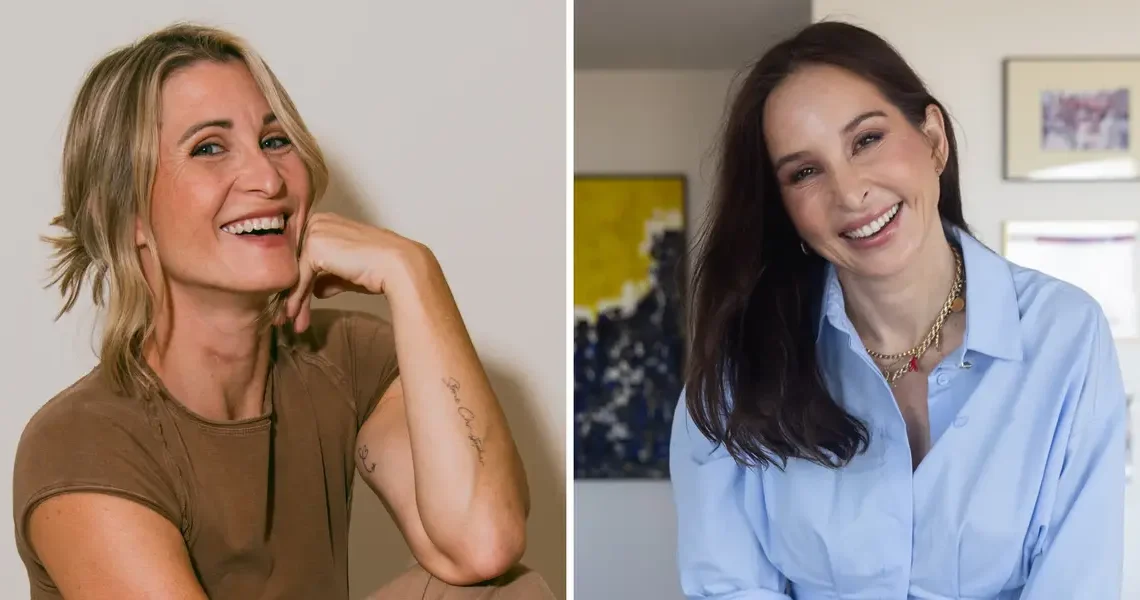

Gabrielle Stone never imagined she’d get divorced, let alone that she’d tell the world about it.
Her first instinct after the one-two punch of ending her marriage, then enduring her first post-divorce heartbreak in 2017, was to log off entirely. She decided to embark on a monthlong trip to Europe à la Elizabeth Gilbert’s “Eat, Pray, Love,” and take a social media hiatus.
“I’ll see you on the other side,” Stone signed her farewell-for-now Instagram post, paired with a photo of herself wearing a backpack at the airport, passport in hand.
The internet had other plans.
Stone’s emotional missive, which traced her path from heartache, disappointment, and betrayal to self-love, struck a chord beyond her modest following. She received hundreds of comments and DMs from people who called Stone an inspiration and urged her to keep sharing her journey. So she did.
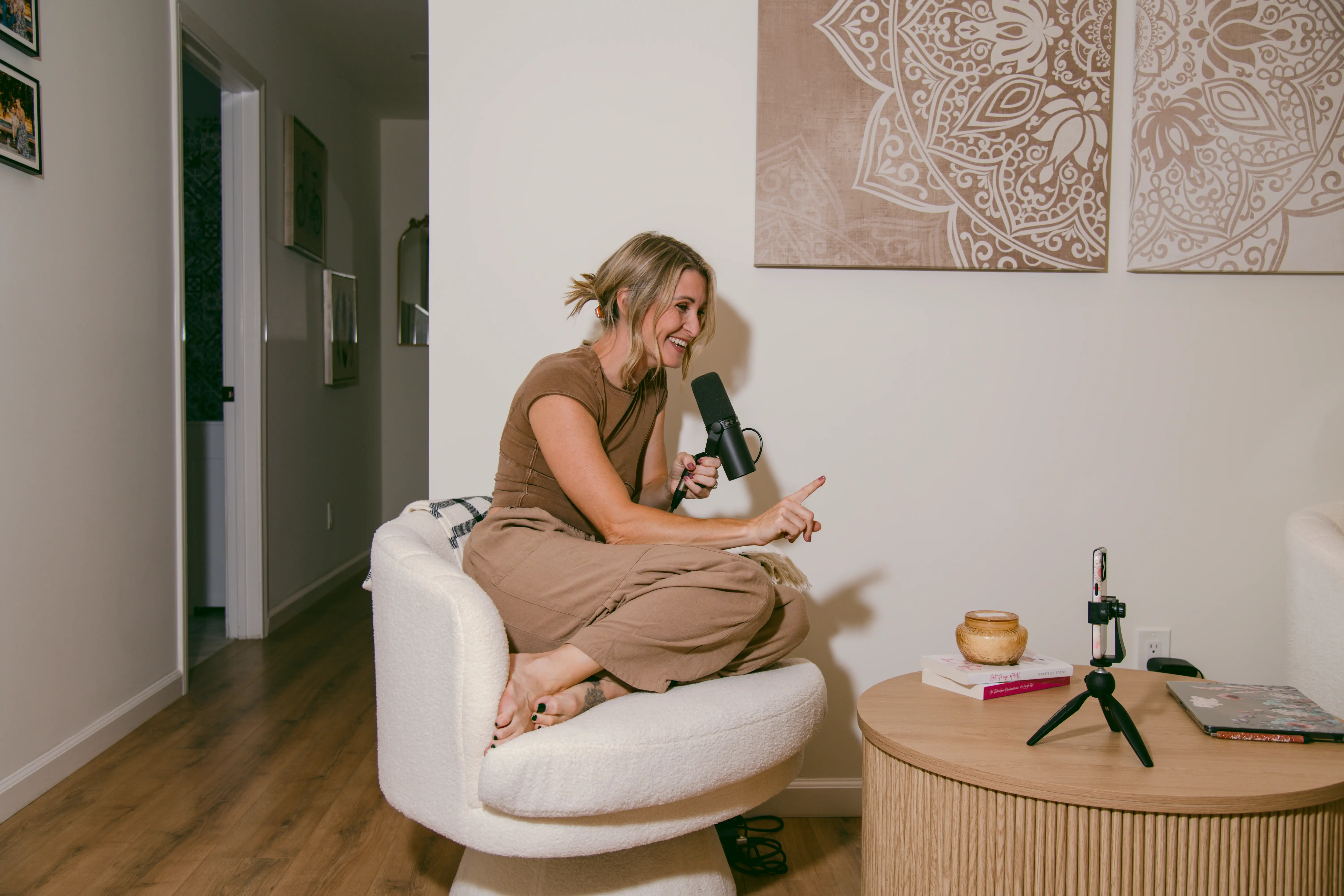
Nine years after posting that pivotal airport photo, Stone has established herself in a fruitful niche: the divorce influencer. Her Instagram audience has grown from about 10,000 to over 112,000, plus 1.3 million TikTok followers. She self-published a viral memoir, “Eat, Pray, #FML,” in 2019; hosts a podcast, “FML Talk,” and arranges meet-and-greet trips across the globe where her fans, dubbed “FMLers,” are encouraged to gather, commiserate, and bond. What began as a solo mission shared online almost as a lark has bloomed into a mini media empire.
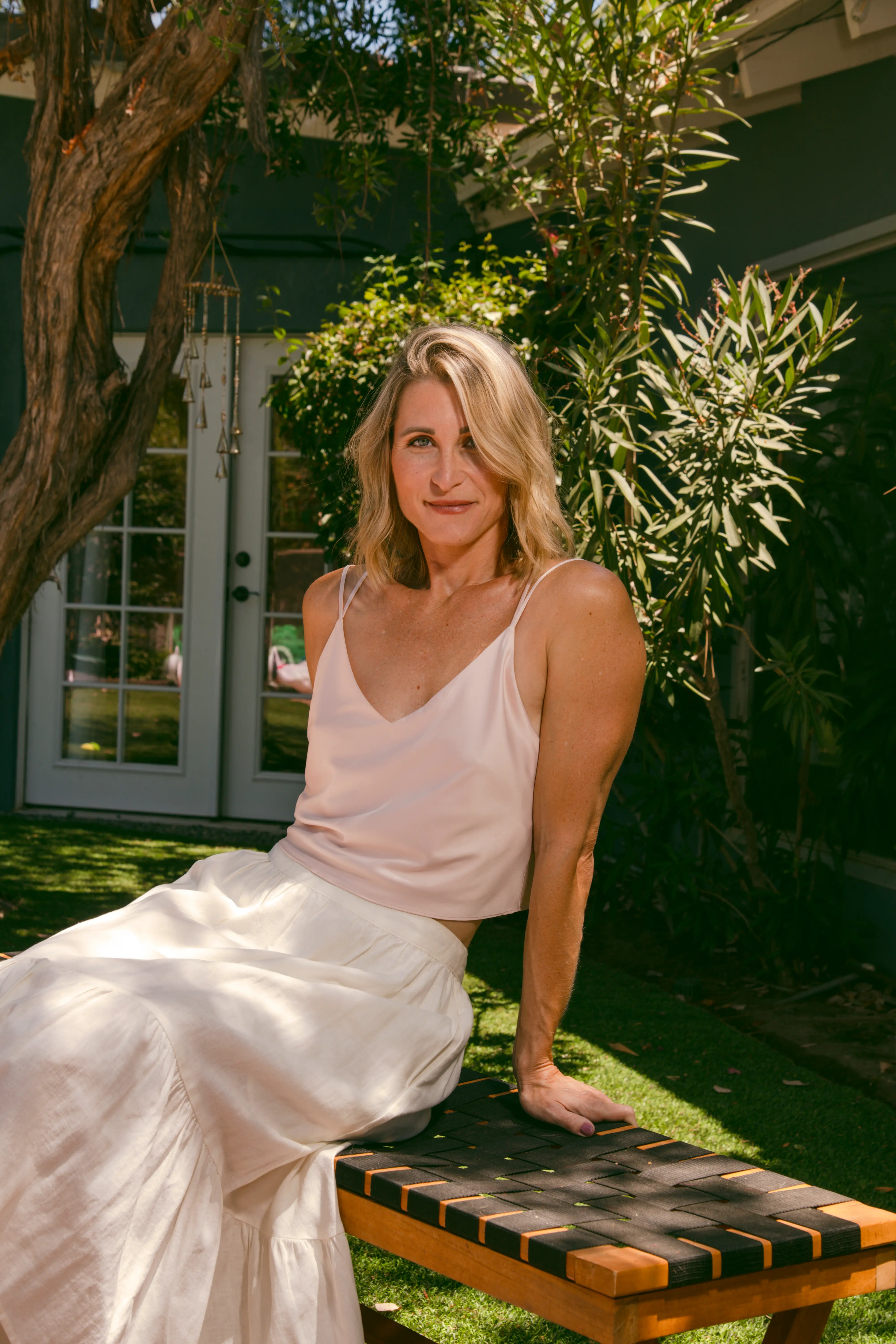
Stone, 37, may not have intended to become a divorce influencer, but like any savvy content creator, she saw an appetite for the kind of story she was telling and pushed through self-doubt to satisfy her audience. Knowing that she could scale and monetize that story didn’t hurt, either.
“For anybody to be like, ‘I don’t need to support myself and make money,’ they’re just lying,” Stone told Business Insider.
Plus, seeing a hit social media post lead to a real-time spike in book sales is part of the fun.
“Because I self-published, I can go on to the backend of my KDP Amazon site and see the correlation,” Stone said, referring to Amazon’s self-publishing platform, Kindle Direct Publishing. “You can’t pay for marketing like this.”
When ‘conscious uncoupling’ becomes ‘celebratory uncoupling’
Stone was early to recognize the earning potential of breaking up. In the years since, divorce has gotten a rewarding rebrand in popular culture, one that emphasizes autonomy and freedom, particularly for women.
In some corners of the internet, typical connotations of divorce — namely that it’s a tragedy or a failure — have been replaced with an air of liberation and merriment, epitomized by the famous paparazzi photos of Nicole Kidman whooping and basking in the sunshine. (According to meme lore, those photos were taken by paparazzi after she filed for divorce from Tom Cruise, though Kidman has denied this.) The band Haim even recreated Kidman’s pose for the cover of their 2025 single, “Relationships.” Sample lyric: “I think I’m in love, but I can’t stand f**king relationships.”
Trending phrases on TikTok, like “the divorce effect” and “the divorce glow-up,” showcase before-and-after images of singles who say they’re happier, hotter, and more personally fulfilled after ditching their spouses. Earlier this year, the cool-girl brand Reformation launched a “Divorce Collection” campaign, starring celebrity divorce attorney Laura Wasser. Famous women like Emily Ratajkowski and Rachel Zoe are proudly repurposing their diamonds into “divorce rings,” or, to some, “F-you rings.” Belle Burden’s hit divorce memoir, “Strangers,” has sold over 220,000 copies in the US since it was published in January, holding steady on The New York Times bestseller list for over six months. It’s never been more chic — or more lucrative — to flaunt your divorcée credentials.
And it largely is divorceés. A Stanford University study found that among heterosexual couples in the US, women initiate about 70% of divorces. James Sexton, a divorce attorney in New York City, said that, in his experience, the gender imbalance is largely due to women being forced to seize the bureaucratic reins and take charge as the marriage falls apart.
“I couldn’t possibly count on all my fingers and toes how many times I’ve had a case where the guy went out for milk and never came back, or the guy came home and said, ‘I’m in love with another woman, and I’m moving out,'” Sexton told Business Insider. “Then the wife comes to me and goes, ‘He stopped paying the mortgage. What do I do?’ And I go, ‘We have to file for divorce.'”
Over her 30-plus-year career, Wasser has witnessed firsthand how clients have gone from discussing divorce in her office with hushed, conspiratorial tones to introducing her in public as “Laura Wasser — she did our prenup!”
“When I first started practicing, divorce was kind of taboo,” said Wasser, who is herself divorced. Even a decade ago, she recalled, it was difficult to promote her 2013 book, “It Doesn’t Have to Be That Way,” because morning shows and other traditional book-tour destinations rejected divorce as “too negative” a topic to discuss.
Now, people are throwing “divorce parties” and documenting the festivities online, to the tune of millions of likes. Labor and delivery nurse Jen Hamilton, a content creator with over 7 million followers on Instagram and TikTok, recently told The Cut she threw a “Jendependence” party to commemorate her divorce with friends and coworkers; festivities included burning her bedsheets. Beauty influencer Mikayla Nogueira shared two “get ready with me” videos with her 17.4 million followers before attending divorce court, and both went viral. Although reactions were mixed, engagement was high.
.tt-row { display:flex; gap:12px; justify-content:center; margin:1.5rem 0 0.5rem; }
.tt-slot { width:325px; height:500px; overflow:hidden; border-radius:8px; }
@media (max-width:680px) {
.tt-row { gap:18px; }
.tt-slot {
transform: scale(0.56);
transform-origin: top left;
margin-right: -143px;
margin-bottom: -220px;
}
}
If “conscious uncoupling” was the defining divorce catchphrase of the 2010s, this decade is taking that concept to its aesthetic extreme. Call it “celebratory uncoupling” — a public renunciation of shame and a declaration of empowerment, all wrapped in brand-friendly packaging.
Posting through it is paying off
When Orange County, California-based lifestyle influencer Cora Lakey tearfully announced on TikTok that she was getting a divorce last January, the video amassed over 1.3 million views — well above her average, given that she has what she calls a “micro following” of about 134,000.
Lakey, 32, told Business Insider she didn’t intend to go viral; she had shared the news more as a courtesy to her loyal viewers, who would surely notice her ex-husband’s sudden absence in her posts. “But it definitely signaled to me that, wow, there’s a lot of relatability here,” she said.
Since then, Lakey has broadcast details about her post-divorce dating life, her solo apartment-hunting journey, and her lowest moments of loneliness. Her candor has won her paid partnerships with dating apps, a moving company, and beauty brands.
In one ad for the wellness brand Rael, Lakey appears wearing smeared mascara. “Your personal life might be a mess,” she says to the camera, “but your cleansing balm doesn’t have to be.”
Though the ad was “tongue-in-cheek,” Lakey said, leaning into brand deals post-divorce ended up being a financial lifeline.
“I had quit my job six weeks before my divorce, and then my marriage suddenly ended. And I was like, what am I going to do? I have no money,” she said.
Lakey said her contracts prevent her from sharing specific dollar figures on how much money she made on social media. But without those deals, she said her financial situation at the time would have been “pretty bleak.”
“I was making minimum wage at an entry-level sales job trying to get back on my feet,” Lakey said. “The additional income from social media quite literally made the difference between seeking government funded resources and being able to pay my rent and keep my dogs.”
Scarlett Longstreet, 38, a Detroit-based content creator and writer, had a similar revelation. After nine years of being a stay-at-home mom and self-described “mommy blogger,” pivoting to life-after-divorce content helped her break free from relying on her ex-husband’s income.
In her second year as a full-time creator, she said she made six figures in brand deals.
“There’s taxes and my agency cut to factor in, but between brand work and my Substack, I’m able to cobble together an income that I wouldn’t be able to achieve by working in my field of study,” said Longstreet, who has a master’s degree in educational psychology.
She added, “My exodus wasn’t possible without this industry.”
With nearly 80,000 followers across Instagram and TikTok, Meghan McTavish, 41, has proudly embraced the “divorce influencer” title, sharing posts with captions like, “when I reverse uno’d my divorce into the best rebirth and glow up period of my life,” and “to become cool, all I had to do was get divorced.” She recently launched a series titled “You Deserve to Go (even if you go alone),” in which she films herself taking solo trips and dining alone at romantic restaurants.
Because she is based in Australia, McTavish is ineligible for TikTok’s view-based payout programs. But she leverages her social media presence to sell The Plotline ($38.99 AUD), a journal she said is “based on the principles of narrative therapy,” and to score brand deals.

“I always tell women, ‘You deserve to get whatever makes you feel good,’ and so brands do come to me with shampoos, makeup, stuff like that,” McTavish said.
A big part of McTavish’s online brand is self-care — something she’s noticed is less of a priority for her married friends.
“I have friends who are married who won’t get their teeth whitened, for example, because they don’t feel they deserve it. They go, ‘What’s the point? I’m already married,'” McTavish said. “The point is more than just a man. The point is feeling nice and feeling good.”
Of course, conflating divorce with hotness and self-care with beauty is a convenient angle for those hawking makeup online. But McTavish said she views the overarching narrative of her content as a net good.
“Like anything on the internet, you have to give people what they want,” McTavish said. “I’m lucky in that what I think I’m giving people is something positive, and not hateful.”
Divorce is common. Maybe talking about it should be, too.
Giving people what they want — or what they seem to want — also has its drawbacks. McTavish said she’s been accused of flippantly promoting divorce or encouraging women to leave their husbands, no matter the cost.
In comment sections, divorce-fluencing is often decried as anti-love or anti-marriage, and high-profile influencers like Nogueira have been criticized for selling divorce as a “fantasy.” So far, Nogueira hasn’t explicitly responded to the backlash, though she’s posted about negativity in her comment sections. A representative for Nogueira did not respond to a request for comment.
McTavish said these sentiments are misconceptions and that she does not take divorce lightly. “I don’t want everyone to leave their partners,” she said. “I just don’t want anyone to be afraid to leave because they’re afraid to be alone.”
Lakey agreed, adding that she hopes sharing her experience will encourage other women to take control of their finances, so they don’t feel hamstrung during a breakup, like she did.

“We live in a two-income world,” Lakey said. “That was something that held me back from leaving a lot sooner.”
The data backs up Lakey’s fears: A 2023 study found that women were substantially more likely than men to be living in poverty following a divorce or separation.
And yet, divorce is not rare. In 2023, over 1.8 million Americans divorced, according to the Pew Research Center, and about one-third of Americans who had ever been married reported that their first marriage ended in divorce. This outcome also becomes more likely over time; about half of Americans who married in the 1970s and 1980s reported that their first marriage ended in divorce.
Sexton believes an experience shared by so many people is worth speaking about freely and without shame.
“We all suck at love. It’s something we all have in common,” Sexton said. “I represent billionaires and CEOs and actors and athletes. I used to represent cops, and teachers, and union steelworkers. We all suck at this. We all have a hard time with it.”
“Should you dispose of a marriage willy-nilly? No, of course not,” he added. “But as a divorce lawyer and as a human being, I think that we’re better off destigmatizing divorce.”
I pointed out that, as a divorce lawyer, he may have a bias; it would be good for business if more people believed that divorce isn’t shameful.
Sexton laughed. “Our business?” he replied. “We don’t need any help.”
Read the original article on Business Insider
The post Divorce is getting a lucrative rebrand. These influencers are cashing in. appeared first on Business Insider.