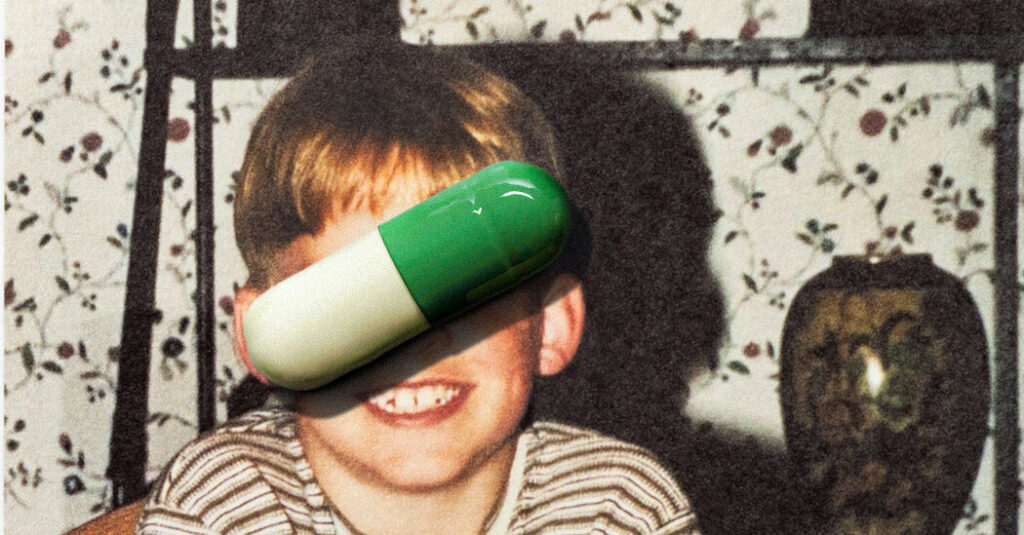
To the Editor:
Re “He Grew Up on Antidepressants. Now He Wants a Way Out,” by Camille Bromley (Opinion guest essay, Aug. 9):
As a neurodevelopmental psychiatrist who has treated patients like Cameron LaBar for nearly 40 years, I was deeply moved by his story. Growing up with complex Tourette’s syndrome can be extraordinarily challenging, both for those who live with it and for their families.
While medications such as S.S.R.I.s can provide meaningful relief from some of the disorder’s most distressing symptoms, they are not cures. As a result, many patients face the difficult question of whether to remain on treatment long term. I understand Mr. LaBar’s desire to live without medication. At the same time, I was struck by how viewing the choice as all-or-nothing can create an unnecessary burden.
For some people, accepting that a condition may be chronic and that a low dose of medication may support a stable, productive and fulfilling life can be an act of wisdom rather than resignation. Much as insulin helps manage diabetes or an inhaler helps control asthma, psychiatric medication can be one valuable tool for managing a chronic condition.
Whatever choice an individual ultimately makes, remaining on psychiatric medication should never be viewed as a moral failing or a measure of personal strength.
Anthony L. Rostain Camden, N.J. The writer is the chairman of the department of psychiatry and behavioral health at Cooper University Health Care and a professor of psychiatry and pediatrics at Cooper Medical School of Rowan University.
To the Editor:
I was left with a sense of familiarity reading Cameron LaBar’s story. Our stories are not the same, but they rhyme. By age 5, I was already seeing a child psychiatrist for severe anxiety. In third grade, I developed agoraphobia and began to miss school. My doctors too prescribed S.S.R.I.s at age 9.
I thrived. I still take medication to this day. I expect I will be on it the rest of my life. If that is the price I have to pay for being able to leave my apartment in the morning, so be it.
I wish Mr. LaBar the best, but it is frustrating to read yet another Opinion piece in The Times painting a dire portrait of S.S.R.I.s, especially when the current administration is laser focused on decrying these drugs. These medications should be prescribed with caution, yes, but they can be lifesaving.
They were for me.
Rebecca K. Washington The writer’s full last name is being withheld at her request to protect her medical privacy.
To the Editor:
As a psychiatrist, I share some of this movement’s concerns, but the conversation demands more nuance. Patients deserve honest discussion about the potential duration of antidepressant treatment, withdrawal symptoms and thoughtful tapering when appropriate. Shared decision-making and periodic reassessment should be standard practice, not the exception.
At the same time, we should be careful not to let de-prescribing reinforce psychiatry’s longstanding stigma. We don’t hear parallel calls for patients to “free themselves” from insulin or blood pressure medication. That difference reveals an old assumption: that needing help to manage one’s mind reflects weakness rather than illness.
The article also risks implying that withdrawal is uniform across antidepressants. It isn’t. Discontinuation symptoms vary considerably by medication. Paxil, for example, is much more likely than Prozac to precipitate discontinuation symptoms such as nausea, fatigue, headaches and dizziness when stopped abruptly. That distinction shapes both prescribing decisions and how medications should be tapered.
I tell every patient that medication is only one tool; sleep, exercise, psychotherapy and meaningful relationships matter just as much. The goal should never be keeping people on medication indefinitely, nor pushing them to quit at all costs, but instead giving patients the information and individualized care to decide what’s right for them.
Brandon Jacobi Pleasantville, N.Y.
To the Editor:
Stories like Cameron LaBar’s are as foreseeable as they are awful. Antidepressants are among the most commonly prescribed medications in the United States, along with those for cardiovascular problems and diabetes. They have been overprescribed for decades without proper follow-up.
People with an established, long-term relationship with a competent psychiatrist are less likely to stay on an antidepressant for years because the longer a psychiatrist has known the person, the more informed the decisions he or she can make about tapering off or down to minimum doses.
The problem is that there are not nearly enough psychiatrists to go around. How much more suffering must there be for mental health care to be regarded differently in this country? It should be as basic to health care as E.R. visits, as evidenced by a national mental health crisis in various age groups. To start, the U.S. government and medical schools should incentivize medical students to become psychiatrists.
Paul Siegel New York The writer is a clinical psychologist and an adjunct research professor of pediatrics at Children’s Hospital Los Angeles, Keck School of Medicine, University of Southern California.
To the Editor:
I read Camille Bromley’s article with great sadness. It is another in what seems to be a series of articles documenting the harms caused by psychiatric drugs.
It’s true that the “decade of the brain” disappointed us. I am a 76-year-old psychiatrist, and I wonder if science will yield slam-bang medications for mental illnesses such as depression, bipolar disorder, O.C.D., PTSD and schizophrenia — without troubling side effects — before I die. Though we know some basics, finding the perfect combination of medications is an art more than a science.
However, my sadness reading your relentless articles that document valid individual patients’ points of view arises because my experience and that of my peers vary considerably from your reporting. I stuck by my patients through thick and thin for years, working to find the right mix of medicines for each one. When someone wanted to discontinue a medicine, or I thought they ought to, we tapered it slowly to avoid as many unpleasant symptoms as possible.
Some of my patients, and I know I speak for many other psychiatrists and their patients, feel that their medications are — literally — lifesaving. I wish you would feature articles from that perspective.
Robin Weiss Baltimore
To the Editor:
Like Cameron LaBar, I was diagnosed with Tourette’s syndrome in elementary school. It became apparent in subsequent years that I also had obsessive-compulsive disorder and A.D.H.D., and later in life I was diagnosed with autism.
None of these obvious facts — which contributed to a pervasive perception of me in my teen years as annoying, weird, “too much,” inept, disappointing and lazy — seemed enough to provoke the adults in my life to seek psychiatric care for me, let alone pharmaceutical intervention.
Mr. LaBar wonders what his life would have been like if he had been given the chance to experience his neurological conditions without medical support. I face the opposite question. What if, at the very least, I had been allowed to try A.D.H.D. meds, which studies suggest are most effective when patients are younger when starting them?
I am now, at age 44, on an antidepressant and a stimulant, and my life has changed drastically for the better. I understand for the first time what it feels like to perform the tasks of daily living without constant struggle and discomfort. But what if my pleas for help and understanding had been taken seriously when I was suffering as a child?
The stigma around medication and mental health diagnoses, as well as misinformation about the presentation of autism and A.D.H.D. in young women, prevented my tired and overworked parents from seeking out the treatment I desperately needed. Thirty-five years later, Opinion pieces like this are dragging us back to that time rather than helping us move forward.
Calgary Martin Urbana, Ill.
The post Beyond the Stigma of Antidepressants appeared first on New York Times.