MYRTLE BEACH, S.C. — President Donald Trump came to South Carolina on Friday night to give Darline Graham’s Senate campaign a jolt — and perhaps notch a needed win of his own.
A string of primary-season setbacks have chipped away at one of his most prized political assets: his reputation as the Republican Party’s kingmaker.
Trump-backed candidates have recently lost races for governor in Iowa, Georgia, Wyoming and Minnesota, and congressional primaries in Tennessee and Michigan — an unusual streak of defeats for a president who wants his endorsement to be seen as a golden ticket. Polls show his standing, perilously low with most voters, has started to erode even with the Republican base.
Now he is putting his endorsement, and some of his own political standing, behind Graham, the younger sister of the late senator Lindsey Graham, a close Trump ally and influential foreign policy adviser, who died in early July.
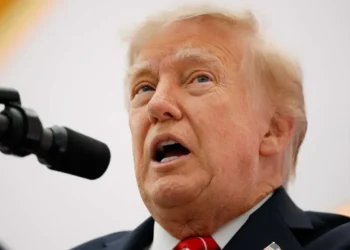
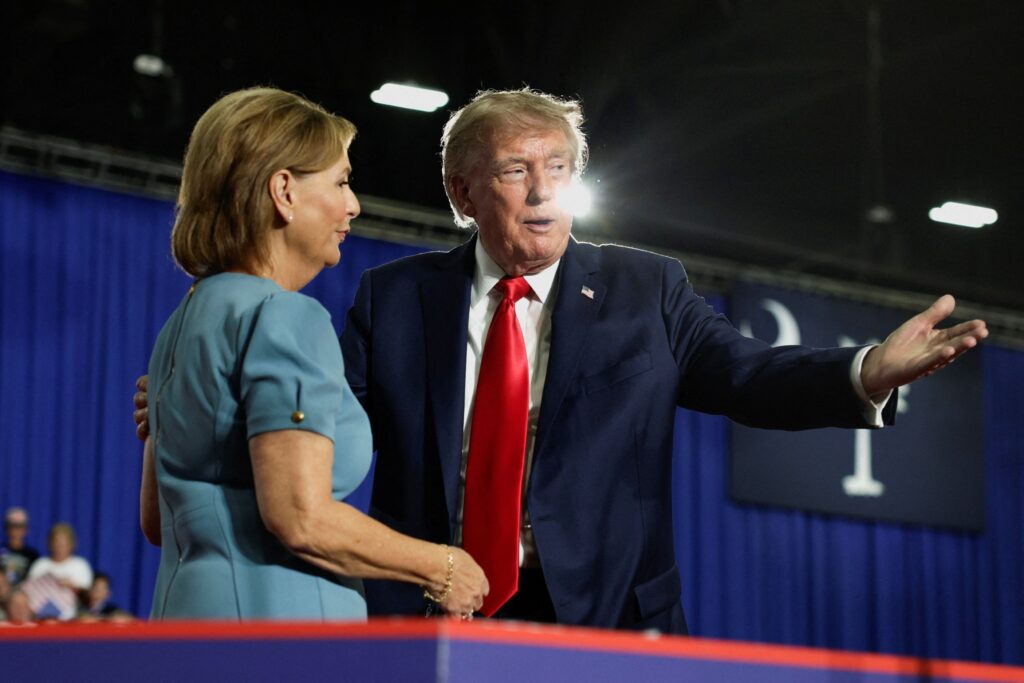
“We’re going to elect Senator Darline Graham to fight, fight, fight for South Carolina and to always put America first,” Trump said, invoking his own campaign mantra after saying that he was the one who asked Graham to run for U.S. Senate. At one point during the rally, he called her back onstage to stand beside her. “You vote for her, you’re going to be very proud of that vote.”
Trump sought to recast opposition to Graham as opposition to himself, telling the crowd that her critics were motivated by a desire to hand him a political defeat. “They’re only fighting Darline because they want me to lose,” Trump said. “It’s not fair. But I’m doing this to honor Lindsey.”
South Carolina Republicans agreed that it was a test both of Graham and of Trump’s power as a kingmaker to some of the staunchest Republicans, some of whom are skeptical of the senator after she acknowledged during Tuesday’s debate that she was not well versed in foreign policy.
“This is probably the biggest bellwether of his endorsements so far in 2026, even more important than Iowa, even more important than Georgia, because this is a special election where the hardcore base is going to be coming,” said CJ Westfall, chairman of the Dorchester County Republican Party. Westfall has not endorsed a candidate in the runoff, which is to choose a Republican nominee for November’s election.
“And it’s the last temperature check that we have before we see these presidential candidates start popping up and announcing themselves,” Westfall added. “It’s a massive statement if South Carolina voters reject his choice, and I think there’s a very good chance that happens,” Westfall said.
Speaking a few minutes before Trump, Graham sought to turn one of her chief vulnerabilities — her lack of political experience — into an asset. She touted her conservative credentials, pledged to “have President Trump’s back 100 percent” and dismissed criticism that she was unqualified for the Senate.
“Now the critics say I shouldn’t run for the Senate. They say I’m not a politician,” Graham said. “You know what I say? Guilty as charged.”
She then invoked Trump’s own path to the presidency. “President Trump had never served in an elected office before, and I think he’s done a damn good job.”
Graham was appointed last month to serve out the rest of her brother’s current term, finished first in South Carolina’s Republican primary on Aug. 11, but only captured about 32 percent of the vote, despite Trump’s endorsement. She now faces Rep. Ralph Norman in Tuesday’s runoff.
In the whirlwind, two-week runoff campaign, she has exacerbated questions about whether she is prepared for the job.
Tuesday, during the runoff’s only debate, Graham stumbled over a question about Taiwan and the South China Sea, one of the central flash points in the United States’ strategic competition with China.
“I’m just going to be honest here,” she said. “I’m not that informed on national security.”
Gasps and boos could be heard from the audience.
The exchange highlighted a stark contrast both with Graham’s late brother and with her opponent. Lindsey Graham spent decades immersed in national security and foreign policy, and was an outspoken supporter of Taiwan. Darline Graham had no experience with most public policy issues until she was appointed to fill his seat.
Trump, however, brushed aside questions about Graham’s readiness just before boarding Air Force One for South Carolina, portraying her lack of foreign policy experience as candor rather than a liability. He called Graham “very smart” and said her focus as a senator would be less on international affairs than on the everyday concerns of South Carolinians.
“She’s into the price of groceries, the price of food, the price of beef. And [foreign policy] hasn’t been her thing but she’s surrounded by very good people, and she’s said that she’s totally for the military. She’s going to do what the military wants and, really, what the president wants.”
Norman, a five-term congressman and member of the House Freedom Caucus, has emphasized both his support for Trump and his willingness to break with the president when he disagrees. He has made his governing record and long-standing conservative credentials central to his campaign.
A spokesperson for Norman did not respond to a request for comment. But in recent days, he and his supporters have stressed the experience gap.
He posted the video of Graham’s foreign policy answer on X, writing “South Carolina deserves a Senator who UNDERSTANDS Foreign Policy. I’m a PEACE THROUGH STRENGTH supporter! No more forever wars!”
And an ad from Palmetto First PAC, which supports Norman in the runoff, called Graham a “puppet” and said “the D.C. establishment” was trying to stop Norman.
“What if Darline Graham had any other last name?” it asked.
Former governor Mark Sanford, who finished fourth in the first-round primary, cited that experience in endorsing Norman on Friday, praising the congressman’s “experience in legislative circles, matched by a conservative voting record and conservative stands.”
Trump, who has worked to consolidate Republican support around Graham, took the rare step of calling Sanford — a longtime adversary who challenged Trump for president in 2020 — and asking him to back Graham. He also reached out to Rep. Russell Fry, who finished third and did endorse her.
Graham has defended her foreign policy answer as evidence of her willingness to acknowledge what she does not know, arguing that voters are tired of polished politicians and saying she would learn the national security issues.
In a Fox News appearance after the debate, she sought to redirect attention toward issues she said were more pressing for South Carolinians, including the economy and cost of living.
But the debate moment has added unpredictability to a runoff that is expected to feature a low turnout dominated by party activists.
The brief campaign has been disorienting for some of those voters, who are accustomed to taking their time with political candidates. For nearly five decades, the state’s first-in-the-South presidential primary has given voters repeated opportunities to scrutinize White House hopefuls over months of campaigning. This time, they are being asked to choose a likely successor to a long-serving senator in just over two months.
For Randy Page, a longtime South Carolina Republican operative who is now executive vice president of the conservative Palmetto Family Council, the compressed schedule has been jarring.
“It truly is a snap election,” Page said. “In a normal election, for a presidential [primary] in 2016, we saw the presidential candidates roll through two or three in a day, and I might have been able to have breakfast with Jeb Bush, lunch with Marco Rubio and dinner with John Kasich. But this really is remarkable that this happened so quickly.”
The post Trump, his clout on the line, stumps for Graham in South Carolina appeared first on Washington Post.