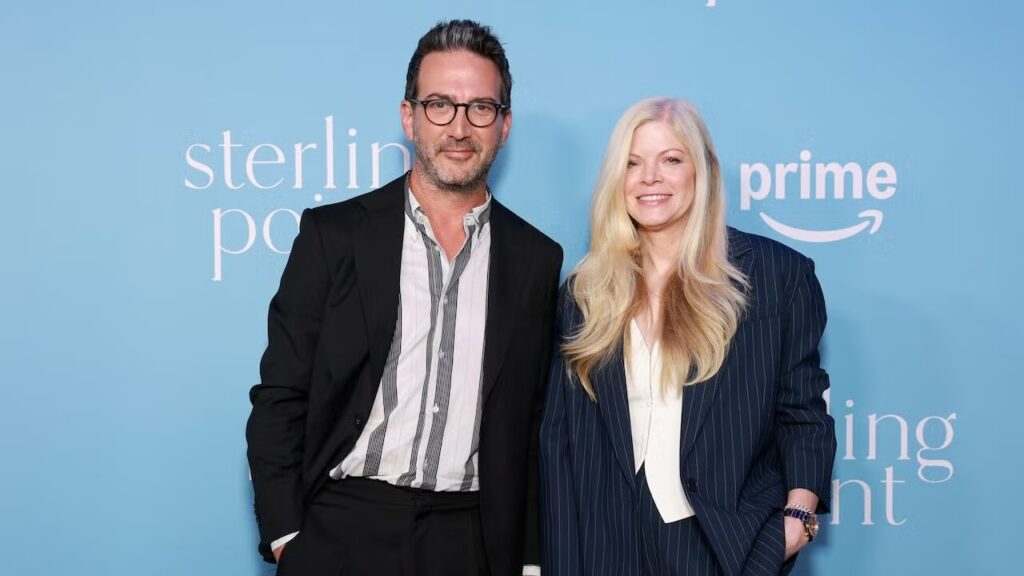
Josh Schwartz and Stephanie Savage know what it takes to succeed in YA — they’ve crafted countless hits since pioneering “The O.C.” and “Gossip Girl,” which have served as the blueprint for young adult shows as streamers breathe life back into the genre.
It’s that instinct that led the duo to partner with indie filmmaker and first-time showrunner Megan Park, whose pilot script for coming-of-age drama series “Sterling Point” came across their desk by way of LuckyChap’s Dani Gorin and immediately piqued their interest.
“It was a very rare moment where we were both like, ‘Hey, let’s just open this up while we’re sitting here,’ and then we both started reading and laughing and being like, ‘What part are you laughing at?’ and like, ‘Oh my God, where’s this going?’” Schwartz recalled to TheWrap. “We just got really swept up in the in the pilot script and Megan’s voice … and we just really fell in love with it.”
It wasn’t until after reading the script, which centers on 17-year-old Annie (Ella Rubin) who inherits a Canadian island from her mysterious grandfather, that the duo watched Park’s second film, “My Old Ass,” another coming-of-age story set in Muskoka starring Maisy Stella and Aubrey Plaza. For Schwartz and Savage, “My Old Ass” was a “proof of concept” for what “Sterling Point” could be, and they knew just where to help.
“Megan had never done TV before, she’d never been in a writers’ room. She’d never written with other people,” Savage said. “There were a lot of steps that she was going to have to go through to make a TV show that were very unfamiliar to her, and we were like, ‘let’s be of service here.’”
Beyond the basic mechanics of writing and running a TV show, as executive producers, Schwartz and Savage aimed to help marry Park’s voice as a filmmaker with the commercial requirements that come with distributing a show to Prime Video’s global audience — especially as the streamer establishes its dominance in the YA space.
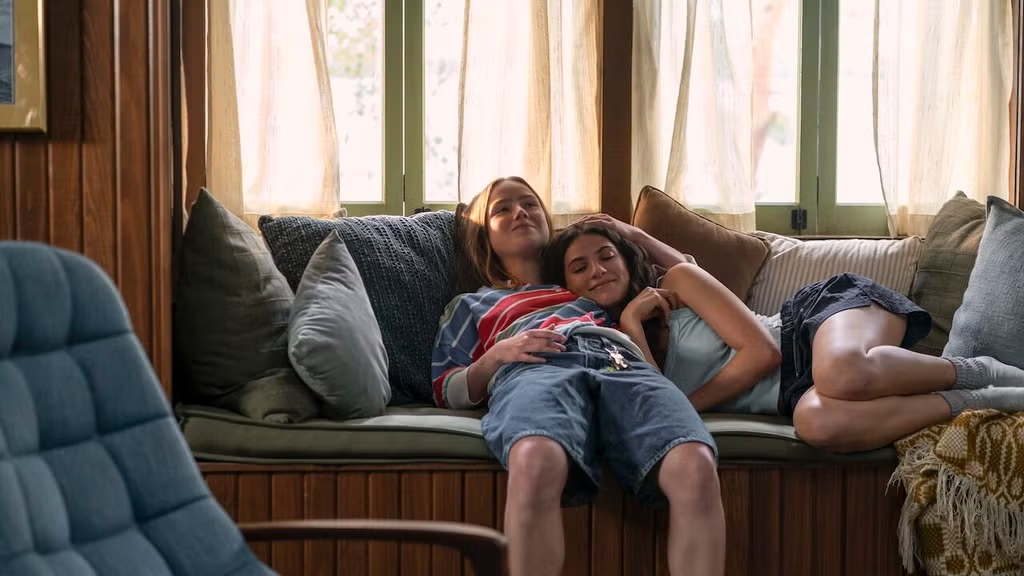
It worked across all fronts: Prime Video granted “Sterling Point” a Season 2 renewal on Thursday, just over two weeks after its debut, and fans have been applauding the show’s natural dialogue in alignment with Park’s goal to have “Sterling Point” stand as “the most authentic YA show they’ve seen in a while.”
“We’ve been really delighted by how people have reacted to the show and really getting the show and breaking down the dialogue, or how Ellis pulls Annie across the floor in the closet to kiss her,” Schwartz said, pointing to one fan video breaking down the books read by different characters. “It’s a show that goes deep, and people are going deep with it as well.”
And the team is hoping to lean into that fan feedback as they craft Season 2. “We very much believe that shows are organic and they become what they are in the process of making them,” Savage said. “We might have certain north stars in terms of ideas or targets we want to hit, but then we’re also very open on the journey as to what happens to the characters and how they get to the places that we want them to go.”
Mentorship is nothing new for the duo. In fact, they consider it the “cornerstone” of their relationship and their production company, Fake Empire, dating all the way back to “The O.C.,” their first project together.
While Savage was an executive at McG’s Wonderland when she first met with Schwartz on a general meeting and brought up Orange County as a story area, their roles reversed later on when Savage was a “baby writer.”
“We very much mentored each other, and part of the impetus of starting our company, Fake Empire, was wanting to just keep that relationship going,” Savage said. “And then part of the objective of that company would be providing for other writers what we provide for each other in terms of mentorship and support.”
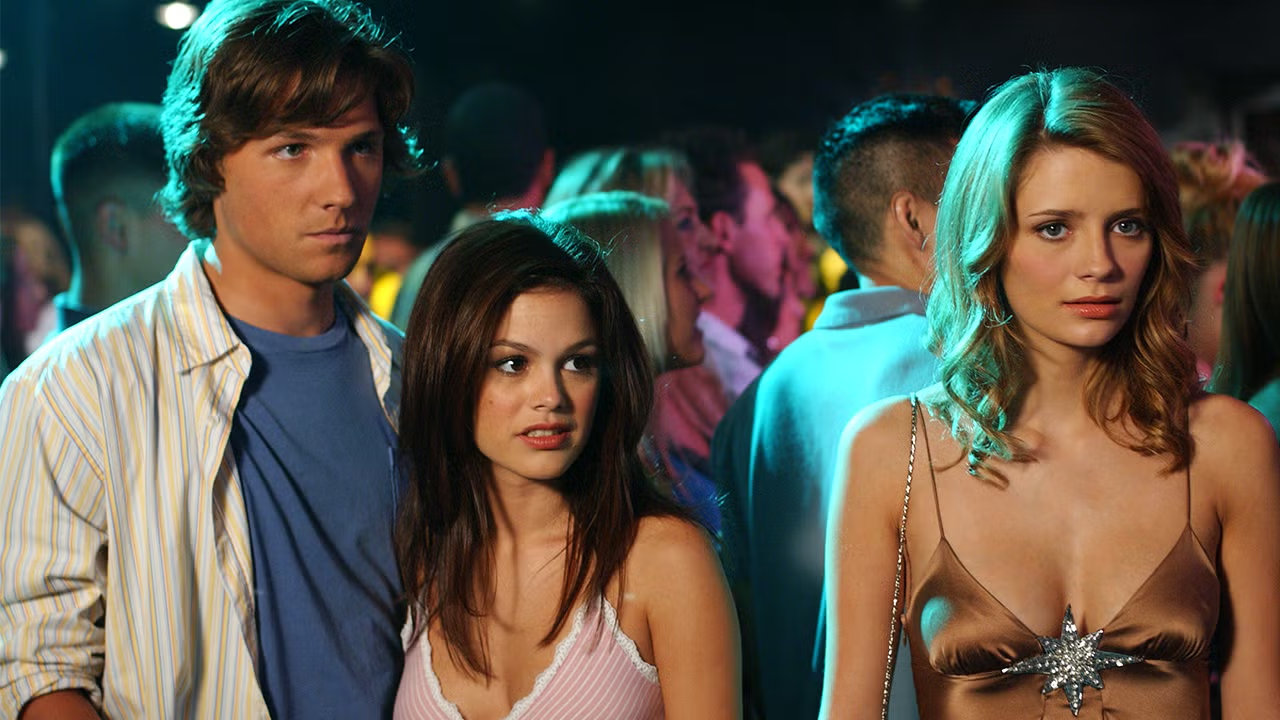
Since then, Schwartz and Savage have weathered industry turmoil and shifting tastes that prompted teen dramas to transition from their past linear homes on networks like the CW, Fox and Freeform to streaming platforms, though most streamers weren’t completely willing to commit to the genre wholeheartedly as they throw content at the wall and see what sticks. It’s only now, over 20 years after “The O.C.” launched, that streamers like Prime Video — where the duo and Fake Empire found their home — and Netflix have shouted their commitment to YA from the rooftops.
“We’ve been around now for a couple of boom and busts cycles in the YA space,” Schwartz said. “The CW was a big home, and then obviously when that went away, it migrated to another streamer, and then they would do it for a little while … everybody wanted to be be making them, and then nobody wanted to be making them.”
That’s not to say it was easy to craft a successful teen drama back in the 2000s, with Schwartz noting, “Long running teen dramas were always a tricky bet … how long can they stay in high school and then when they leave high school, it was complicated.”
Schwartz pinpointed their adaptation of John Green’s “Looking for Alaska,” which launched on Hulu in 2019, as their entry to “elevated YA for streaming,” noting the eight-episode series would’ve worked well on Prime Video’s YA slate today. “That was our first moment of going, ‘Oh, you can do this in a way where it’s not just you have to build for 25 episodes, we can tell eight episodes and go deep on these characters.’”
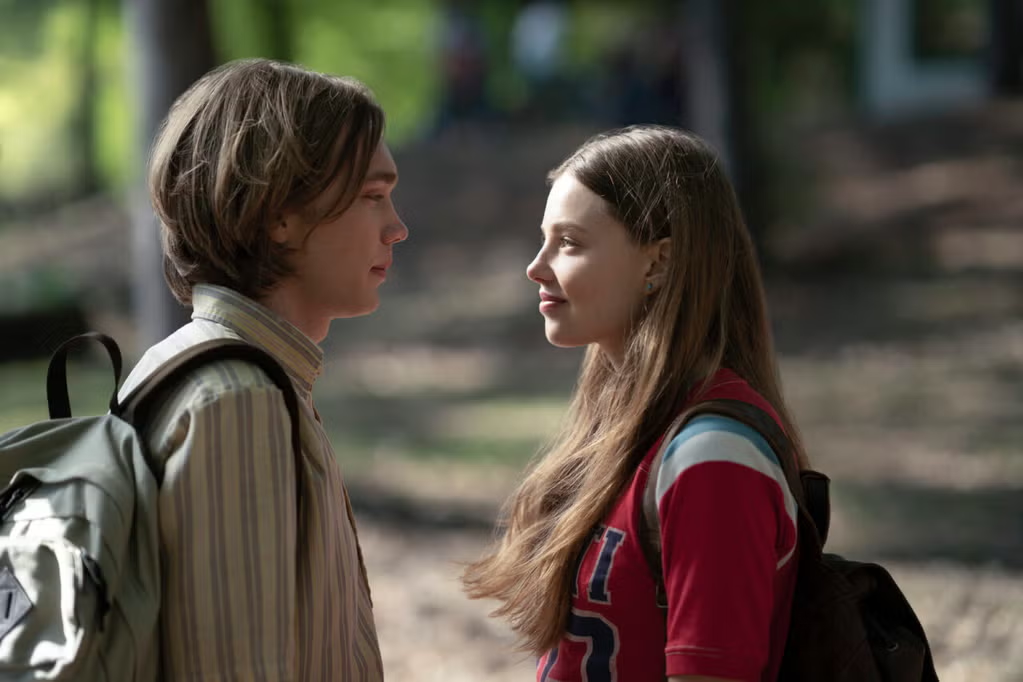
That said, the duo has seen the audience’s desire for more episodes and more space to sit with the characters, especially when it comes to “Sterling Point.” “I’ve seen some people online say, ‘I wish there was more episodes, because you just get to hang out with these characters,’” Schwartz shared. “There’s big story reveals, and there’s mystery, and there’s a lot of narrative momentum to it, but … it’s a hangout show at the same time.”
“Maybe somewhere we’ll find the balance,” he continued. “Maybe one day you’ll hear about 12 episodes or 10 episodes.”
Chatter about eight-episode seasons always makes Savage think of the first run of “The O.C.” between the pilot and Marissa’s overdose in Tijuana, which they jumped into right after filming the pilot. “That felt like a good number of episodes to tell a story about a group of characters and really establish who everybody is and what the stakes are, what the world is,” Savage said. “And then we went on and made 20 more episodes that year.”
After “Looking for Alaska,” the duo straddled linear and streaming with Hulu’s “Runaways” and the CW’s “Dynasty” remake, before revisiting “Gossip Girl,” which HBO hoped to serve as an “anchor” show as they launched HBO Max. The show, featuring an all-new cast of Upper East-siders, ran for two seasons on the streamer.
“There were a lot of things happening in the world at that time … COVID, and some other behind-the-scenes things that made that show challenging to keep going,” Savage said. “But in success, I think there would have been more seasons of that show. I think the second season, especially, was very good, and that the ending was really fun.”
But while “Gossip Girl” opened the doors for a “next gen” series as the anonymous gossip source was revived, they can’t quite see a reboot for “The O.C.” anytime soon.
“We’ve been asked, and I was like, ‘Well, the only idea I have is it opens with Seth and Ryan getting vasectomies as they approach middle age,’” Schwartz joked, noting that revisiting the show for its 20th anniversary was sufficient. “Everybody got to really reflect and talk about their experience and what the show meant to them, and be gratified that the show continues to mean something to people and resonate … we feel like ‘let’s just leave it right there.’”
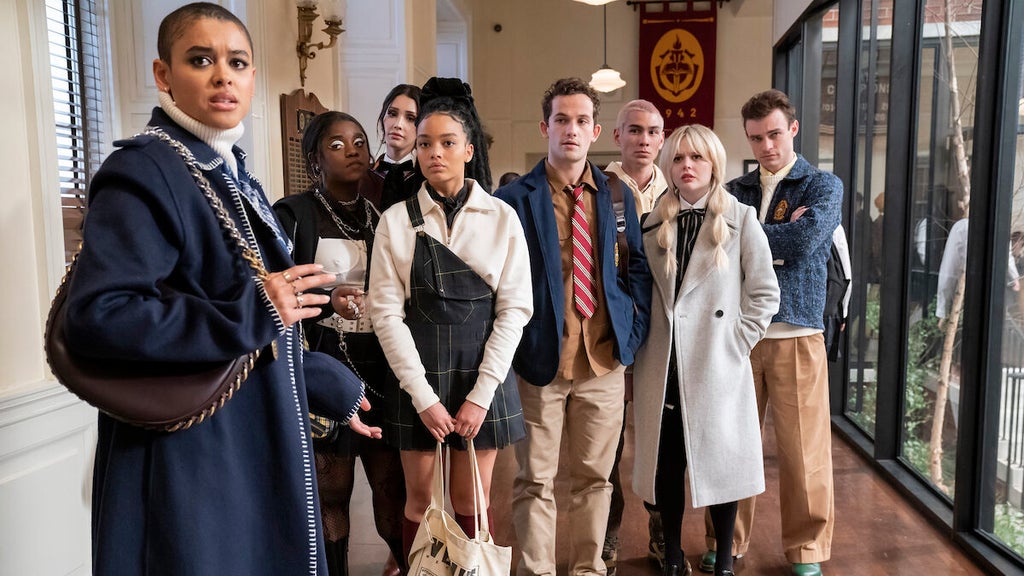
One thing the duo finds themselves talking about amid the genre’s migration to streaming is the cadence of seasons: audiences are lucky if they have to wait just one year for another eight-episode string.
“How can we get into a cadence where these shows can come back sooner … and the audience could be in the habit of knowing that they’re on more of a cycle?” Schwartz asked. “That’s something we’d love to help solve … not that it’s really up to us, and anyone’s asking us … that’s not even our jobs … it’s never stopped us before.”
The shift to streaming comes as audiences have similarly migrated from message rooms of the early ’00s over to social media, resulting in feedback that Savage has found contains less critical “snark” and instead have fostered a community for fans.
“There were a couple things in ‘Sterling Point’ that I was nervous about that the audience would have a negative reaction to, or that the messiness of the characters would bring out a judgment in the audience,” Savage said, noting the duo faced those critiques 20 years ago. “I was very, very happily surprised that wasn’t the case — that the audience seemed to have a lot more empathy for the characters and a willingness to watch messy characters make mistakes and learn from them, or maybe not learn from them in a way that felt really true to life.”
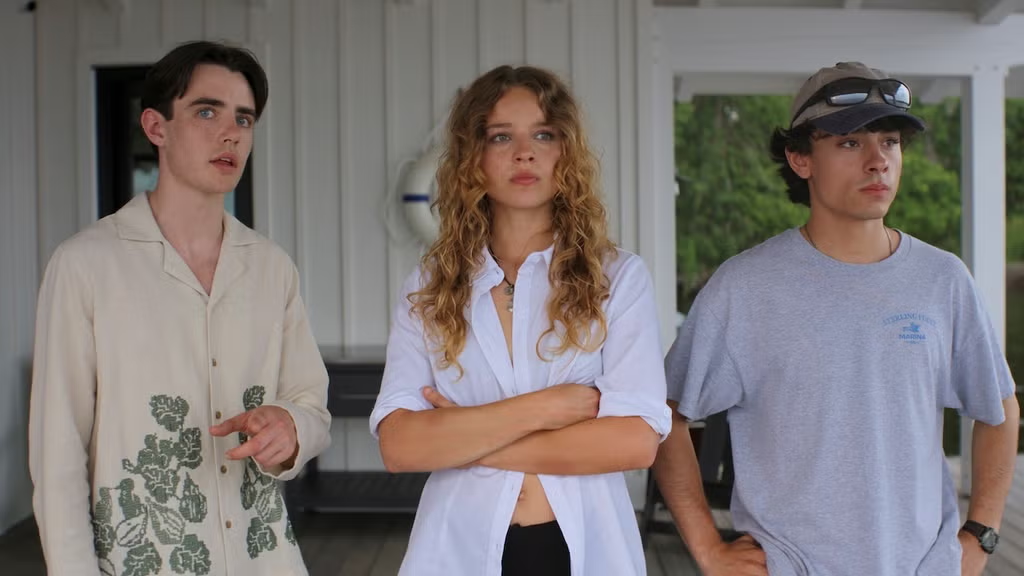
Next up — in addition to “Sterling Point” Season 2 — the pair teased updates soon to come for their Barneys NY series, while work is underway on the “Clueless” TV show starring Alicia Silverstone, which was rescued by Paramount+ after being dropped by Peacock.
The key to the “Clueless” continuation lies in straddling nostalgia for audiences who watched the movie as teenagers and now have teenagers of their own, with a writers’ room filled with Gen Z voices who can make the series feel “authentic.”
“It was really important in doing ‘Clueless’ that we were doing it with Alicia, and it was her character as an adult — it wasn’t like just a new version of a girl named Cher,” Savage said. “We’re still on her journey with her, and then introducing a younger generation that is very much Gen Z.”
As with “Sterling Point” and “Clueless,” Schwartz and Savage are open to both original stories and tapping into IP — including BookTok sensations that have ruled Prime Video’s YA slate — with the duo noting “The O.C.” was an original idea but both “Gossip Girl” and “Looking for Alaska” were books.
“We’re also fascinated by BookTok’s very specific subgenres,” Schwartz said. “Obviously you see something like ‘Off Campus,’ which did a great job of translating these books that people are already very passionate about, and that can be really powerful … but we’re also excited to either write original things or champion original voices like Megan’s.”
And while tastes might change amongst the streamers, the partners know the desire for coming-of-age stories is “eternal.”
“There’s always going to be people who are coming of age who want to see themselves on screen, who are teenagers now; there’s always going to be people who once were teenagers and are nostalgic for that moment in their lives,” Schwartz concluded. “It’s such a rich period of time to write about … fashion, technology, lingo might change, but there’s a lot of timelessness and universality to the story, and then it really becomes about the characters and the specificity of the voice.”
The post Josh Schwartz and Stephanie Savage on ‘Sterling Point,’ YA’s Transition to Streaming and What’s Next appeared first on TheWrap.