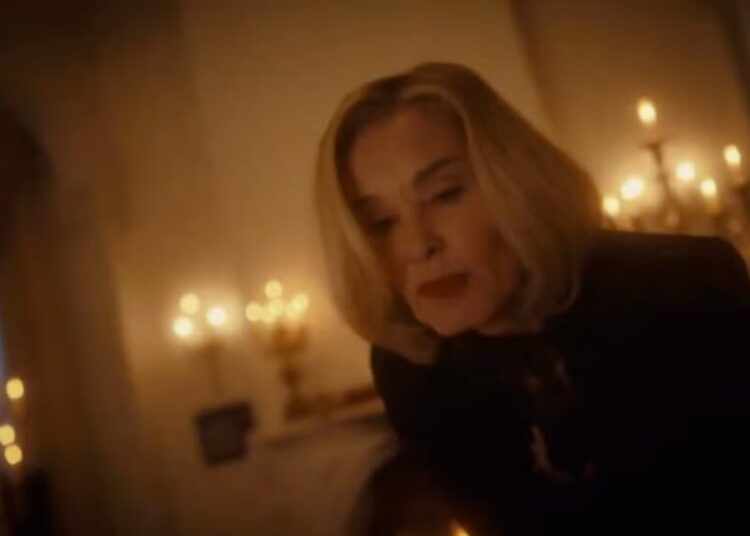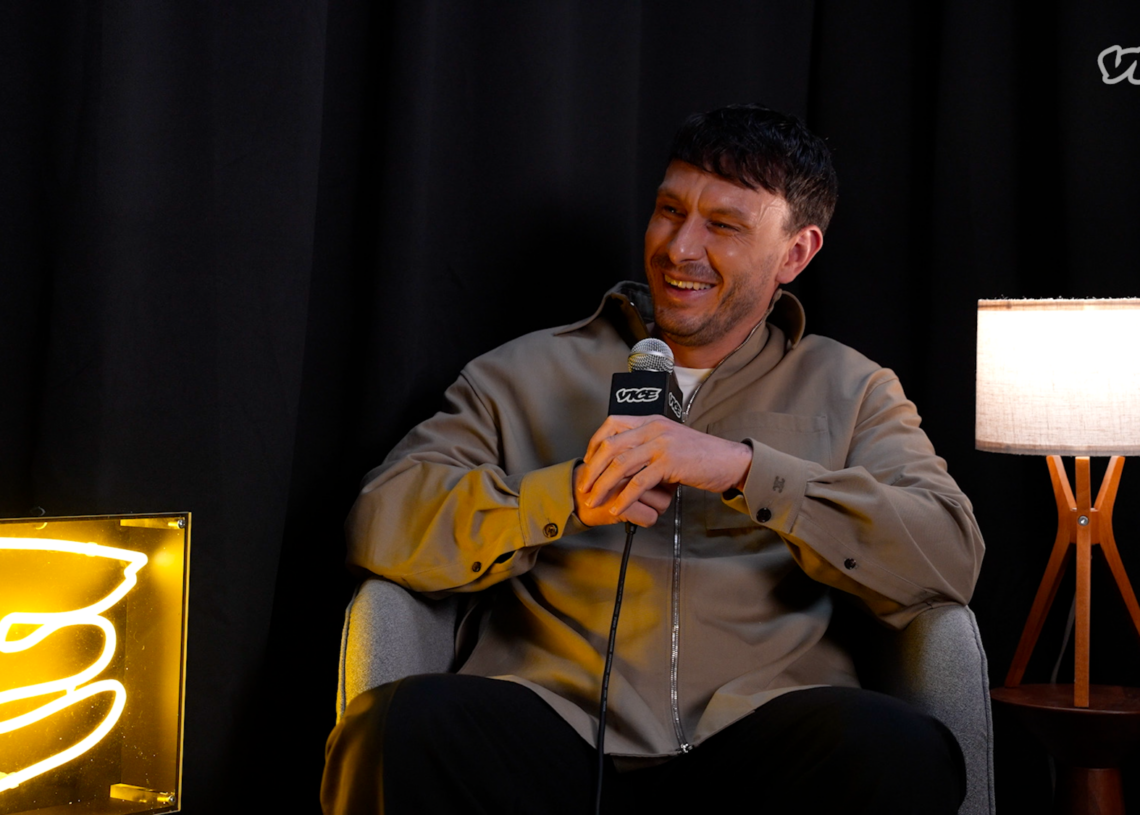
Richard Gadd has now written, created, and starred in two of the most critically bruising series in recent memory — Baby Reindeer and Half Man — and he’d like you to stop calling them manosphere content. On the latest episode of VICE Culture Club, host Jackson Garrett sits down with the Scottish writer-actor to talk about where Half Man actually comes from, what it took to play a villain he almost didn’t cast himself as, and whether making art out of your own worst moments counts as therapy. The short answer: not really.
Garrett opens with a bracket-style game — ranking the greatest writer-actor-creator combos in TV and film history. Gadd works through Always Sunny, Fleabag, Girls, Atlanta, and Good Will Hunting with hard opinions, landing on Phoebe Waller-Bridge as his winner. He calls Fleabag a top-ten all-time show, and specifically praises the second season, which he’d been dreading. “I remember when it was commissioned for a second series, I remember being like, oh no, no, no, don’t ruin it,” he says. “They somehow surpassed the first season, which I thought was almost like an impossible artistic feat.”
From there, the conversation turns to Half Man — or rather, what it’s actually about. Gadd pushes back on the “toxic masculinity” label, not because he thinks the phrase is wrong, but because he thinks it steamrolls everything underneath it. “I never really set out to explore like a political agenda,” he says. For him, the show is about two men who can’t communicate with each other or themselves, and what that silence costs over decades. “A lot of destructive behavior comes from a lack of expression,” he says, which is about as unguarded a thesis as the show ever offers.
Playing Ruben — the show’s volatile, menacing antagonist — wasn’t even part of the original plan. It was actor Jamie Bell who suggested Gadd for the role. Gadd almost talked himself out of it. “I realized all my thinking was based around what people would think, whether people would judge me, whether it would fail,” he says. He changed his body, his voice, his entire physicality, then went looking for the thing underneath all of it: “Ruben ran on a river of pain.” The Emmy nomination that came after proved people bought it.
Those same Emmys come up again when Garrett brings in an LA Times quote: some Emmy voters reportedly found Half Man so off-putting they didn’t make it past the first episode. Gadd takes the note in stride, more or less. “There should always be a place for television to test people, to push buttons, to try things different,” he says. “My big worry with television right now is that I never wanted it to become so homogenized that people no longer recognize the human struggle in it.” Jackson, for his part, is less diplomatic about the voters.
The therapeutic question gets the most lucid answer of the episode. Making Baby Reindeer — which drew directly from Gadd’s own life — wasn’t a release in the moment. “I don’t think it was therapeutic at the time,” he says. “It was extremely tough, actually.” The catharsis came later, in the messages from strangers who recognized something in it. “People come up to me, and they say, I related to it. God, I thought I was the only one who had those feelings.” That, he says, is where the catharsis lives — not on set, but in the shared recognition afterward.
Watch the full VICE Culture Club episode with Richard Gadd to hear how he built two of TV’s most unsparing series, why he thinks art should disturb the comfortable, and what it actually felt like to root for Scotland at the World Cup.
The post Richard Gadd Made Baby Reindeer and Half Man From His Own Wreckage. So, Is It Therapeutic? appeared first on VICE.